
By The Pulseline News Desk
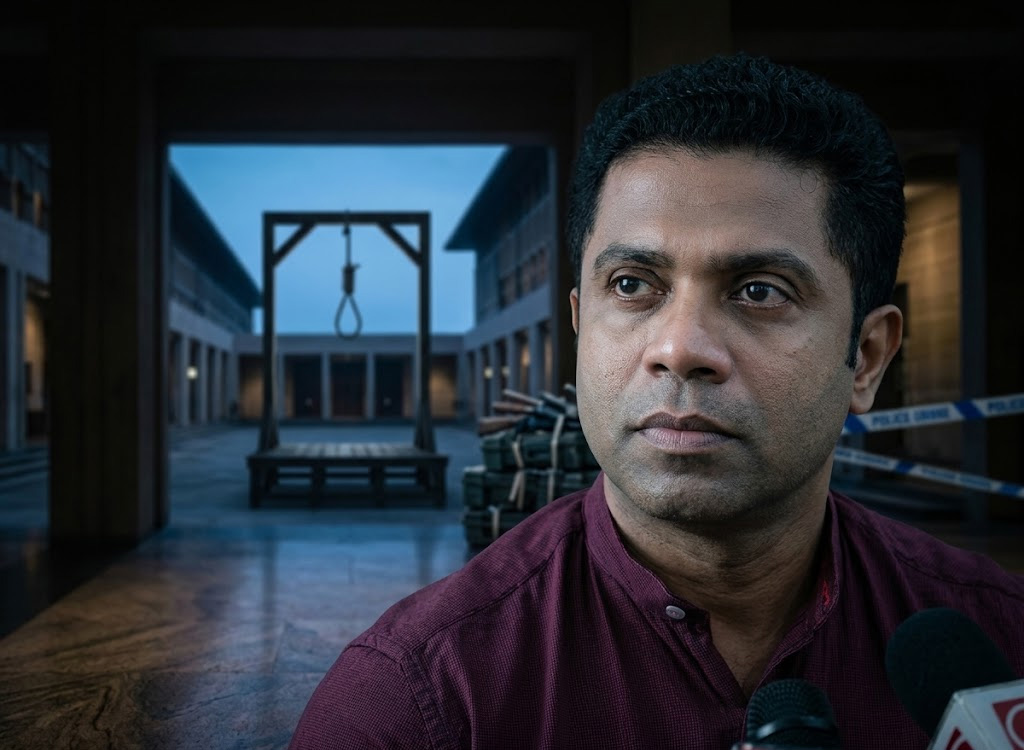
The Government has yet to make a decision on calls to reintroduce the death penalty for organised crime, as a series of shootings and gang-related violence continues to raise concerns over the country’s ability to dismantle entrenched criminal networks.
Health Minister Nalinda Jayatissa has said that several proposals had been submitted calling for the death penalty to be brought back into active use, while the issue had also been raised directly with President Anura Kumara Dissanayake at a recent meeting.
However, he has stressed that no decision had been taken by the Government to reintroduce capital punishment.
The renewed debate comes against the backdrop of continuing gun violence, with the Government facing pressure to demonstrate that its crackdown on organised crime is producing tangible results.
According to Jayatissa, 37 shooting incidents resulting in 17 deaths have been reported between January 1 and September 10 this year.
The scale of the weapons recovered during the same period has also highlighted the extent of the challenge. Authorities have seized 867 firearms, including 14 T-56 assault rifles, during operations targeting criminal activity.
Crackdown intensified
Jayatissa has said the Government had intensified arrests and investigations against organised criminal groups and claimed that underworld activity had been brought under control to some extent.
He has pointed to a decline in clashes between rival gangs, which had previously contributed to a series of violent incidents.
However, the Government’s position suggests that the crackdown is being pursued primarily through existing legal mechanisms rather than through an immediate return to capital punishment.
“We are taking action under the existing laws,” the Minister has said.
His comments indicate that the Government is continuing to rely on police investigations, arrests, weapons seizures and prosecutions as its immediate response to organised crime, while proposals for tougher punishment remain under consideration.
Network that cannot be dismantled overnight
One of the central challenges identified by the Minister is the structure of organised crime itself.
Jayatissa has cautioned against expecting the problem to disappear within days, pointing out that criminal networks operate through extensive and interconnected structures.
He has said eliminating organised crime could not be achieved “within a day or two” because the underworld had developed a widespread network.
That assessment comes as authorities attempt to move beyond responding to individual shootings and target the broader networks behind them — including the movement of firearms, financing and relationships between criminal groups.
The seizure of hundreds of firearms provides an indication of the scale of illegal weapons circulating in the country, while the continued occurrence of fatal shootings demonstrates that enforcement operations have yet to eliminate the threat.
Death penalty debate returns
The renewed calls for capital punishment reflect growing public concern over violent crime, but the Government has so far stopped short of committing itself to the measure.
Sri Lanka has retained the death penalty in law, but executions have not been carried out for decades. Any move to resume executions would therefore represent a major shift in the country’s approach to criminal punishment.
For the Government, the immediate challenge is to demonstrate that its existing crackdown can weaken organised criminal networks while maintaining effective investigations and prosecutions.
- i need news thumbnail without wording aspect ratio 1024x750px, make it more cinematic, and dotn change face features.












Leave a comment