

By The Pulseline News Desk
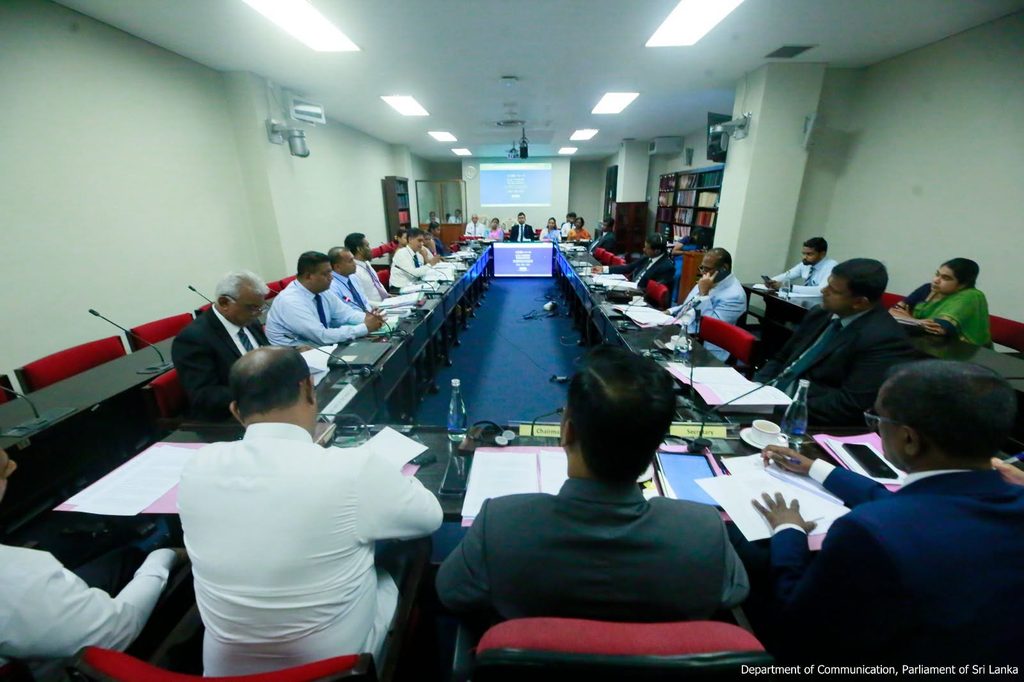
Sri Lanka’s proposed new Immigration Bill, aimed at modernising the country’s immigration framework and introducing technology-driven border control systems, has received approval from the Sectoral Oversight Committee on Governance, Justice, and Civil Protection.
The Bill, which was recently presented to Parliament for its First Reading, was approved by the committee chaired by MP Najith Indika, subject to Committee Stage amendments required by the Supreme Court’s determination on the proposed legislation.
The new legislation is expected to replace two longstanding laws governing immigration and travel documentation: the Immigrants and Emigrants Act (Chapter 351) and the Passports and Exit Permits Act, No. 53 of 1971.
Officials have told the committee that the proposed legislation seeks to bring Sri Lanka’s immigration system in line with contemporary international standards and technological developments, while strengthening the legal framework governing border security and the movement of people.
They have confirmed that all amendments and directions arising from the Supreme Court’s consideration of the Bill had been incorporated into the proposed legislation.
Particular attention has been given to safeguards governing the collection and storage of biometric information, with provisions introduced to ensure compliance with the Personal Data Protection Act.
The Bill is to also introduce changes to the administrative structure of the Department of Immigration and Emigration, updating several designations under the existing legislation. Accordingly, the positions of Controller, Deputy Controller and Authorised Officer will be replaced by Controller General, Additional Controller General and Immigration Officers.
In a move aimed at strengthening border security, the proposed legislation also allows limited powers to be assigned to members of the three Armed Forces and the Coast Guard to prevent illegal entry into the country.
Such powers may be conferred by the President through a Gazette notification, following a request by the relevant Minister.
The legislation has also sought to address the growing cross-border dimensions of human trafficking and organised crime. It is to provide for legal action in Sri Lanka against human trafficking and organised criminal activities committed overseas using forged travel documents, including instances where the individuals involved had legally departed from the country.
Cases involving such organised illegal activities will also be brought within the jurisdiction of the High Court.
Another significant feature of the Bill is the legal foundation it provides for introducing modern immigration facilities, including automated electronic gates (E-Gates) at points of entry and departure.
The system is expected to allow eligible passengers to complete immigration clearance electronically without requiring conventional passport stamping, potentially streamlining passenger processing and reducing delays at border checkpoints.
The proposed legislation represents a major overhaul of Sri Lanka’s immigration laws, replacing legal provisions dating back several decades with a framework intended to address contemporary challenges involving border management, data protection, travel documentation and transnational crime.













Leave a comment