
By The Pulseline News Desk
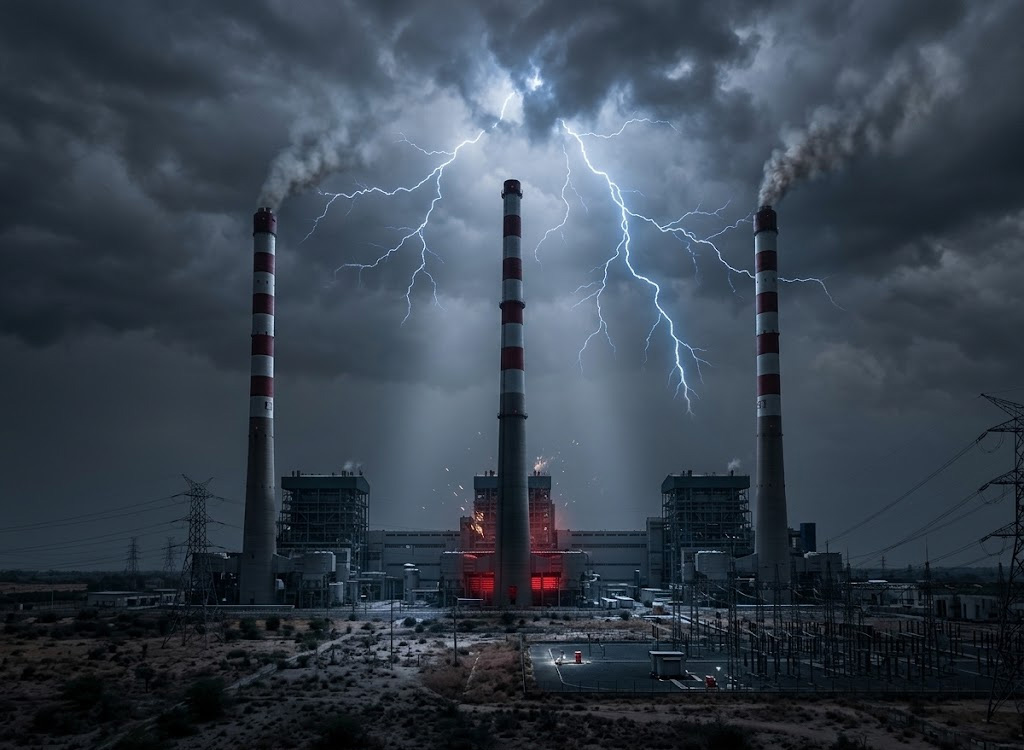
A sudden collapse in electricity generation at the first unit of the Norochcholai Lakvijaya Power Plant had triggered a chain of events that led to the islandwide power failure on October 17, according to a preliminary investigation report submitted to the Public Utilities Commission of Sri Lanka (PUCSL).
The National System Operator (NSO), which prepared the report, has found that the generation capacity of Norochcholai Unit 1 had plunged from 187 megawatts to just 5 megawatts within 450 milliseconds, causing a sharp decline in the frequency of the national electricity grid.
According to the report, grid frequency had dropped from 49.906 Hertz to 48.75 Hertz within just two seconds of the sudden generation loss.
The decline had triggered all five stages of the national grid’s Under-Frequency Load Shedding (UFLS) protection system, which is designed to automatically disconnect selected electricity loads when grid frequency falls below specified levels.
However, despite the activation of these protective mechanisms, the national electricity grid could not be stabilised.
The report has stated that electricity generation units at several power plants subsequently ceased operations as the grid began collapsing at approximately 11.43 a.m. on October 17, eventually resulting in an islandwide blackout.
How the grid collapsed
Sri Lanka’s national electricity grid must maintain a frequency of approximately 50 Hertz to ensure stable electricity generation and distribution.
Grid frequency reflects the balance between electricity generation and demand. When a major generating unit suddenly loses output, the remaining generators must compensate for the shortfall. If they cannot respond quickly enough, grid frequency falls, potentially triggering automatic protection systems.
The UFLS mechanism is designed to prevent a complete grid collapse by disconnecting predetermined sections of electricity demand when frequency falls below specified thresholds.
In the October 17 incident, however, all five stages of the protection mechanism were activated following the rapid decline in frequency.
The NSO’s preliminary findings indicate that the sudden reduction in output from Norochcholai Unit 1 was the initial event in the sequence that led to the wider system failure.
The report has also recorded the subsequent shutdown of generating units at several power plants as the national grid collapsed.
Questions over grid stability
The October 17 blackout has renewed concerns over the stability and resilience of Sri Lanka’s electricity transmission network, particularly its ability to withstand the sudden loss of a major generating unit.
The Norochcholai complex, consisting of three coal-fired generating units, has a combined installed capacity of 900 megawatts and remains a major contributor to the country’s electricity supply.
The incident has also drawn attention to the challenges of maintaining grid stability as Sri Lanka expands renewable energy generation, particularly solar and wind power, whose output can fluctuate depending on weather conditions.
The preliminary report has been submitted to the PUCSL for consideration as investigations into the islandwide blackout continue.
However, further technical investigations will be necessary to establish why the existing protection mechanisms failed to prevent the cascading shutdown of generating units and whether weaknesses in grid operations or protection settings contributed to the scale of the blackout.
The findings could have significant implications for future electricity sector planning, including grid protection systems, generation reserves and the ability of the national network to withstand sudden disruptions at major power plants.












Leave a comment