
By The Pulseline News Desk
The Opposition has intensified its campaign against the government’s proposed constitutional reforms, using a high-level engagement with Colombo’s diplomatic community to raise concerns over judicial independence, constitutional governance and the future of Sri Lanka’s democratic institutions.
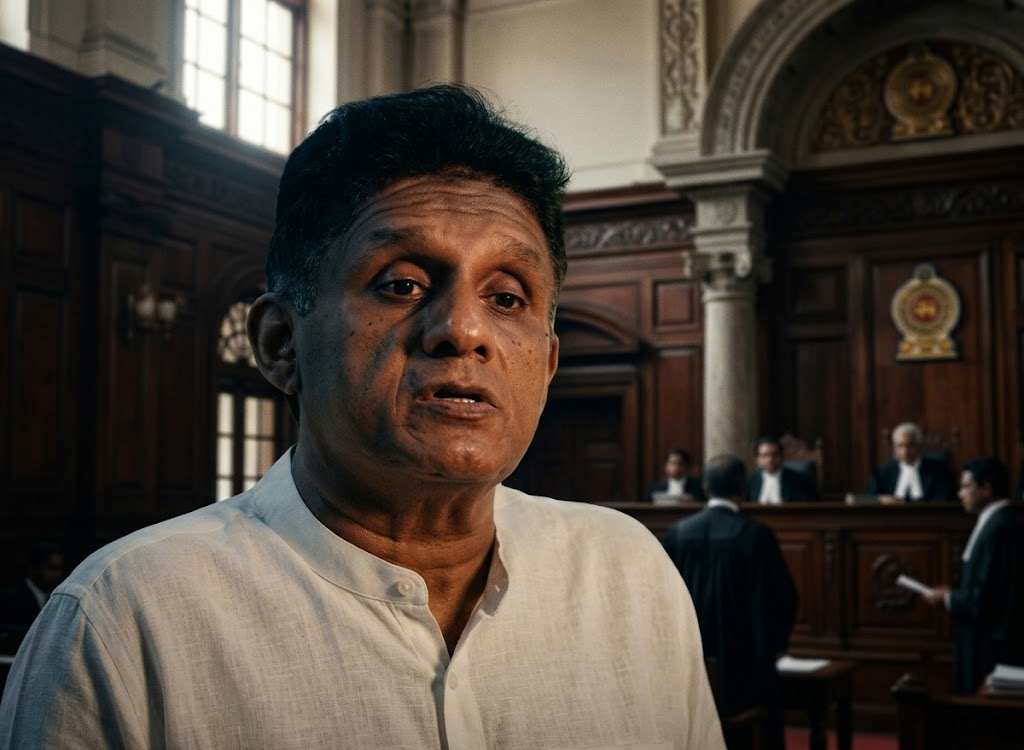
Opposition Leader Sajith Premadasa on Thursday (6) convened a meeting with Heads of Diplomatic Missions, representatives of international organisations, members of the diplomatic corps and Opposition members of parliament (MPs) to discuss what his office described as recent developments affecting democratic governance, constitutional rule and institutional independence.
The meeting comes as the government faces mounting criticism over its proposal to amend the Constitution to extend the retirement age of superior court judges, a move that has already drawn objections from the Bar Association of Sri Lanka (BASL), civil society groups and sections of the legal fraternity.
Judicial reforms dominate discussions
According to the Opposition Leader’s Office, discussions had centred on the government’s proposal to extend the retirement age of Supreme Court judges and the wider implications of what it described as ad hoc constitutional amendments.
Participants had also examined broader constitutional issues, including the separation of powers, judicial independence and the need to preserve public confidence in democratic institutions.
Opposition MPs attending the meeting had argued that constitutional reforms should not be driven by short-term political considerations but instead follow a transparent, consultative and principled process capable of strengthening Sri Lanka’s democratic framework.
The engagement reflects the Opposition’s attempt to frame the government’s judicial reform agenda not merely as a domestic political issue but as one with implications for governance, institutional credibility and Sri Lanka’s international standing.
Commitment to constitutional safeguards
Addressing the gathering, Premadasa had reaffirmed the Opposition’s commitment to safeguarding the Constitution and protecting the independence of key state institutions.
He had stressed that constitutional amendments carrying significant legal and institutional consequences should be subjected to proper scrutiny and informed public debate before being enacted.
The Opposition Leader had also highlighted the importance of maintaining dialogue with Sri Lanka’s international partners on issues relating to democratic governance, institutional integrity and the rule of law.
While the meeting had stopped short of calling for international intervention, it underscored the Opposition’s intention to keep the diplomatic community informed of developments surrounding the government’s constitutional reform agenda.
Constitutional debate gathers momentum
The meeting comes at a politically sensitive time, with the government presenting constitutional amendments that include extending the retirement age of superior court judges while also introducing changes linked to the judiciary’s administrative structure.
The government has defended the reforms as necessary to retain experienced judges, improve judicial efficiency and address the country’s mounting backlog of court cases.
However, critics argue that changes affecting the tenure of sitting judges should be approached with caution, warning that such reforms could create perceptions of executive influence over the judiciary if not accompanied by broad political consensus and transparent consultation.
The BASL has previously urged the government to reconsider the proposed amendments, while several civil society organisations have called for wider stakeholder consultations before any constitutional changes are introduced in Parliament.
A growing political fault line
The judicial reform debate is rapidly emerging as one of the defining constitutional issues facing President Anura Kumara Dissanayake’s administration.
While the government maintains that its proposals are intended to strengthen the administration of justice, the Opposition is seeking to position itself as a defender of constitutional governance and institutional independence.
By taking its concerns directly to the diplomatic community, the Opposition has signalled that the debate extends beyond Parliament and will increasingly be contested in the broader arena of public opinion, legal discourse and Sri Lanka’s engagement with its international partners.
As the government moves closer to presenting its constitutional package, the controversy surrounding judicial independence and institutional reform is likely to remain at the centre of the country’s political agenda.











Leave a comment