
By The Pulseline News Desk
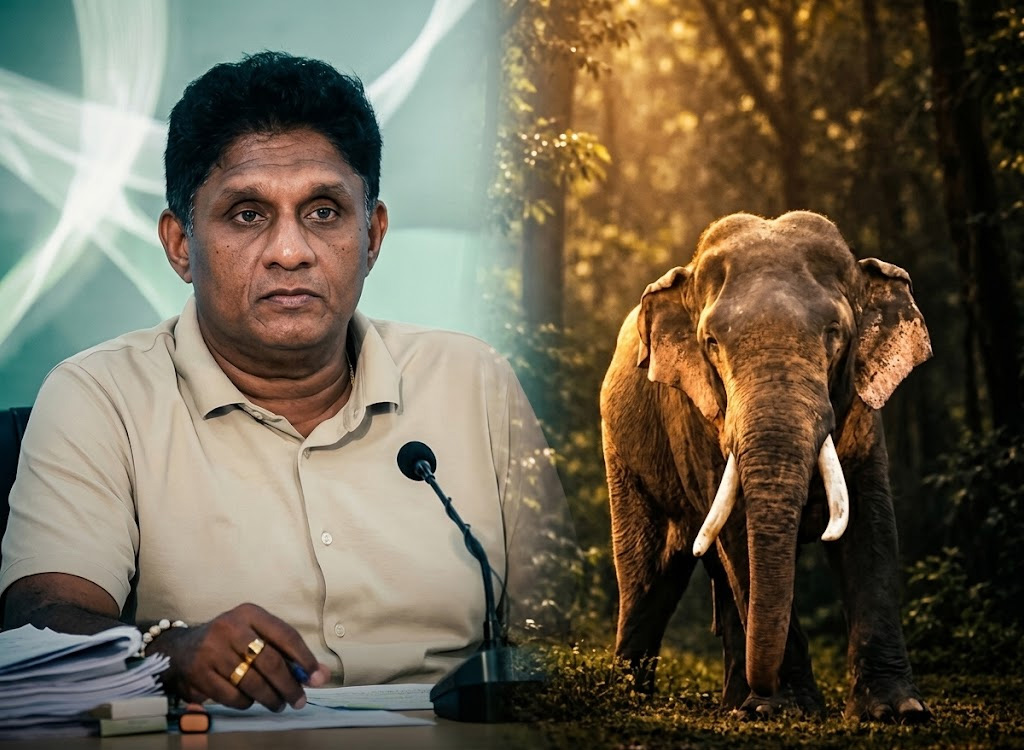
Opposition Leader Sajith Premadasa has called for a comprehensive overhaul of Sri Lanka’s wildlife protection and emergency veterinary services, proposing a special task force to safeguard the country’s remaining tuskers following the death of Kavanthissa.
Speaking in Parliament on Tuesday (20), Premadasa has proposed establishing a dedicated wildlife hospital, modern veterinary facilities and a rapid-response unit to treat injured elephants and other wild animals, warning that the country needed stronger preventive measures to avoid further losses.
His proposals came as Environment Minister Dhammika Patabendi has told Parliament that Kavanthissa had died from gunshot injuries, adding that investigations were continuing to determine whether there had been a conspiracy to kill the animal.
The Minister has said Kavanthissa had initially recovered but subsequently fell ill again before dying. He has added that veterinary advice had been sought from specialists in Thailand and India.
Premadasa has said the circumstances surrounding Kavanthissa’s death, together with the deaths of other prominent tuskers, including Bhathiya and Thekka Raja, should prompt the Government to strengthen wildlife protection mechanisms and improve emergency medical care.
Special task force proposed
Premadasa has proposed establishing a special elephant protection task force comprising experienced wildlife officers and investigators with expertise in handling wildlife-related crimes.
He has specifically identified the investigation team involved in an arrest connected to the Kavanthissa incident, as personnel whose experience could be utilised to strengthen efforts to protect endangered tuskers.
He has said their expertise should be channelled into preventing elephant-related crimes, improving investigations and protecting the country’s remaining tuskers.
The Opposition Leader has also proposed including environmental organisations and civil society representatives in the expert committee appointed by the Government to investigate Kavanthissa’s death.
Such participation, he has argued, would strengthen transparency and accountability in establishing the circumstances surrounding the animal’s death.
Dedicated wildlife hospital and modern facilities
A central element of Premadasa’s proposal was the establishment of a dedicated wildlife hospital capable of treating seriously injured animals, particularly elephants requiring specialised medical attention.
He has called for modern diagnostic equipment, mobile laboratory facilities and emergency treatment units to improve the capacity of wildlife authorities to respond to critical cases.
He has also proposed creating a rapid-response mechanism to ensure that injured elephants receive immediate medical attention, reducing delays that could jeopardise their chances of survival.
Premadasa has stressed the importance of involving foreign veterinary specialists in complex cases and strengthening collaboration between wildlife authorities, universities and other relevant institutions.
Highlighting shortages of wildlife veterinarians and trained personnel, he has urged the Government to address staffing gaps and provide the Department of Wildlife Conservation with the medical resources necessary to respond effectively to emergencies.
He has also offered the Opposition’s support in establishing the proposed facilities, including assistance in securing foreign funding and other resources.
Lessons from tusker deaths
Premadasa has said the deaths of Kavanthissa, Bhathiya and Thekka Raja should serve as a basis for developing improved treatment protocols, emergency response procedures and long-term conservation strategies.
He has emphasised that protecting Sri Lanka’s remaining tuskers required coordinated action, adequate veterinary capacity and practical reforms rather than measures introduced only after the death of a prominent animal.
Meanwhile, the Environment Minister’s confirmation that Kavanthissa died from gunshot injuries has added urgency to calls for stronger wildlife protection and accountability.
With investigations continuing into the possibility of a conspiracy behind the death, the focus is now on establishing the full circumstances of the incident while addressing weaknesses in the systems responsible for protecting and treating injured wildlife.













Leave a comment