
By The Pulseline News Desk
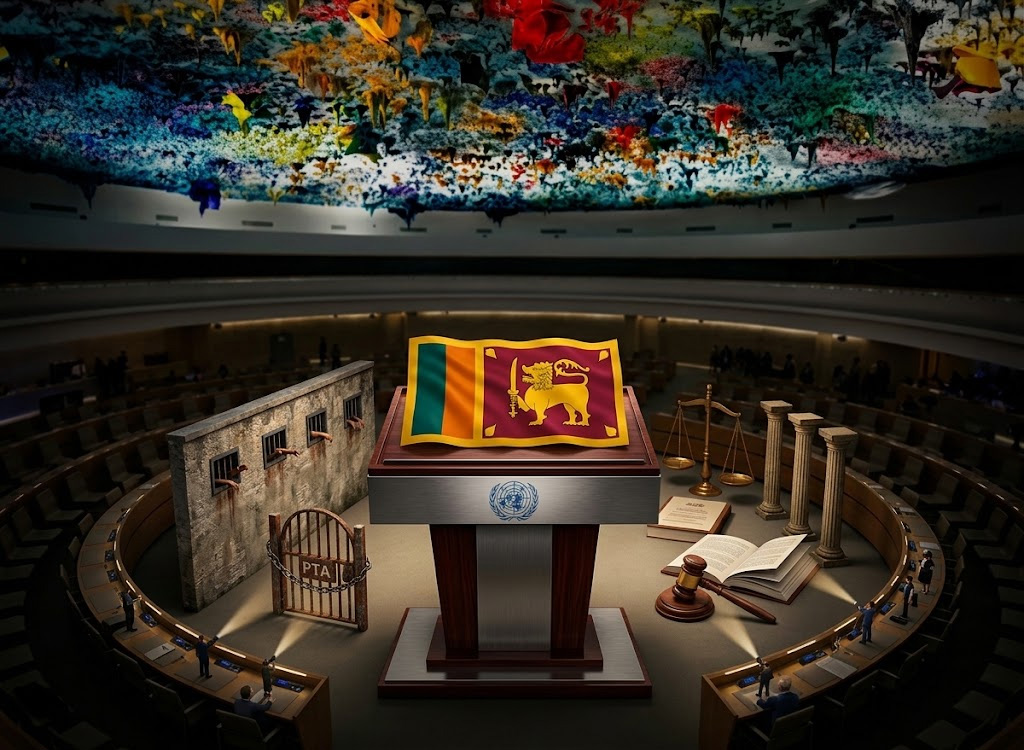
Recent incidents of unrest in Sri Lanka’s prisons and the Government’s delay in repealing the Prevention of Terrorism Act (PTA) are expected to come under renewed scrutiny when the United Nations Human Rights Council (UNHRC) begins its 63rd session in Geneva next month.
The issues are among several human rights concerns that the UN body has raised with the Sri Lankan Government as it continues to monitor the country’s progress on reconciliation, accountability and human rights.
During the session, the Office of the United Nations High Commissioner for Human Rights (OHCHR) is expected to present a written update on developments in Sri Lanka, providing an assessment of progress made since the council last reviewed the country.
The Government is also expected to respond to the concerns raised by the UN human rights body, with Sri Lanka’s Permanent Representative to the UN in Geneva scheduled to outline the Government’s position and progress on human rights and accountability.
The latest developments come as the international spotlight remains on the Government’s handling of the prison system, following a series of incidents of unrest and violence at correctional facilities.
The delay in repealing the PTA is also likely to remain a key issue, given longstanding international concerns over the legislation and calls for its replacement with a legal framework that provides stronger safeguards for fundamental rights.
At the same time, the Government is expected to emphasise steps it has taken to strengthen domestic institutions dealing with reconciliation and accountability.
Foreign Affairs Minister Vijitha Herath has said the Government had addressed many of the concerns raised by the UN body, while steps had also been taken to strengthen the Office on Missing Persons (OMP) and the Office for Reparations.
Herath has further said the Government had made progress in reducing discrimination based on ethnicity, religion and other differences.
The UNHRC’s scrutiny comes within the framework of its continuing oversight of Sri Lanka. Last year, the council extended the OHCHR’s mandate relating to Sri Lanka, keeping the country under its monitoring until September next year.
A more comprehensive report on Sri Lanka is expected to be presented before the council next year.
The upcoming session will therefore provide another international assessment of the Government’s human rights record, while also giving Colombo an opportunity to present its case on the progress it says has been made since taking office.
For the Government, the challenge will be to demonstrate that institutional reforms and commitments on reconciliation are translating into tangible improvements on the ground, particularly in areas such as the treatment of detainees, accountability and protection of fundamental rights.











Leave a comment