
By The Pulseline News Desk
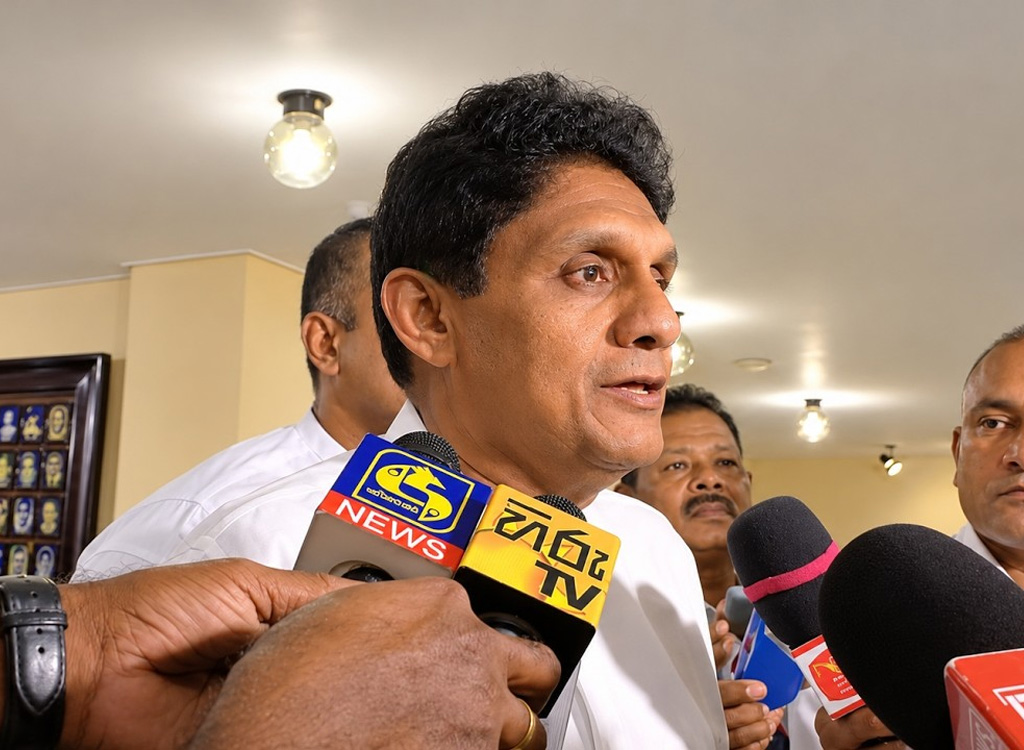
Opposition Leader Sajith Premadasa has accused President Anura Kumara Dissanayake’s Government of abandoning its election promises and embracing neoliberal economic policies, arguing that Budget 2027 places a heavier burden on ordinary people while favouring the wealthy.
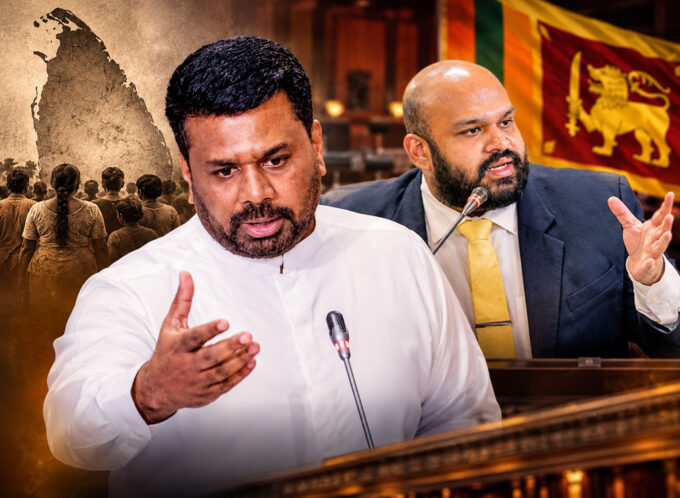
Addressing Parliament on Friday (13) during the Budget debate, Premadasa described the Government’s third budget as a betrayal of the mandate given by voters, claiming that the National People’s Power (NPP) administration had moved away from its Marxist political ideology and adopted policies similar to those of previous governments.
He argued that the budget contradicted the promises made under the NPP’s A Thriving Nation – A Beautiful Life policy programme, particularly its commitments to economic equality, poverty reduction and improving living standards.
Drawing parallels with Buddhist teachings, Premadasa questioned whether the budget had been prepared with genuine concern for the welfare of the people. He also accused the President of moving between two ideological positions, describing him as a Marxist by political background but now the “captain of neoliberalism”.
Questions over economic equality and poverty
A major part of Premadasa’s criticism centred on income inequality and the distribution of wealth.
Citing statistics he said he was tabling in Parliament for inclusion in Hansard, he claimed that real household income among the poorest 20% of the population had declined by 19.6% between 2019 and 2025, while that of the wealthiest 20% had increased by 6.8%.
He further claimed that the income gap between the richest and poorest 20% had widened from 11.2 times to 14.8 times, with the wealthiest 20% accounting for 55.8% of total income.
According to Premadasa, these figures demonstrated that the country’s economic recovery had disproportionately benefited the wealthy while leaving working-class and middle-class households struggling with rising living costs.
He also questioned the Government’s official poverty measurements, challenging the methodology used to calculate the minimum monthly expenditure required for an individual to meet basic nutritional needs.
Referring to the World Bank’s October 2026 report and the UNDP Multidimensional Poverty Report, he argued that poverty remained a serious national concern and accused the Government of presenting an overly favourable picture of economic conditions.
Premadasa questioned whether the Government’s poverty alleviation programmes, including Aswesuma and Praja Shakthi, had delivered meaningful improvements to vulnerable communities.
Foreign investment and employment concerns
The Opposition Leader also raised concerns about foreign investment and the closure of businesses, arguing that the Government had failed to deliver the investment-led growth it promised.
He claimed that foreign direct investment entering Sri Lanka in 2025 amounted to approximately US$1 billion, while several investment projects and business operations had withdrawn from the country.
Among the examples he cited were Merchants Logistics Hub, Adventures, Ceylon Petroleum, the Petronet Kerawalapitiya project and the Floating Energy Terminal.
He also questioned the closure of garment and manufacturing operations, referring to companies such as MAS, Brandix and Hydromark, and warned that the relocation of industrial activities overseas could undermine employment opportunities for Sri Lankan workers.
Premadasa said the Government had campaigned on creating jobs and improving economic opportunities for young people but had failed to demonstrate sufficient progress in those areas.
IMF agreement and debt restructuring
Premadasa accused the Government of abandoning its earlier commitment to renegotiate Sri Lanka’s agreement with the International Monetary Fund (IMF).
He recalled that the NPP’s policy programme had promised changes to the country’s debt sustainability analysis and the existing IMF framework after assuming office.
However, he argued that the Government had continued along the same economic path as its predecessor.
He also criticised Sri Lanka’s sovereign debt restructuring arrangements, particularly the inclusion of macro-linked bonds, claiming that the structure could reduce the country’s debt relief as economic growth improves.
Referring to international financial advisory firm Lazard, which was involved in Sri Lanka’s debt restructuring as well as similar processes in Ghana and Senegal, Premadasa alleged that Sri Lanka had received a less favourable arrangement than those countries.
He argued that the structure could create a disincentive to economic growth because higher growth could result in increased debt repayments.
The Opposition Leader further questioned the Government’s response to the financial difficulties faced by micro, small and medium-sized enterprises (MSMEs).
He said approximately 263,000 small and medium-sized businesses had fallen into distress during the 2022 economic crisis and criticised the Government for failing to establish the promised National Development Bank and implement a comprehensive debt restructuring programme.
Digital economy and youth expectations
The Opposition Leader also criticised the Government’s progress in developing the digital economy, arguing that it had failed to meet expectations raised among younger voters.
He noted that Rs. 28.5 billion had been allocated for the digital economy and claimed that only five of the 17 commitments made in the information technology sector in 2026 had been fulfilled.
He specifically questioned delays in introducing the Digital Identity programme, pointing out that the Government had previously indicated that a contractor would be selected by March 2026 and that the initiative would be introduced during the third quarter of the year.
Premadasa also questioned the progress of proposed IT parks in Digana and Nuwara Eliya, accusing the Government of failing to deliver on commitments made to Generation Z and other young people.
Agriculture, energy and public services
Turning to agriculture, Premadasa accused the Government of failing to honour its election promise to purchase paddy at Rs. 150 per kilogram.
He claimed that farmers were currently receiving around Rs. 95 to Rs. 98 per kilogram and questioned the failure to introduce promised interest-free loans and measures to support small and medium-scale rice millers.
He also raised concerns about the difficulties faced by producers of big onions, potatoes, chillies, fruits, export crops and upcountry vegetables.
On energy policy, he questioned the Government’s continued investment in thermal power generation while publicly promoting renewable energy.
He also raised concerns about shortages of medicines, medical equipment and human resources in the health sector, as well as inadequate access to computers, smart boards and internet connectivity in schools.
Premadasa called for stronger measures to address the microfinance debt crisis and questioned the absence of a comprehensive development strategy for Sri Lanka’s marine and fisheries resources.
He further warned about the continuing departure of professionals, academics, doctors and skilled workers, urging the Government to introduce incentives to retain qualified personnel in the country.
Public servants and cost-of-living relief
Premadasa also criticised the President’s remarks concerning the cost of public sector salaries and the financial implications of salary increases.
He questioned why such concerns had not been raised before the elections, when public servants had been presented as an important constituency deserving greater recognition.
He also called on the Government to honour its promises concerning senior citizens’ savings interest rates and provide solutions to the financial difficulties faced by pensioners.
The Opposition Leader further questioned the absence of the promised 33% reduction in electricity bills, recalling the NPP’s election commitments to lower household electricity expenses.
He also referred to other campaign promises, including the proposed supply of essential goods and affordable motorcycles, accusing the Government of failing to translate its election pledges into practical measures.
Calls for a different economic direction
Concluding his speech, Premadasa described Budget 2027 as a departure from the promises that brought the NPP to power, arguing that the administration had disappointed the expectations of the 6.8 million people who voted for it.
He said the Government had failed to deliver the fundamental political and economic transformation it had promised and accused it of misleading the electorate by campaigning on one set of policies while implementing another.
Premadasa called on the Government to reject both neoliberalism and extreme Marxist economic policies, advocating instead a middle path based on social democracy and a social market economy.
His criticism adds to the political debate surrounding Budget 2027, particularly over the Government’s economic direction, the distribution of the costs of recovery and whether the administration can reconcile its original political commitments with the economic policies being pursued under the IMF-supported reform programme.






Leave a comment