
By Janahitha
A nation’s greatness is not measured merely by its wealth, its military strength or the cleverness of its people. It is measured by how its people treat one another, and how they treat the rest of the world.
We live in precarious times. Political debate has become a contest between extremes, and I often wonder what happened to the centre-right and the centre-left – to those reasonable voices who understood that governing requires compromise, tolerance and an acceptance that people who disagree with us may still have a point.
Civilisation was not built on the triumph of one extreme over another. It was built, slowly and painfully, through institutions that allowed people with very different beliefs to live side by side.
Yet there is a growing tendency to believe that conviction must be proven through intolerance and that to defend one’s own culture, one must reject another’s; that to be progressive, one must abandon tradition; that to be conservative, one must resist every change. None of this is necessary, and none of it is wise. A healthy society needs the wisdom to keep what works and the courage to change what does not. Above all, it needs moderation.
The perspective we have lost
We tend to view history through the narrow window of our own lives, as though the world began shortly before we arrived. More than eight decades have passed since the end of the Second World War. There have been many devastating regional conflicts since, but humanity has so far avoided another war on that global scale. That was no accident. It grew out of extraordinary sacrifice, diplomacy, economic interdependence and institutions designed to prevent such a catastrophe from happening again.
We should be careful not to dismantle, through ideological arrogance, what earlier generations built through unimaginable suffering. The lesson of history is not that we must always agree. It is that we must learn to disagree without destroying one another.
Respecting the country that welcomes you
Consider the debate over immigration and assimilation. Japan is often discussed in terms of cultural exclusion and discrimination against foreigners, including people of African and South Asian descent. Racism certainly occurs, and it must be challenged. But it would be unwise to assume that every difficulty a foreigner experiences in Japan is driven by racial prejudice.
Japan is a society of deeply rooted conventions. Politeness, cleanliness, punctuality and respect for shared spaces are among the very reasons the country is admired around the world. Surely anyone who chooses to visit or settle there has a responsibility to respect them?
That does not mean surrendering one’s identity, nor does it mean tolerating discrimination. It means recognising that entering another society brings obligations as well as rights. The same principle applies in Australia, Singapore, Oman, Saudi Arabia and everywhere else.
When we travel to the Middle East, most of us respect local religious sensitivities and dress codes, knowing that some behaviour may cause deep offence or even carry legal consequences. So we adapt. Curiously, though, in many liberal democracies the expectation that newcomers respect established norms is treated as an unreasonable demand.
Why should Australians or the Japanese feel embarrassed to expect respect for their laws and conventions? Assimilation need not mean abandoning who you are. It can simply mean learning to live in harmony with the society you have chosen to join. Of course, the obligation runs both ways as a host nation must extend dignity, fairness and equal protection under the law to those who arrive on its shores. The answer is neither forced conformity nor fragmentation. It is mutual respect.
The difference between fear and respect
Here is an uncomfortable question, which is, why do people behave so differently depending on which country they are in?
The same person who would never drop litter in Singapore may casually toss rubbish onto a street in Colombo. Someone who keeps carefully to the speed limit in Australia may drive recklessly the moment they are back in Sri Lanka. A traveller who queues patiently abroad may push ahead of everyone once they land at home. The person has not changed. The environment has.
Where rules are enforced consistently, people comply. Where enforcement is patchy and influence can override procedure, discipline erodes until rules become mere suggestions. Deterrence matters, but punishment is only the starting point of a functioning society, not its crowning achievement. The most successful societies are those in which people behave responsibly even when nobody is watching.
That is the difference between enforcement and culture. The first requires authority. The second requires character. And it is character that Sri Lanka must now cultivate.
A country that deserves better from its people
Sri Lanka is an extraordinary country, with a rich history, remarkable natural beauty, deep religious and philosophical traditions and a highly capable people. We have shown great resilience through war and economic collapse, and Sri Lankans have excelled across the world. Our potential has never been in doubt.
And yet we still struggle with the most basic requirements of an orderly society. We struggle to queue, to obey traffic rules, to keep our public spaces clean and to respect public property. We struggle to accept that the person beside us is entitled to exactly the same dignity and fairness we demand for ourselves. Most damaging of all, we have come to accept that influence, wealth or political connections should entitle someone to special treatment.
This is not a failure of intelligence. It is a failure of shared values. We celebrate personal achievement while tolerating collective dysfunction. A businessman may be admired for his wealth while his employees are treated without dignity. A politician may be celebrated for his influence while ordinary citizens wait endlessly for basic services. We have grown far too comfortable separating personal success from social responsibility, and that is where our national transformation must begin.
What social equity really means
There is a profound difference between charity and social equity. Charity is what we choose to give. Social equity is the dignity, fairness and opportunity that every human being ought to be able to expect. It recognises that a street sweeper and a government minister are entitled to the same basic respect. Their contributions may differ. Their human dignity does not.
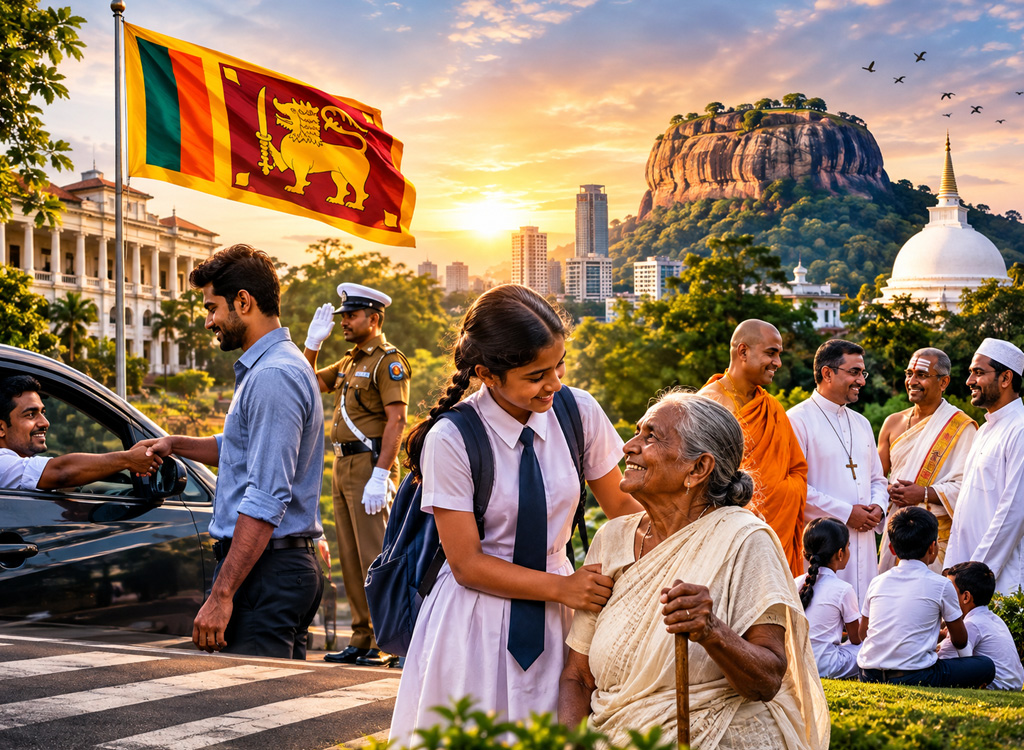
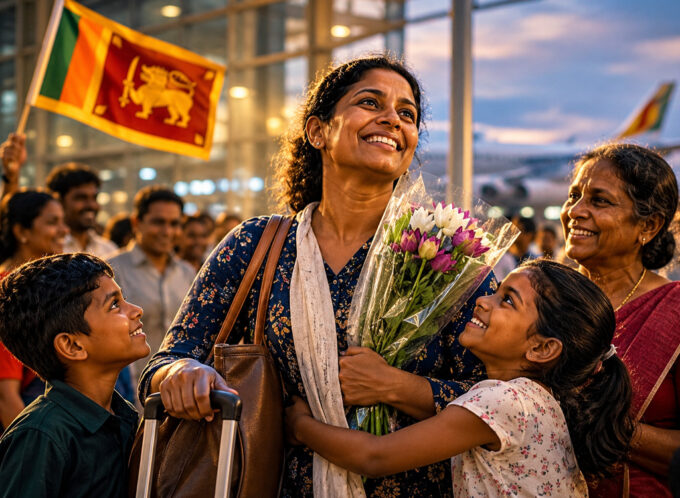
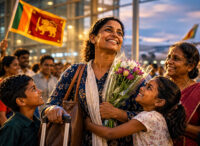
Imagine a Sri Lanka in which a domestic worker returning from years abroad is welcomed at the airport with the same courtesy shown to a wealthy investor; where a labourer is spoken to as politely as a company chairman; where officials regard it as an honour to serve the public rather than a chance to exercise power over it, and where children learn that a person’s worth is not measured by their surname, school or bank balance.
We already have the philosophical foundations
Sri Lanka does not need to import a new moral philosophy. Much of what we need already exists within our own traditions.
Buddhism, which has shaped Sri Lankan civilisation so profoundly, offers four principles: Metta (loving-kindness), Karuna (compassion), Mudita (appreciative joy) and Upekkha (equanimity). Metta asks us to wish others well, including those who can do nothing for us. Karuna asks us to meet suffering with compassion rather than indifference. Mudita asks us to celebrate another’s success without jealousy. Upekkha asks us to approach life with balance and fairness.
How would our roads change if drivers treated one another with patience? How would our workplaces change if employers showed genuine compassion? What would our politics look like if leaders could applaud their opponents?
These values also echo the teachings of Christianity, Hinduism and Islam, as well as secular principles of human dignity. Sri Lanka does not suffer from a shortage of religious teaching. It suffers from a shortage of people who consistently practise it. A thousand religious observances cannot substitute for a single act of genuine kindness at the moment it is needed.
Building a culture of consideration
The transformation Sri Lanka needs is not grand or expensive. It does not begin with another commission or national slogan. It begins with ordinary conduct.
It begins when we stop at a pedestrian crossing with no police officer in sight; when we wait our turn instead of hunting for someone influential to move us up the queue; when we pay workers fairly and on time, refuse a bribe and accept disagreement without hatred.
Individually, these acts seem trivial. Together, they define a nation. There is a strong economic case, too, where a society in which people trust institutions and behave predictably is easier to invest in and easier to govern.
But discipline must go hand in hand with justice. We cannot demand obedience from ordinary citizens while allowing the powerful to operate above the law. The rules must apply equally to the rich and the poor, the politician and the pedestrian. A society becomes truly disciplined when fairness is universal, not when punishment is reserved for the powerless.
What we must teach the next generation
Perhaps the most important investment Sri Lanka can make is not in another highway or industrial zone, but in the character of its children.
Our education system rightly values academic achievement. But how much weight do we give to kindness, punctuality, honesty and civic responsibility? Schools should teach civic conduct through practice, not just textbooks, so that children learn to respect public spaces, people from different backgrounds and every kind of honest work.
Parents must reinforce these values at home, and leaders must model them in public, because children learn far more from what adults do than from what they say. A father who ignores traffic rules cannot credibly lecture his child about discipline. We must become the examples we want the next generation to follow.
The Sri Lankan identity we should aspire to
I would like being Sri Lankan to carry a particular meaning. Not merely that we come from a beautiful island, or that we produce fine cricketers and successful professionals, but something more lasting.
I would like us to be known as courteous, dependable and honest: people who respect the elderly, protect the vulnerable and treat those who serve them with dignity; who keep their word; who respect the cultures of the countries they visit while taking pride in the finest traditions of their own.
Imagine a Sri Lankan arriving in Tokyo, Melbourne, London or Dubai and being seen as someone who will naturally show integrity and grace. Not because of a branding campaign, but because our conduct has earned it. Wealth can disappear and political power inevitably changes hands, but a reputation of that kind can endure for centuries.
Greatness without arrogance
We live in an age obsessed with power, wealth and influence. Yet the qualities that make life genuinely worthwhile are often quieter: a little more patience and a little less anger; the discipline to do what is right when doing wrong would be easier; and the grace to treat another person with dignity even when they have nothing to offer us.
Sri Lanka has spent decades pursuing prosperity and stability, and rightly so. But the most important transformation we need may be neither political nor economic. It may be moral and cultural.
We do not need every Sri Lankan to become wealthy. We need to become a people who instinctively consider the welfare of others alongside our own; who understand that freedom carries responsibility and that personal success is incomplete without consideration for others.
The world does not need another nation claiming superiority. It needs examples of dignity, compassion and mutual respect. Sri Lanka has the history, the philosophical foundations and the human potential to become one of them. The question is whether we have the collective will.
Let the world recognise a Sri Lankan not by the wealth they possess or the power they wield, but by the grace with which they carry themselves and the dignity they extend to others. That is a national identity worth building, and a form of greatness that no economic crisis or political upheaval can easily take away.
Disclaimer: The views and opinions expressed in this article are those of the writer and do not necessarily reflect the official position of this publication.









Leave a comment