
By The Pulseline News Desk
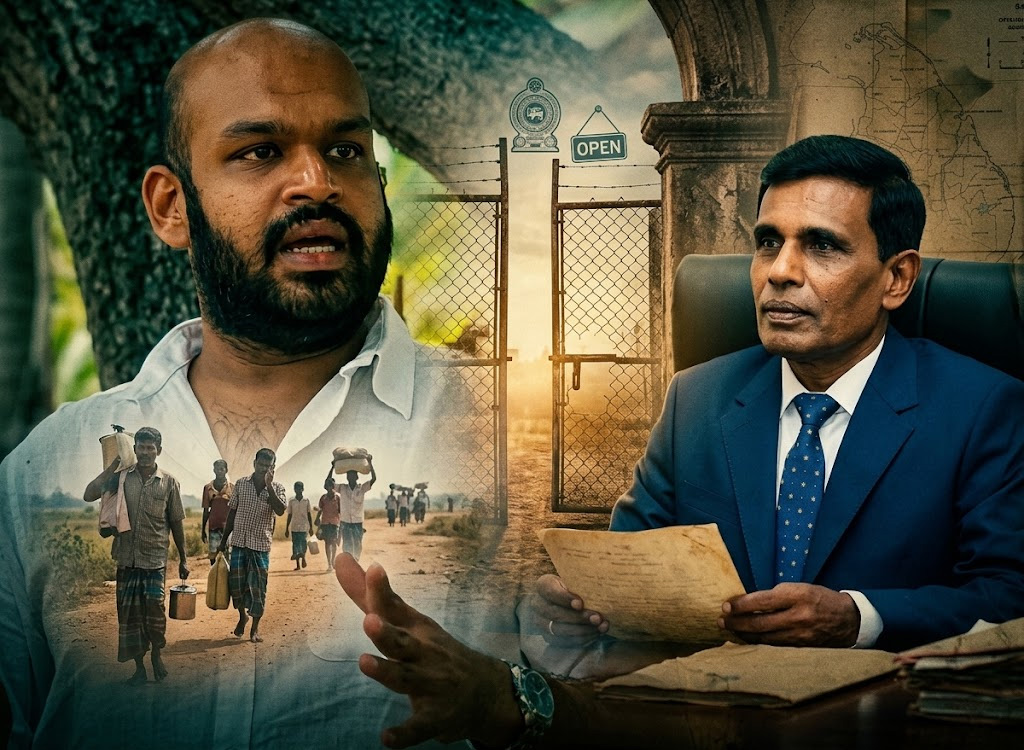
Sri Lanka is moving to remove long-standing legal barriers faced by Sri Lankan Tamil refugees in India seeking to return home, while calls are growing for the Government to ensure that the process extends beyond citizenship verification to practical support for resettlement.
The issue was raised in Parliament on Wednesday (19) by Batticaloa District member of parliament (MP) Shanakiyan Rasamanickam, who highlighted the difficulties faced by refugees attempting to return to Sri Lanka after years of displacement.
Rasamanickam said returnees continued to encounter uncertainty over several issues, including citizenship verification, security clearance, travel documentation, housing, land, employment and resettlement.
Responding to the MP, Public Security Minister Ananda Wijepala said the Government had taken steps to address legal obstacles affecting Sri Lankan citizens who left the country during the war without departing through officially recognised points of departure.
According to the Minister, Cabinet approval had been granted for new procedures to address the issue, with the Department of Immigration and Emigration instructed to implement the necessary measures.
Under the new arrangements, Sri Lankan refugees in India seeking to return can approach Sri Lankan diplomatic or consular missions to establish their citizenship.
Applicants will be required to submit whatever identity and citizenship documents are available to them. Their information will then be subjected to a security assessment through the State Intelligence Service before the relevant authorities proceed with the return process.
The move could provide a pathway for individuals who have remained in India for years because their departure from Sri Lanka during the conflict was not formally recorded through recognised immigration channels.
However, Rasamanickam welcomed the Government’s decision while stressing that removing the legal barrier would only address one part of the problem.
He called for the Government to publish clear and accessible guidelines setting out the steps refugees must follow to return, including the documents they need, how security clearance will be conducted and what assistance will be available once they arrive in Sri Lanka.
The MP also proposed establishing an integrated mechanism to support returnees with issues extending beyond immigration formalities.
These include access to land and housing, property claims, compensation, employment opportunities and livelihood assistance.
For families who have spent years or even decades outside Sri Lanka, returning home is not simply a matter of obtaining travel documents. Many may have lost access to their former homes or land, while others may have no immediate source of income or accommodation upon arrival.
The challenge, therefore, is likely to shift from determining who is legally entitled to return to ensuring that those who do return can rebuild their lives in Sri Lanka.
The Government’s decision to introduce new procedures marks a significant step towards resolving one of the administrative obstacles affecting wartime refugees. But the success of the initiative will ultimately depend on whether the new mechanism can provide a clear, predictable and coordinated pathway from citizenship verification to sustainable resettlement.
With Parliament now focusing attention on the issue, pressure is likely to grow on authorities to ensure that the policy is translated into a practical process that refugees in India can understand and access without facing a new set of bureaucratic hurdles.








Leave a comment