
By The Pulseline News Desk
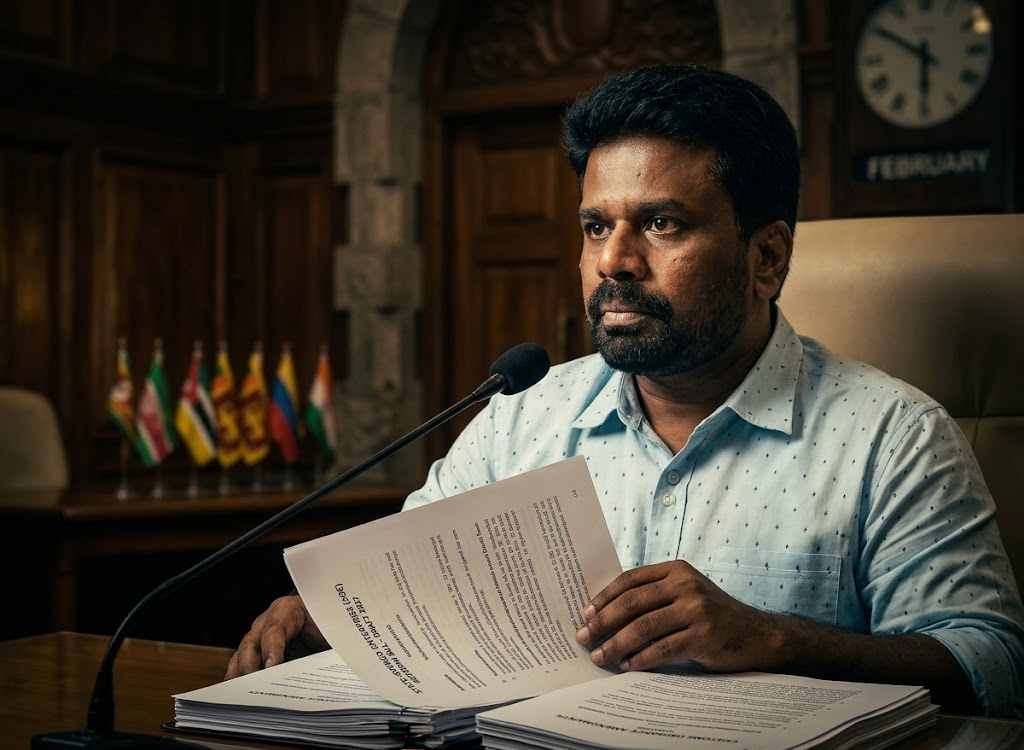
President Anura Kumara Dissanayake has outlined a timeline for introducing key legislation governing State-Owned Enterprises (SOEs), public-private partnerships (PPPs), labour reforms and customs, with the Government expecting to present the bills to Parliament by February 2027.
The proposed legislation is expected to address longstanding structural weaknesses in Sri Lanka’s economy, improve public sector governance and create a more predictable regulatory environment to attract domestic and foreign investment.
Speaking at an investment forum this week, Dissanayake said the Government had made progress in preparing the bills, with several proposals now at different stages of the legislative process.
“Regarding the SOE law, I expect it will be presented to the Cabinet in about two weeks,” he said.
The proposed SOE legislation is expected to establish a more effective framework for managing State-owned businesses, which have long been a source of fiscal pressure due to governance weaknesses, operational inefficiencies and financial losses.
Reforming the sector is a key component of Sri Lanka’s broader efforts to strengthen public finances and reduce the burden of SOEs on the national budget.
The President said the proposed PPP legislation had already been drafted and submitted to the Legal Draftsman’s Department, which had provided its recommendations.
A clear legal framework for PPPs is expected to improve the Government’s ability to attract private sector participation in infrastructure development and public services while providing greater clarity on project implementation and risk-sharing arrangements.
The Government is also working on consolidating existing labour legislation, which Dissanayake said currently consists of approximately 12 separate statutes.
“A draft bill has already been formulated, though reviewing and finalizing it will take some time,” he said.
The proposed consolidation is intended to bring greater coherence to Sri Lanka’s labour regulatory framework, although the final legislation will depend on the review and approval process.
Meanwhile, the Government has reached an agreement on proposed amendments to the Customs Ordinance following discussions between the Treasury and the Sri Lanka Customs Department.
“The proposed amendments to the Customs Ordinance are the most appropriate way forward,” Dissanayake said, adding that the proposals had been submitted to the Legal Draftsman’s Department for finalisation.
The Customs Ordinance, originally enacted in 1869, has long been identified as an area requiring modernisation to improve trade facilitation, strengthen administration and address potential revenue leakages.
A more modern customs framework is particularly important as Sri Lanka seeks to expand exports, improve trade efficiency and strengthen revenue mobilisation.
The legislative agenda forms part of the structural reform commitments associated with Sri Lanka’s International Monetary Fund (IMF) Extended Fund Facility (EFF) programme.
The IMF has emphasised the importance of stronger governance frameworks, fiscal discipline and institutional reforms in supporting the country’s economic recovery following its sovereign debt default.
Delays in implementing structural reforms have remained a concern, particularly as Sri Lanka seeks to move beyond macroeconomic stabilisation towards sustained investment-led growth.
Weak governance of SOEs can expose public finances to additional liabilities, while uncertainty surrounding PPP arrangements can discourage private sector participation in infrastructure and other development projects. Similarly, outdated customs procedures can increase administrative costs for businesses and undermine trade competitiveness.
The Government’s challenge will therefore be to translate the proposed legislation into enforceable laws that deliver measurable improvements in governance, investment conditions and public sector efficiency.
While Dissanayake expects the bills to reach Parliament by next February, their enactment and implementation will depend on the completion of the drafting process and the subsequent parliamentary procedures.
The progress of these reforms will be closely watched by investors and development partners as Sri Lanka seeks to consolidate its economic recovery and establish a more sustainable foundation for long-term growth.









Leave a comment