
By The Pulseline News Desk
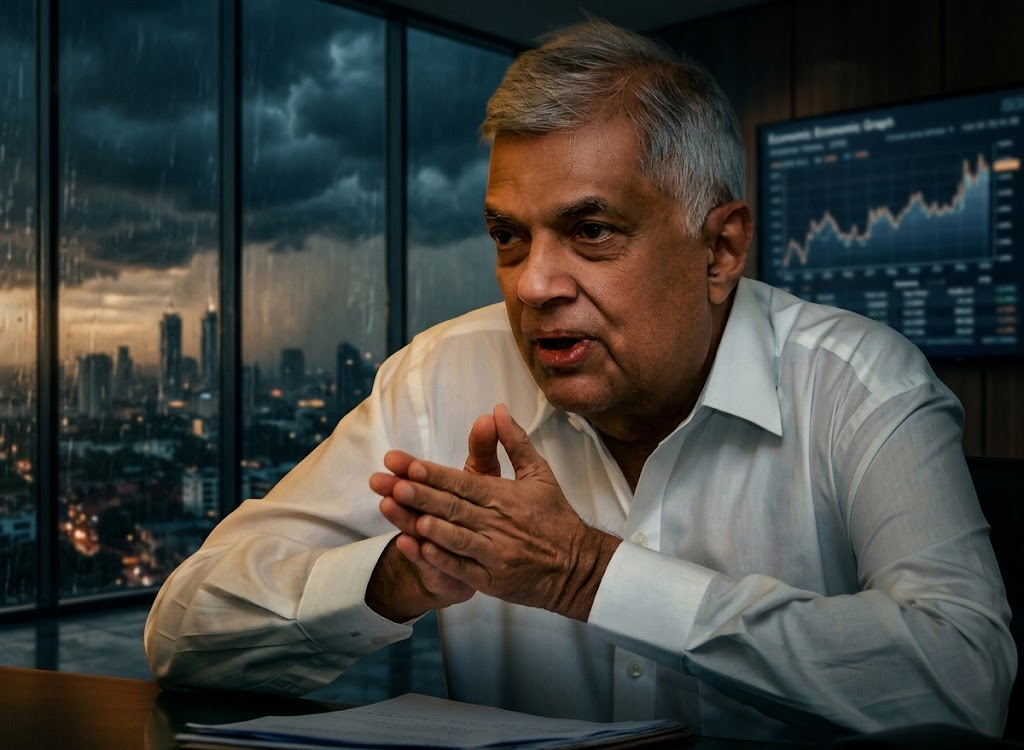
Former President Ranil Wickremesinghe’s (RW) warning that Sri Lanka could face another serious economic crisis after 2028 has opened a fresh debate over the country’s ability to rebuild foreign exchange reserves and meet its post-debt-restructuring obligations.
Speaking at the launch of former Minister Ranjith Siyambalapitiya’s book Yudha Dekakata Ura Dee in Colombo, Wickremesinghe said Sri Lanka had only completed the first phase of its economic recovery and would face a new and potentially more difficult challenge when debt repayments begin to rise from the end of 2028.
Wickremesinghe argued that Sri Lanka should build its foreign exchange reserves to around $ 15 billion by 2028 to ensure it can meet its future external debt obligations without falling back into the kind of crisis experienced in 2022.
The former President noted that the Central Bank of Sri Lanka (CBSL) expects reserves to reach approximately $ 8 billion by the end of 2026, but questioned where the additional $ 7 billion needed to reach the $ 15 billion target would come from.
According to Wickremesinghe, there is currently no clear programme to generate this additional foreign exchange.
“We have finished the first round. Now the second round has to begin,” he said, stressing that the central issue was how Sri Lanka would generate sufficient foreign exchange once debt repayments increase.
Debt relief is not the end of the crisis
Wickremesinghe acknowledged that Sri Lanka had secured substantial relief through the debt restructuring process, including a period during which debt repayments were reduced or deferred.
However, he cautioned that the breathing space provided by the restructuring should not be mistaken for a permanent solution to the country’s external financing problem.
He also questioned what economic strategy would be followed after the current International Monetary Fund (IMF) programme, which is expected to conclude by the end of March 2027.
His argument is that Sri Lanka now needs to use the period before debt repayments intensify to build up reserves, increase foreign exchange earnings and strengthen the productive capacity of the economy.
Wickremesinghe referred to several laws introduced during his administration, including the Central Bank Act, Public Financial Management Act, Public Debt Management Act and Economic Transformation Act, which he said were intended to establish a framework for economic stability and long-term growth.
He claimed that the present administration had decided not to proceed with the economic transformation programme without presenting a clear alternative.
Describing the challenge that could emerge after 2028 as Sri Lanka’s “third war”, Wickremesinghe warned that failing to overcome it could once again leave the country in serious economic difficulty.
“If we cannot win that war, we will be in serious trouble,” he cautioned.
Government rejects the warning
The Government, however, has strongly rejected the suggestion that Sri Lanka is heading towards another bankruptcy.
Deputy Minister Chathuranga Abeysinghe accused Wickremesinghe of presenting a misleading picture of the country’s future debt-servicing position.
Abeysinghe pointed to Sri Lanka’s recent debt payments, saying the country paid approximately $ 3.9 billion in debt obligations in 2025 and is expected to pay around $ 3.7 billion in 2026, while at the same time increasing its foreign exchange reserves.
The debt-service requirement is expected to fall further to approximately $ 2.7 billion in 2027, he said.
The Deputy Minister also referred to figures presented by the CBSL to investors, arguing that these figures demonstrate that Sri Lanka can continue servicing its debt while simultaneously rebuilding its reserves.
With reserves expected to reach around $ 8 billion by the end of this year, Abeysinghe said there was no reason to assume that the country would be unable to meet its future obligations.
The real test: earning dollars
The disagreement between the former President and the Government ultimately centres on a fundamental question: Can Sri Lanka generate enough foreign exchange to service its debt while continuing to build reserves?
Abeysinghe pointed to several sources that could strengthen the country’s external position, including worker remittances, exports, foreign investment and tourism earnings.
He said all four sectors are expected to perform better in 2026 compared with the previous year.
For the Government, therefore, rising foreign exchange inflows combined with continued fiscal discipline and debt restructuring provide a basis for maintaining debt sustainability.
For Wickremesinghe, however, the issue is whether these inflows will be sufficient to build a sizeable reserve buffer before debt repayments increase significantly after 2028.
A warning about the next phase
The debate comes at a critical point in Sri Lanka’s economic recovery.
The country has moved away from the acute foreign exchange shortage and sovereign default that triggered the 2022 economic crisis. The IMF programme, debt restructuring and improved external financing conditions have helped stabilise the economy.
But the underlying challenge remains: Sri Lanka must now move from crisis management to sustained foreign exchange generation.
The country cannot rely indefinitely on debt restructuring or temporary relief. It will eventually have to meet substantial external obligations from its own foreign exchange earnings.
That makes the period leading up to 2028 particularly important.
The Government’s ability to increase exports, attract investment, expand tourism, maintain strong remittance inflows and accumulate reserves will determine how much room Sri Lanka has when larger debt repayments return.
Wickremesinghe’s “third war” warning has therefore placed the post-2028 period firmly back on the economic agenda.
Whether it proves to be a warning of another crisis or simply a political disagreement over the scale of the challenge will depend largely on what Sri Lanka does with the limited window it now has to strengthen its external finances.





Leave a comment