
By Dr. Nadee Dissanayake
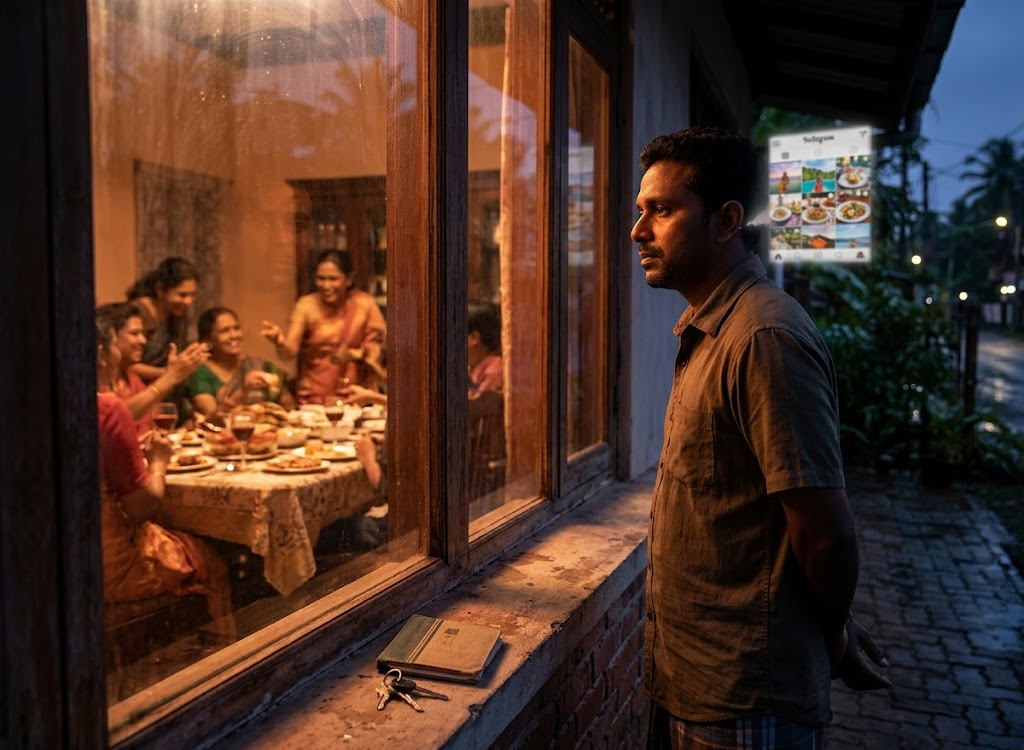
At a family dinner in a Sri Lankan home, the conversation often moves from everyday matters to the latest family news, whose son has built a house, whose daughter has gone abroad, who has bought a new vehicle and who has just returned from a holiday. Quietly observing from the corner, someone else wonders when their own family will ever reach similar milestones.
These conversations are usually born of love and genuine celebration. Parents are proud of their children’s achievements, and relatives naturally want to share good news. But without anyone intending it, these exchanges subtly breed comparison. A young couple returns home anxious about why they are still renting. Parents wonder if they have failed their children. Those who cannot afford an overseas trip feel their families are falling behind.
This raises a quiet, uncomfortable question: Are we building the life we truly want, or merely trying to live up to what others admire?
For generations of Sri Lankans, success followed a familiar blueprint: owning a home, securing permanent employment, buying sovereign gold for a daughter’s wedding, or helping children settle abroad. These were not simply displays of wealth; they represented hard-won security, respect, parental sacrifice, and the hope of upward mobility.
Today, the markers are shifting. A long weekend at a southern beach resort, dinners at trendy restaurants, overseas travel, and curated digital albums have become modern badges of achievement. We want to experience life, explore the world, and make memories, not just accumulate physical assets.
There is nothing inherently wrong with these ambitions. The danger begins when we feel compelled to consume what others showcase simply to feel adequate. We start spending not out of personal value, but out of fear of falling behind. While the symbols of status have evolved, the anxiety to conform has not.
This dynamic is especially acute in today’s economic landscape, where household realities diverge sharply. A young family may be juggling rent, nursery fees, and transport while caring for ageing parents. A salaried worker must budget every rupee, while a small entrepreneur contends with fluctuating revenue. Every household carries its own hidden arithmetic.
Social media further distorts this reality. We see the overseas getaway or the celebratory dinner, but never the compound interest, maxed credit limits, or quiet compromises funding them. By measuring our mundane Mondays against someone else’s highlight reel, we create an artificial sense of failure. A vacation funded by debt brings a weekend of joy followed by months of financial strain. Joy should enrich our lives, not linger as a debt burden long after the photographs fade.
How, then, do we define what genuinely fulfills us? It begins with honest, internal evaluation: What gives me peace of mind? What matters most to my household? Am I choosing this because I value it, or because I believe it is expected of me?
The answers will never be uniform. For one person, contentment is the deed to a modest house. For another, it is investing in higher education, building a venture, or having unhurried evenings with family. Authentic living does not mean self-absorption; our financial choices directly touch those who rely on us. A healthy life creates room for personal aspirations while honoring collective family stability.
Often, the most enduring forms of security cost very little. A home-cooked meal shared without distraction, clearing an overdue loan, or having an emergency buffer against life’s shocks brings a level of quiet dignity no luxury can purchase. This is not a call to hoard every rupee and defer all joy until retirement. Life is happening now. The goal is harmony: enjoying today while safeguarding tomorrow.
The same principle holds true for Sri Lanka’s broader economic path. National progress cannot be judged purely by headline growth rates, modern high-rises, or import volumes. True recovery is measured by whether ordinary citizens can meet daily necessities, educate their children, access healthcare, and build resilient futures without chronic financial anxiety. An economy should expand human agency, not manufacture social pressure to overspend.
Perhaps it is time to redefine what we applaud. Instead of asking how much someone owns or where they spent their holiday, we might ask whether they are healthy, financially secure, connected to their community, and at ease with their choices.
A successful life is not one curated to impress an audience. It is one where we honor our responsibilities, care for those around us, and sleep with a quiet mind at the end of the day. Ultimately, the true measure of our lives is not how visibly we display them, but how meaningfully we live them.
Disclaimer: The views and opinions expressed in this article are those of the writer and do not necessarily reflect the official position of this publication.












Leave a comment