
By The Pulseline News Desk
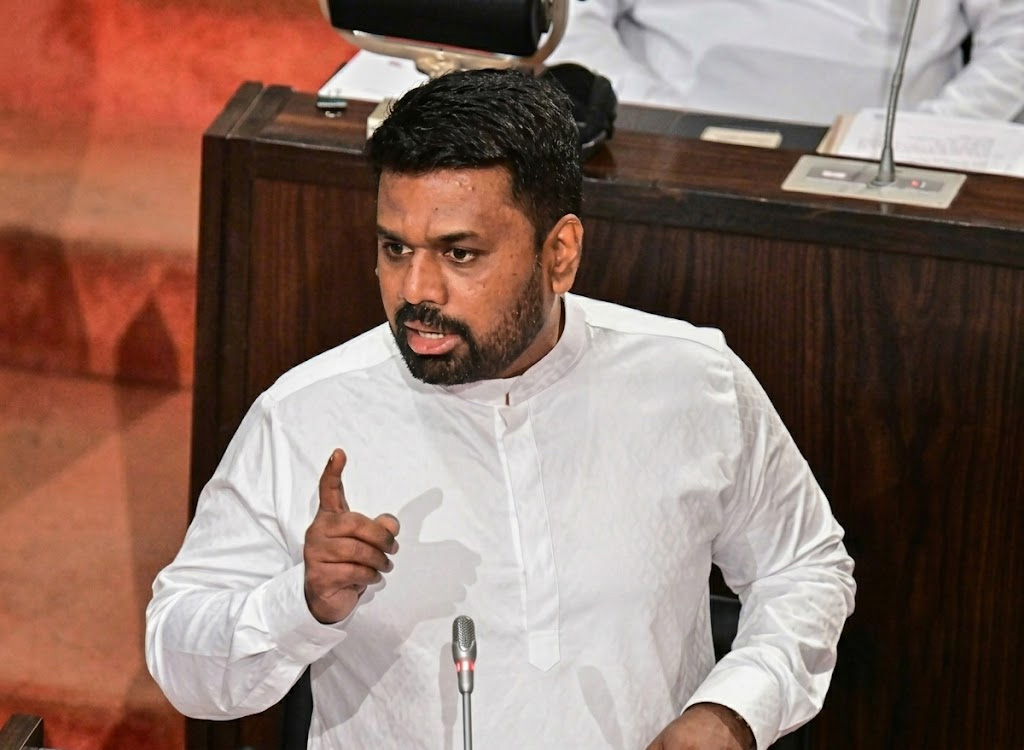
President Anura Kumara Dissanayake (AKD) on Thursday (25) pledged that his government would pursue corrupt officials, organised criminals and drug traffickers without fear or favour, declaring that “no crime will be buried in the sands of time” as Sri Lanka seeks to build what he described as a “civilised State.”
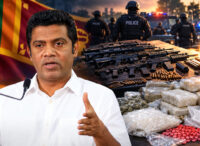
Speaking during the adjournment debate on Combating the Drug Menace in Parliament, the President delivered a sweeping defence of his administration’s anti-corruption and anti-crime agenda, while strongly rejecting accusations that investigations into past abuses are politically motivated.
“The people of this country have long expected those who stole public property through fraud and corruption to be brought before the law,” he said. “Our Government is fulfilling that expectation.”
Linking crime, corruption and politics
President AKD argued that organised crime and drug trafficking could not be addressed in isolation, insisting that criminal networks had been sustained over decades by political patronage, corruption within state institutions and the abuse of public authority.
According to the President, dismantling the drug trade requires confronting not only traffickers and criminal gangs but also the broader ecosystem that enabled them to flourish.
He praised several law enforcement and judicial officials involved in anti-corruption and criminal investigations, including senior police officers, prosecutors and anti-bribery investigators, claiming that many have become targets of political attacks because of their efforts to expose wrongdoing.
The President maintained that the Government’s objective is not revenge but accountability.
“If our intention had been revenge, it would have happened the day we came to power,” he said. “This is about justice.”
Revisiting unresolved crimes
In one of the most significant sections of his speech, AKD referred to several controversial cases that have remained subjects of public debate for years, including the murder of journalist Lasantha Wickrematunge, the abduction and assault of Keith Noyahr, attacks on journalists and media institutions, the death of Wasim Thajudeen, and the 2019 Easter Sunday attacks.
The President alleged that elements within a small section of the state apparatus had been used in the past to protect political interests rather than national interests, and argued that uncovering the truth behind such incidents was necessary for justice, democratic accountability and the protection of state institutions.
He stressed that investigations into these cases would continue regardless of political pressure.
Tougher measures against drug networks
AKD outlined a series of measures already undertaken by his administration to combat narcotics trafficking and organised criminal activity.
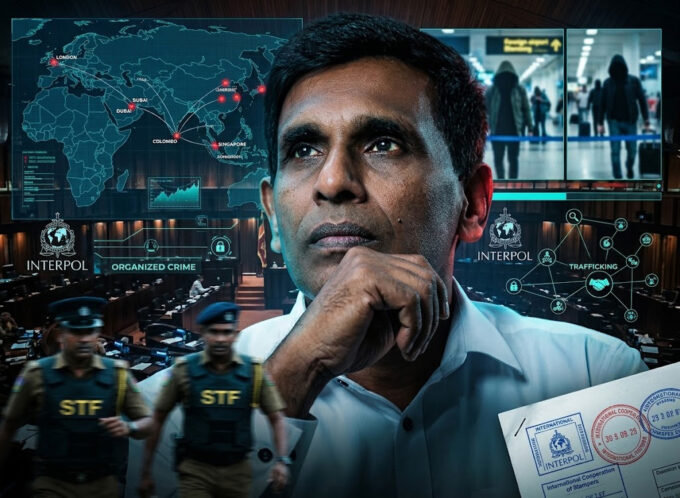
He said authorities have intensified operations targeting drug routes through airports, ports and postal channels, while arrests are being carried out irrespective of social status or political influence.
The President revealed that 23 individuals subject to international arrest notices had been brought back to Sri Lanka, while dozens more suspected of involvement in drug trafficking had also been arrested and repatriated.
He further noted that prison reforms were underway to curb the influence of criminal networks operating from behind bars. A new high-security prison facility has been established at Welisara, where communications systems have been dismantled to prevent inmates from directing criminal activities from prison.
“We are fully committed to uprooting organised criminal gangs, the underworld and the drug trade from Sri Lanka,” he declared.
Repeal of PTA within the year
The President also announced that the long-debated repeal of the Prevention of Terrorism Act (PTA) would be completed before the end of the year.
He acknowledged longstanding criticism of the legislation, arguing that its broad definitions created opportunities for abuse and could be used against political dissent.
In its place, the Government plans to introduce new legislation specifically targeting organised crime, with clearer legal definitions and stronger protections for fundamental rights and democratic freedoms.
AKD also confirmed that the controversial Online Safety Act (AKD) is being comprehensively revised, with a new bill already receiving Cabinet approval.
Democracy and accountability
Throughout his address, the President repeatedly linked anti-crime efforts with democratic reform, arguing that a successful campaign against organised crime must be accompanied by respect for civil liberties.
He claimed that under his administration, public protests have not been met with water cannons or tear gas, except during a prison disturbance, and emphasised that citizens must retain the right to criticise and question those in power.
“We do not want a society that fears its rulers,” he said. “We want a society where those in authority are continuously questioned and held accountable.”
At the same time, he urged political parties, media organisations and activists to exercise their democratic freedoms responsibly and within the bounds of civility.
Vision of a ‘civilised state’
At the heart of the President’s speech was a broader vision of national transformation. He argued that the mandate delivered to his administration was not merely for economic recovery or law enforcement reform, but for the creation of a more accountable and civilised state.
That vision, he said, requires integrity from everyone – from the country’s highest political office holders to the most junior public servants – and demands strong institutions capable of delivering justice without political interference.
Concluding his remarks, Dissanayake expressed confidence that Sri Lanka was entering a period of long-term stability and urged citizens to support the Government’s efforts to combat corruption, organised crime and drug trafficking while strengthening democracy and human rights.
“Our goal,” he said, “is to transform this country into a civilised State and a civilised society.”









Leave a comment