
By The Pulseline News Desk
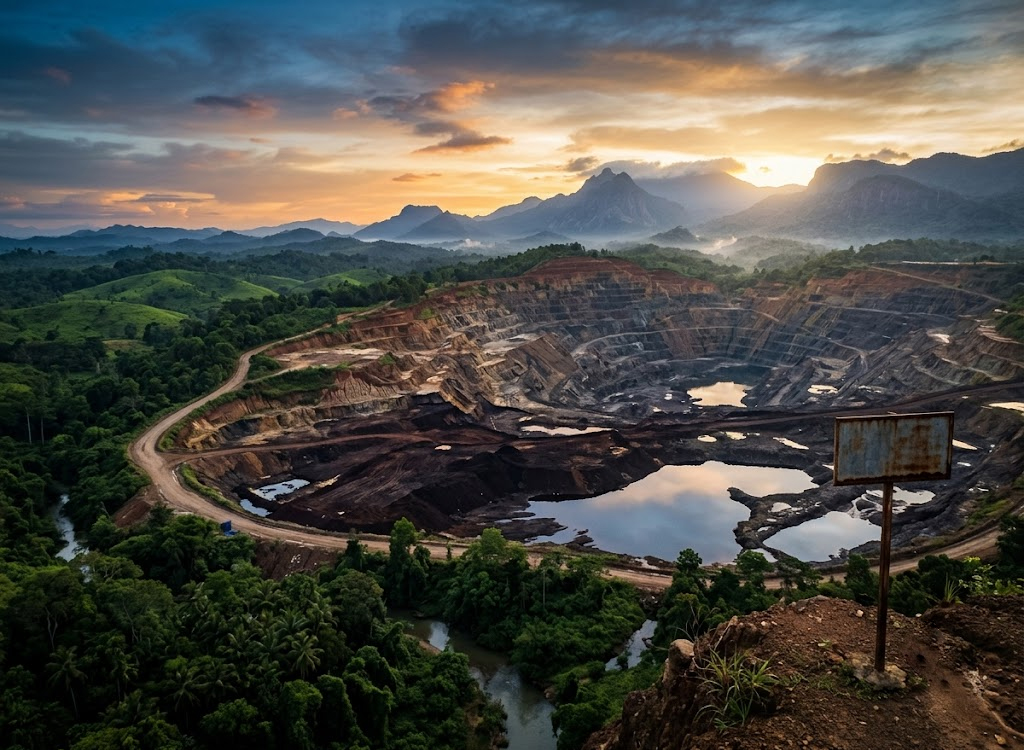
Sri Lanka’s vast mineral resources have once again come under the spotlight, with concerns raised in parliament over whether the country is receiving a fair return from the exploration and extraction of its natural wealth.
Opposition MP Shanakyan Rasamanickam has called for greater transparency surrounding the government’s National Mineral Policy and the issuance of mineral exploration and mining licences, arguing that the public deserves clear answers about who ultimately benefits from the country’s mineral resources.
Speaking in parliament, Rasamanickam questioned whether companies granted exploration licences had subsequently leveraged those permits to attract foreign investment, raise capital, transfer ownership stakes, or secure listings on overseas stock exchanges, while generating limited economic benefits for Sri Lanka itself.
His intervention has reignited a long-running debate over resource governance, environmental accountability, and the balance between economic development and community interests.
Beyond exploration: Who benefits?
At the centre of the discussion is the value attached to exploration licences and the commercial opportunities they may create for private companies.
Exploration permits are often the first step in identifying commercially viable mineral deposits. Once a discovery is confirmed, the value of a company can increase significantly, allowing it to attract investors, raise financing, or enter into partnerships.
Rasamanickam questioned whether such gains have translated into meaningful returns for Sri Lanka, particularly through royalty payments, taxes, employment generation, and local economic development.
The MP sought information on the amount of royalty income received by the state from mineral projects, as well as details of licences already issued and applications currently under consideration.
His questions reflect broader concerns often raised in resource-rich countries about whether governments capture sufficient value from their natural assets or whether the greatest benefits accrue to private investors and foreign stakeholders.
Environmental concerns remain
Alongside economic questions, environmental and social issues featured prominently in the parliamentary discussion.
Rasamanickam requested information on environmental assessments conducted for mining and exploration activities and highlighted concerns raised by communities in areas including Vakarai, Thirukkovil, and Akkaraipattu.
Communities living near mining and exploration sites frequently raise concerns about land use, water resources, biodiversity, and the potential long-term impact of industrial activities on livelihoods such as farming and fishing.
Environmental advocates argue that strong oversight and transparent impact assessments are essential to ensuring that development projects do not create irreversible ecological damage.
Calls for greater transparency
The parliamentary exchange also highlighted concerns about public access to information regarding the country’s mineral sector.
The Minister responsible had requested two weeks to respond.
The delay has intensified calls for greater disclosure regarding licence holders, project approvals, royalty payments, environmental compliance, and the economic performance of mining operations.
Transparency advocates argue that public trust in the management of natural resources depends on citizens having access to clear and timely information about how licences are awarded and how revenues are distributed.
A strategic resource sector
Sri Lanka possesses a range of mineral resources that have attracted both domestic and foreign interest over the years. As global demand grows for minerals used in manufacturing, technology, renewable energy, and industrial production, resource-rich countries face increasing pressure to balance investment opportunities with environmental protection and national interests.
Supporters of expanded mineral exploration argue that the sector has the potential to generate foreign exchange earnings, create jobs, and contribute to economic growth. Critics, however, caution that without robust safeguards and transparent governance, the long-term costs may outweigh the benefits.
The debate ahead
The questions raised in Parliament are likely to intensify scrutiny of the government’s National Mineral Policy and its approach to managing Sri Lanka’s natural resources.
For communities living near prospective mining sites, the debate is not merely about economic statistics or investment figures. It is about how development decisions affect local environments, livelihoods, and future generations.
As Parliament awaits the Minister’s response, the discussion has underscored a fundamental question facing policymakers: how can Sri Lanka harness its mineral wealth in a manner that delivers sustainable economic benefits while ensuring accountability, environmental protection, and public confidence in the stewardship of national resources?
For many observers, the answer will determine whether the country’s mineral wealth becomes a driver of inclusive development or another source of contention in the years ahead.












Leave a comment