
By The Pulseline News Desk
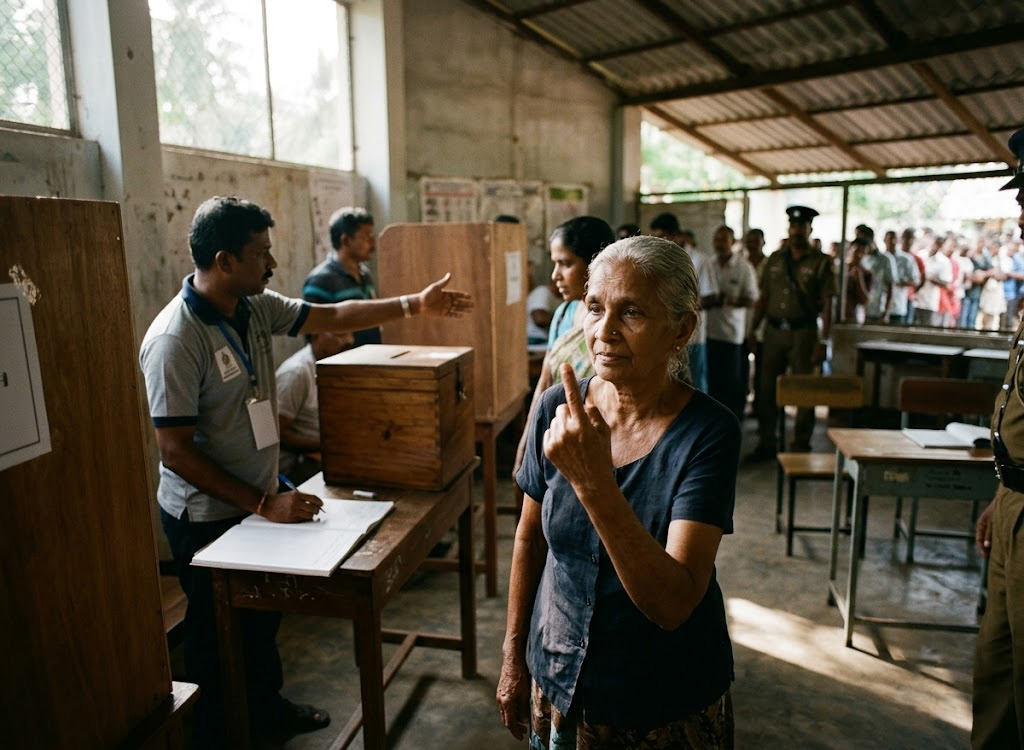
The decision to discontinue the use of indelible ink for marking voters during elections in Sri Lanka has been welcomed by election monitoring advocates, who say the move could significantly reduce public spending while maintaining electoral integrity.
Rohana Hettiarachchi, Executive Director of the People’s Action for Free and Fair Elections (PAFFREL), has said the change could save the state close to Rs. 100 million per election. He has made the remarks at a recent media briefing, describing the policy shift as a long-debated reform among election stakeholders, political parties, and civil society organisations.
According to Hettiarachchi, eliminating indelible ink will reduce costs associated with its importation, distribution, and the administrative processes required to deploy it across polling stations nationwide. These savings, he has argued, would contribute to lowering the overall cost of conducting elections.
He has also pointed to broader improvements in Sri Lanka’s electoral system, noting that the mandatory use of national identity cards and enhanced voter registry systems supported by modern technology have strengthened voter verification procedures.
“With these safeguards in place, the likelihood of impersonation or fraudulent voting is already extremely low,” he has said, adding that the long-standing practice of marking voters with ink is no longer necessary in the current context.
The remarks come amid ongoing discussions about modernizing electoral procedures in Sri Lanka, where reforms aimed at improving efficiency and reducing costs have increasingly become part of the public policy debate.
While supporters of the change emphasize efficiency and savings, the broader implications for election security and public confidence are expected to remain a key point of discussion as the reforms are implemented.











Leave a comment