
By The Pulseline News Desk
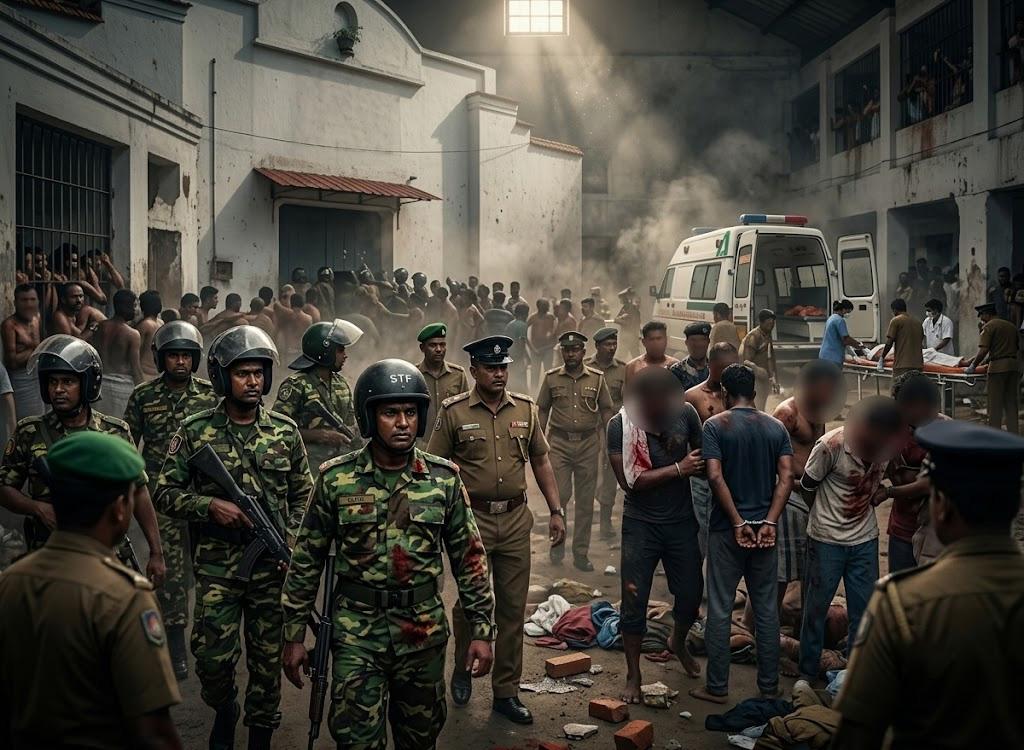
The deadly violence that erupted inside Negombo Prison on Monday (6) has become one of the darkest chapters in Sri Lanka’s recent prison history, leaving at least 25 people dead and close to 100 injured. While authorities have restored order, the tragedy has once again exposed longstanding structural failures within the country’s prison system – particularly severe overcrowding, deteriorating conditions, and growing concerns over prison management.
According to the latest official reports, the death toll includes five prison officers and 20 inmates. More than 50 people were initially reported injured, with subsequent updates indicating that nearly 100 individuals sustained injuries during the unrest. Eight critically wounded victims have been transferred to the National Hospital in Colombo for specialised treatment.
The violence reportedly began around 10.00 a.m. when a group of inmates allegedly attempted to force their way through the prison’s main entrance in what authorities believe was an attempted prison break. The confrontation had quickly escalated into a deadly clash involving inmates and prison officials.
Police, Special Task Force (STF) personnel, the Army, and the Air Force were deployed to regain control of the prison. Witnesses reported hearing repeated gunfire from inside the prison compound as security forces sought to contain the situation.
Sunday clashes
The latest violence follows another deadly clash at the prison just a day earlier between remand and convicted prisoners, which left two inmates dead and 38 others injured. Together, the two days of unrest have resulted in more than 25 deaths and over 80 injuries, making it one of the most serious prison disturbances in the country’s history.
Transferring prisoners
In the immediate aftermath, prison authorities have begun transferring groups of inmates from Negombo Prison to other correctional facilities across the country. Prison Media Spokesperson and Commissioner of Prisons A.C. Gajanayake said the transfers are part of urgent efforts to reduce tensions, restore order, and prevent further violence.
However, the bloodshed has intensified scrutiny of the country’s prison system, where overcrowding has remained a chronic and unresolved problem for decades.
Crisis in prison system
According to the Department of Prisons, facilities originally designed to accommodate approximately 11,000 inmates are now housing nearly 40,000 prisoners – almost four times their intended capacity.
The crisis has also attracted international attention. A recent submission to the United Nations by a human rights organisation alleged that Sri Lanka’s overall prison occupancy exceeds official capacity by 286.6 percent, with several prisons operating at more than 300 percent occupancy.
The report paints a grim picture of daily life behind bars. It claims some inmates are confined to as little as 1.2 square metres of personal space, far below internationally accepted standards. Severe overcrowding has reportedly forced prisoners to sleep in shifts, while others are left with no option but to sleep beside toilets due to the lack of available space.
Human rights advocates have long warned that such conditions create an environment where tensions can easily escalate into violence. Limited living space, inadequate sanitation, poor access to healthcare, and shortages of prison staff have consistently been identified as factors that undermine safety for both inmates and prison officers.
Political debate
The Negombo tragedy has also sparked a political debate over accountability.
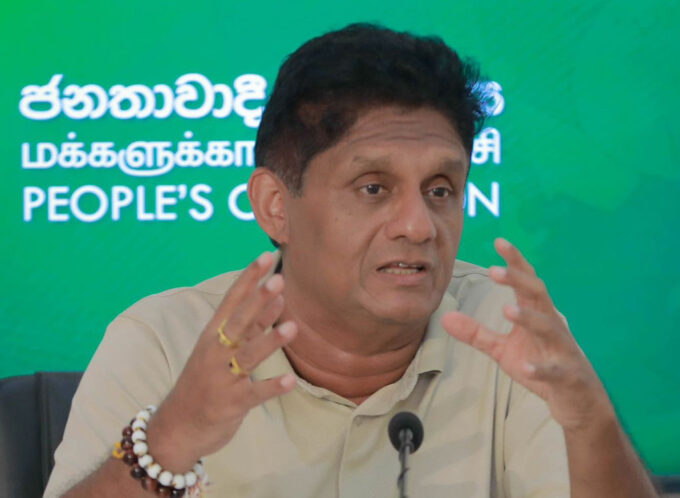
Opposition Leader Sajith Premadasa has blamed the government for the incident, arguing that the deaths and injuries reflect failures in prison administration and governance. In a special statement, he said the government must accept responsibility for the collapse of prison management and questioned whether the administration was capable of maintaining law and order while ensuring humane conditions within correctional facilities.
Premadasa also called for an independent, impartial, and transparent investigation rather than what he described as an internal committee designed to protect the government. He urged authorities to move beyond political rhetoric and address pressing issues relating to national security and prison reform.
As investigations continue, attention is increasingly turning from the immediate violence to the deeper systemic issues that may have contributed to it.
Need for reforms
For years, prison reform has featured in policy discussions, yet overcrowding, prolonged pre-trial detention, ageing infrastructure, and limited rehabilitation programmes remain persistent challenges. Experts argue that without comprehensive reforms – including alternative sentencing, faster judicial processes, expanded prison infrastructure, and improved inmate welfare – the risk of further unrest will remain high.
The events at Negombo Prison are therefore more than an isolated security failure. They serve as a stark reminder of the consequences of an overstretched prison system operating far beyond its limits.
As grieving families await answers and injured survivors recover, the tragedy has renewed calls for meaningful reform. Whether the latest bloodshed becomes a turning point in Sri Lanka’s prison policy or simply another chapter in a long history of neglected reforms remains to be seen.










Leave a comment