
By The Pulseline News Desk
Sri Lanka’s Environment Ministry has launched a fresh national programme to develop a new National Action Plan for Human-Elephant Coexistence, marking a significant policy shift in how the country intends to address one of its most persistent and complex conservation challenges.
The initiative comes in response to growing concern that the existing framework – the National Action Plan for the Mitigation of Human–Elephant Conflict introduced in 2020 – is no longer aligned with conditions on the ground. Officials say the nature, intensity, and geography of conflict between people and wild elephants have continued to change over the past five years, driven by expanding human settlements, land-use changes, and shifting elephant movement patterns.
A Cabinet-approved expert committee has now been tasked with drafting a revised, science-driven strategy that balances human safety, agricultural protection, and the long-term survival of Sri Lanka’s wild elephant population, a nationally and globally significant conservation priority.
The committee brings together some of the country’s most prominent wildlife experts, including Dr. Prithiviraj Fernando, Dr. Sumith Pilapitiya, Dr. U.K.G.K. Padmalal, and Dr. S. Wijemohan. Their mandate is to reassess existing approaches and produce evidence-based recommendations that are not only scientifically sound but also practically implementable and legally enforceable.
According to the Environment Ministry, the renewed effort follows a series of high-level discussions at the Presidential Secretariat, where policymakers and conservation authorities acknowledged the need for a more adaptive and grounded response to escalating conflict situations.
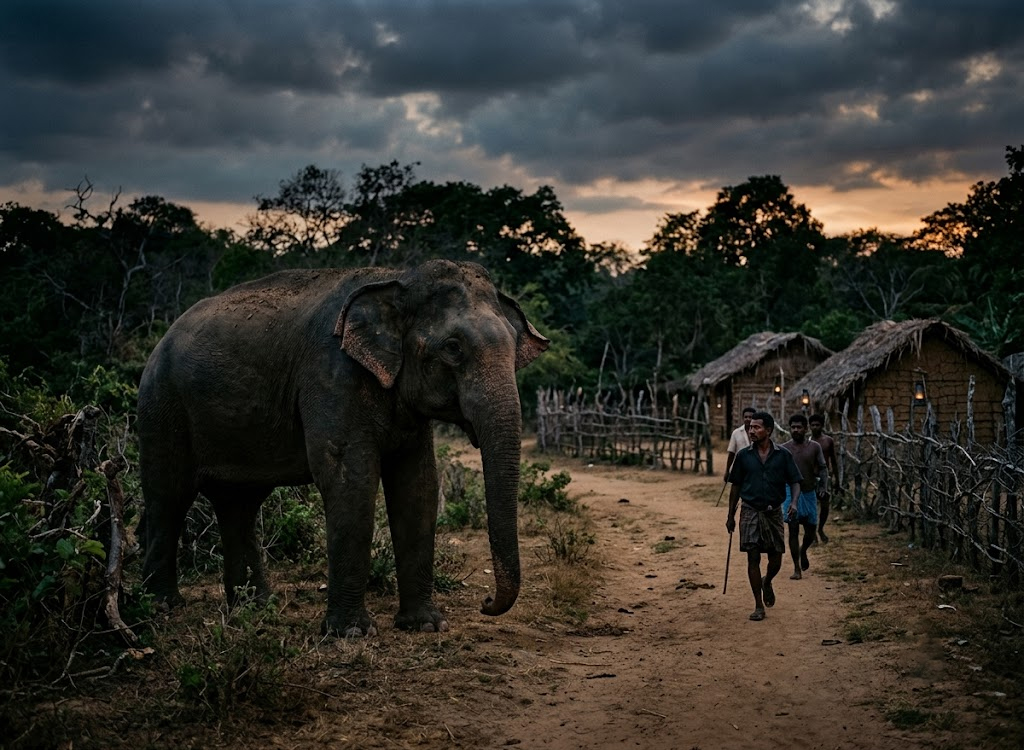
At the center of the new planning process is the ongoing challenge of human-elephant conflict, which remains one of Sri Lanka’s most pressing conservation and rural livelihood issues. While elephants are legally protected and culturally significant, encounters with farming communities continue to result in crop damage, property destruction, and, in some cases, fatalities – fueling tension between conservation goals and local economic survival.
The inclusion of leading researchers such as Prithiviraj Fernando, Sumith Pilapitiya, U.K.G.K. Padmalal, and S. Wijemohan signals an emphasis on integrating field research, ecological data, and practical mitigation experience into national policy.
Officials say the committee is expected to produce a comprehensive national action plan within three months, after which it will be submitted to the President for consideration. The timeline reflects both the urgency of the issue and the government’s intention to move quickly from diagnosis to implementation.
Environmental analysts note that the success of the initiative will depend not only on scientific rigor but also on how effectively recommendations are translated into action on the ground- particularly in rural districts where human-elephant encounters are most frequent.
As Sri Lanka prepares to rethink its approach, the renewed focus underscores a broader shift: from short-term mitigation measures toward a long-term coexistence framework that recognises elephants not as isolated wildlife threats, but as part of a shared and increasingly contested landscape.













Leave a comment