
By The Pulseline News Desk
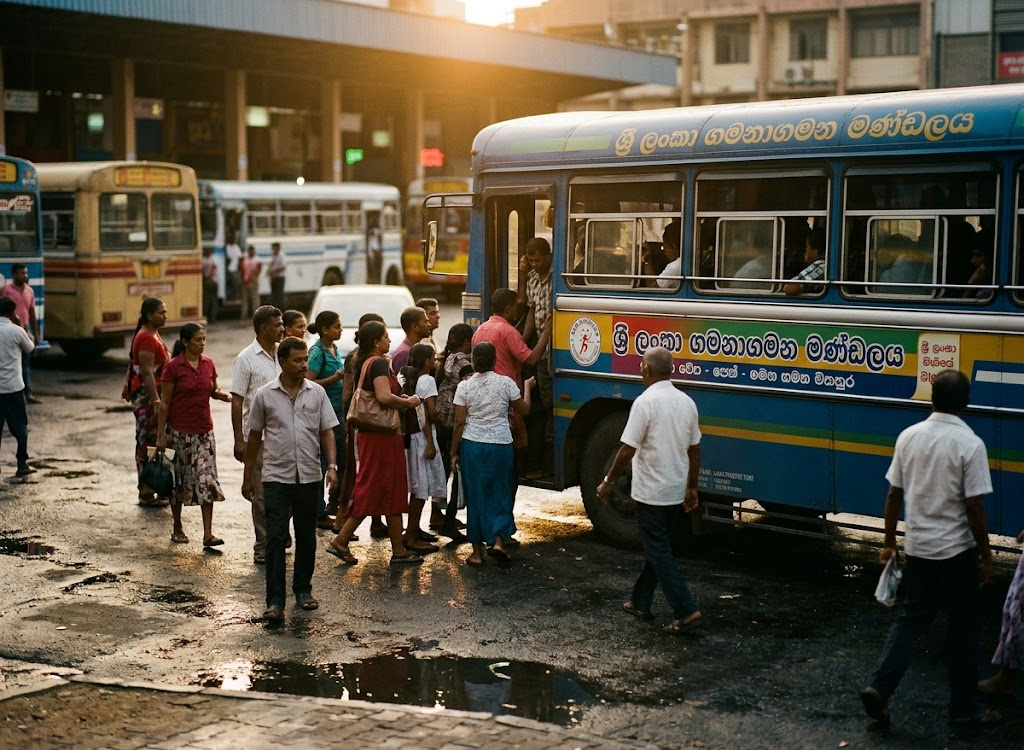
The Cabinet has approved a proposal to revise the country’s bus fare structure, paving the way for a comprehensive review of the bus fare formula in response to rising operating costs, fluctuating fuel prices and changing conditions in the public transport sector.
The proposal, submitted by the Minister of Transport, Highways and Urban Development, follows the latest fuel price revision that came into effect on Tuesday (June 30), and is expected to lead to a new fare structure that more accurately reflects the current economic environment.
Meanwhile, the National Transport Commission (NTC) and the Lanka Private Bus Owners’ Association (LPBOA) have agreed to implement a bus fare increase from July 6. Under the agreement, the minimum private bus fare will increase from Rs. 30 to Rs. 34.
LPBOA Chairman Gemunu Wijeratne has said fares for journeys of up to 100 kilometres will increase by 12 per cent, while fares for journeys exceeding 100 kilometres will rise by 20 per cent. Luxury bus services will also see a 12 per cent increase for destinations below 100 kilometres and a 15 per cent increase for journeys beyond 100 kilometres.
The fare revision comes as transport authorities work to update the country’s long-standing fare calculation formula to better reflect the financial realities faced by bus operators.
Under the existing national bus fare policy, NTC is required to announce annual fare revisions on July 1 based on a fare index that primarily considers fuel prices and other operating expenses. However, the government has determined that the existing formula no longer adequately captures the realities of today’s public transport sector.
To address this, the NTC has appointed a special committee to review and update the current fare calculation model. The committee has been tasked with developing recommendations for a revised bus fare index that incorporates a broader range of economic and operational factors affecting the industry.
Among the key issues under review are the frequent fluctuations in domestic fuel prices, rising operating expenses linked to the ongoing conflict in the Middle East since February 2026, and changes in the composition of Sri Lanka’s bus fleet. The committee will also examine the impact of exchange rate movements, particularly fluctuations in the value of the US dollar, on the cost of imported spare parts, tyres, lubricants and other essential maintenance requirements.
The review will further consider operational differences between conventional route buses and expressway services, as well as the cost implications of buses operating under the recently introduced metro buses, which has added a new dimension to the country’s public transport network.
Government officials say the objective is to establish a more responsive and sustainable fare mechanism that balances the financial viability of bus operators with the affordability of public transport for commuters.
A changing cost environment
Sri Lanka’s bus fare formula has traditionally relied on a cost-based index that adjusts fares in line with movements in fuel prices and selected operating expenses. While the mechanism has helped standardise fare revisions over the years, transport experts have argued that recent global economic shocks have exposed limitations in the existing model.
The escalation of conflict in the Middle East has contributed to volatility in international oil markets, affecting fuel import costs and creating uncertainty for transport operators worldwide. At the same time, fluctuations in the Sri Lankan rupee against the US dollar have increased the cost of importing vehicle components, tyres and replacement parts, placing additional financial pressure on both private and state-owned bus services.
Industry representatives have also pointed to rising labour costs, insurance premiums, maintenance expenses and financing charges, all of which have significantly increased the cost of operating passenger transport services. Private bus operators have argued that fare revisions are necessary to maintain services and ensure that fleets remain roadworthy and financially sustainable.
Balancing affordability and sustainability
Successive governments have sought to strike a balance between protecting commuters from steep fare increases and ensuring that bus operators can continue providing reliable services. Public buses remain the primary mode of transport for millions of Sri Lankans, making fare revisions both an economic and social policy issue.
Authorities say the revised fare index is intended to provide a more realistic reflection of operating costs while ensuring uninterrupted transport services across the country. A sustainable pricing framework is also expected to support fleet maintenance, improve passenger safety and encourage continued investment in the bus industry.
The committee’s recommendations will form the basis for future fare adjustments and are expected to modernise a pricing system that has come under increasing pressure from global market volatility, evolving transport operations and changing economic conditions.
With the latest fare increases set to take effect on July 6, commuters will face higher travel costs in the short term, while the government’s broader review is expected to shape a more transparent and responsive fare-setting mechanism for the years ahead.










Leave a comment