
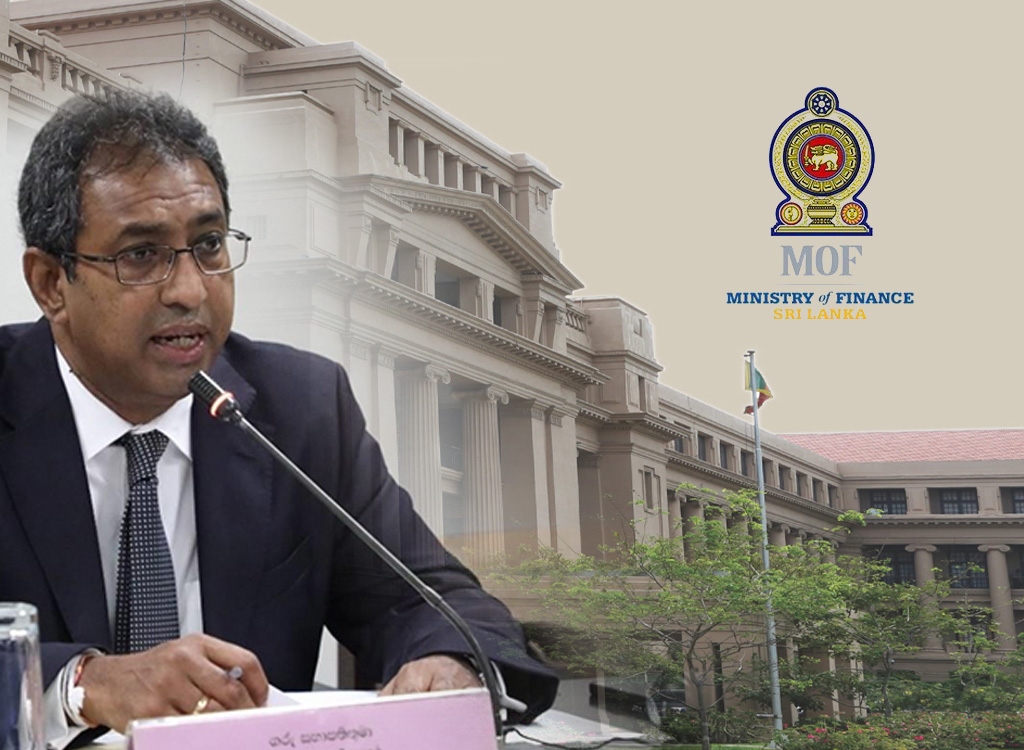
The parliamentary oversight mechanism is set to come under renewed focus after the Committee on Public Finance (COPF) has announced moves to summon the Finance Ministry Secretary over allegations of a $2.5 million Treasury-linked cyber fraud.
COPF Chairman Harsha de Silva said he will formally propose that the Secretary to the Ministry of Finance be called before the committee when it meets, to provide a detailed briefing on the incident that has triggered growing political and administrative concern.
Speaking to reporters, de Silva said the issue warranted urgent parliamentary scrutiny and insisted that the Finance Ministry’s top official has a constitutional obligation to respond to the committee.
“I have summoned the COPF committee members today. I am of the view that the Finance Ministry Secretary must be summoned regarding the Treasury fraud incident. It is essential that he briefs the Parliament,” he said, adding that he expects cross-party agreement on the matter.
The remarks come amid heightened attention on the alleged misdirection of Treasury funds in what has been described as a cyber-related financial breach. While full details of the incident have not yet been officially disclosed, early reports have raised concerns about vulnerabilities in state financial systems and the security of cross-border transactions.
Sri Lanka’s public finance oversight framework places the COPF at the center of parliamentary accountability on expenditure, revenue, and financial governance. The committee, which operates under Parliament, has the authority to summon officials, examine state financial conduct, and demand explanations for irregularities in public funds.
In this context, the proposed summons of the Finance Ministry Secretary signals a potentially significant escalation in parliamentary oversight of the incident. It also reflects growing pressure on fiscal authorities to clarify how the alleged breach occurred, and whether internal controls were adequate.
The issue has emerged at a sensitive time for public financial management, as Sri Lanka continues to navigate post-crisis economic stabilization efforts supported by reforms and oversight mechanisms linked to international assistance. Strengthening transparency and accountability in public expenditure has been a recurring theme in recent governance discussions.
Cyber-related financial risks have also become an increasing concern globally, with governments investing heavily in secure payment systems and audit trails. In Sri Lanka, questions have periodically been raised about the resilience of state digital financial infrastructure, though comprehensive assessments have not always been publicly detailed.
De Silva said he expects members of the committee, including those aligned with the government, to support the proposal, emphasizing that parliamentary oversight should operate without obstruction.
“I intend to discuss with committee members today and reach a consensus on summoning the Finance Ministry Secretary and relevant officials before the COPF committee as soon as possible,” he said.
If the summons proceeds, it could mark one of the more significant parliamentary engagements on a financial security issue in recent months, potentially setting the stage for further scrutiny of how state funds are managed and protected in an increasingly digitized financial environment.
For now, attention turns to the COPF meeting, where the scope and direction of the inquiry are expected to be formally decided.













Leave a comment