
By The Pulseline News Desk
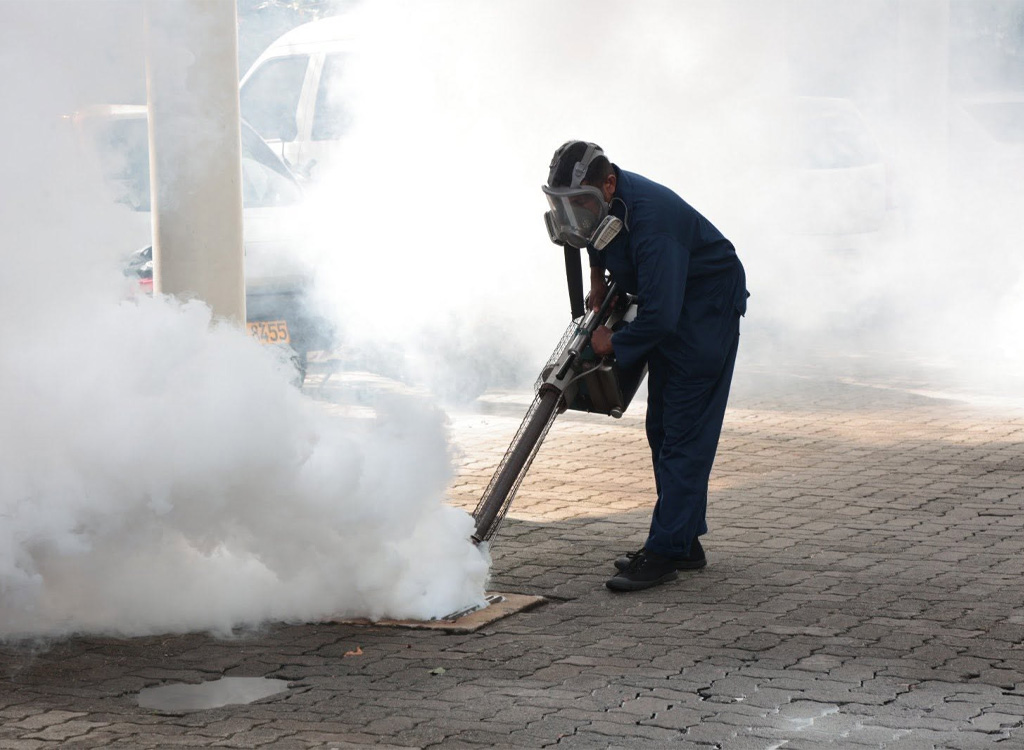
As dengue cases continue to rise across Sri Lanka, the government is intensifying efforts to contain the outbreak through coordinated action involving health authorities, local government institutions, schools, security forces, and communities. However, officials and political leaders alike are emphasising that the battle against dengue cannot be won through short-term interventions alone. What is needed, they say, is a sustained national commitment to prevention, awareness, and environmental management.
The urgency of the situation was highlighted as Health and Mass Media Minister Nalinda Jayatissa directed officials to urgently convene all relevant stakeholders, including District Secretaries from 14 high-risk districts, to strengthen ongoing dengue control measures. The directive came during a special review meeting at the Ministry of Health and Mass Media, where officials assessed the effectiveness of current interventions and discussed strategies to improve coordination and response.
The meeting focused on several critical areas, including hospital preparedness, field-level mosquito control programmes, public awareness campaigns, and the operational challenges that continue to hinder effective implementation. Officials identified gaps in coordination among government agencies and local authorities and stressed the importance of greater public participation in prevention efforts.
Minister Jayatissa emphasised that dengue control programmes must be accelerated with greater urgency and backed by stronger community engagement. He also instructed officials to ensure strict adherence to treatment guidelines and to fast-track a nationwide media campaign aimed at educating the public about prevention measures and early treatment seeking.
Long-term strategy needed
The government’s concerns were echoed by Prime Minister Harini Amarasuriya, who underscored the need for a long-term strategy to address what has become a recurring public health challenge. Speaking at a special dengue prevention programme in Kottawa held in conjunction with Dengue Prevention Week, the Prime Minister noted that while special interventions are underway, the response must extend well beyond a single awareness campaign.
“The effort should not be limited to a single week,” she said, calling for the development of a comprehensive long-term programme to reduce dengue transmission and strengthen resilience against future outbreaks.
Health authorities have identified the Colombo District as one of the country’s highest-risk areas, with Maharagama emerging as a particularly vulnerable location. The risk extends beyond residential communities, with schools, government institutions, private sector offices, and public spaces all identified as potential hotspots for mosquito breeding.
Recognising this broader threat, the Ministry of Education has launched a nationwide dengue control programme targeting schools, preschools, and other educational institutions. Through a circular issued to provincial education authorities, schools have been instructed to identify and eliminate mosquito breeding sites and implement preventive measures based on identified risk factors.
The programme also encourages community-driven clean-up campaigns and awareness activities involving students, teachers, parents, and local residents. Education officials believe that schools can play a pivotal role in promoting behavioural change and fostering a culture of prevention among younger generations.
Individual responsibility
Public health experts have long argued that dengue prevention depends as much on individual responsibility as it does on government action. Stagnant water containers, unmanaged waste, clogged drains, and neglected public spaces continue to create ideal breeding grounds for mosquitoes. Addressing these issues requires consistent vigilance at household, institutional, and community levels.
Prime Minister Amarasuriya reinforced this message, urging citizens to view dengue prevention as a personal responsibility rather than solely a government obligation. She called for collective action to transform high-risk areas into safer environments and ultimately reduce the country’s vulnerability to recurring outbreaks.
Sri Lanka has faced and overcome numerous national challenges in recent years. Yet dengue remains a persistent threat, returning season after season and placing significant pressure on healthcare services. The current outbreak serves as a reminder that while emergency interventions are essential, sustainable solutions require long-term planning, coordinated action, and active public participation.
As authorities mobilise resources and communities are called upon to act, the success of the country’s dengue response may well depend on whether prevention becomes a year-round commitment rather than a seasonal campaign. The challenge is not simply to control the current outbreak, but to build the systems, partnerships, and public awareness needed to prevent future epidemics from taking hold.











Leave a comment