
By The Pulseline News Desk
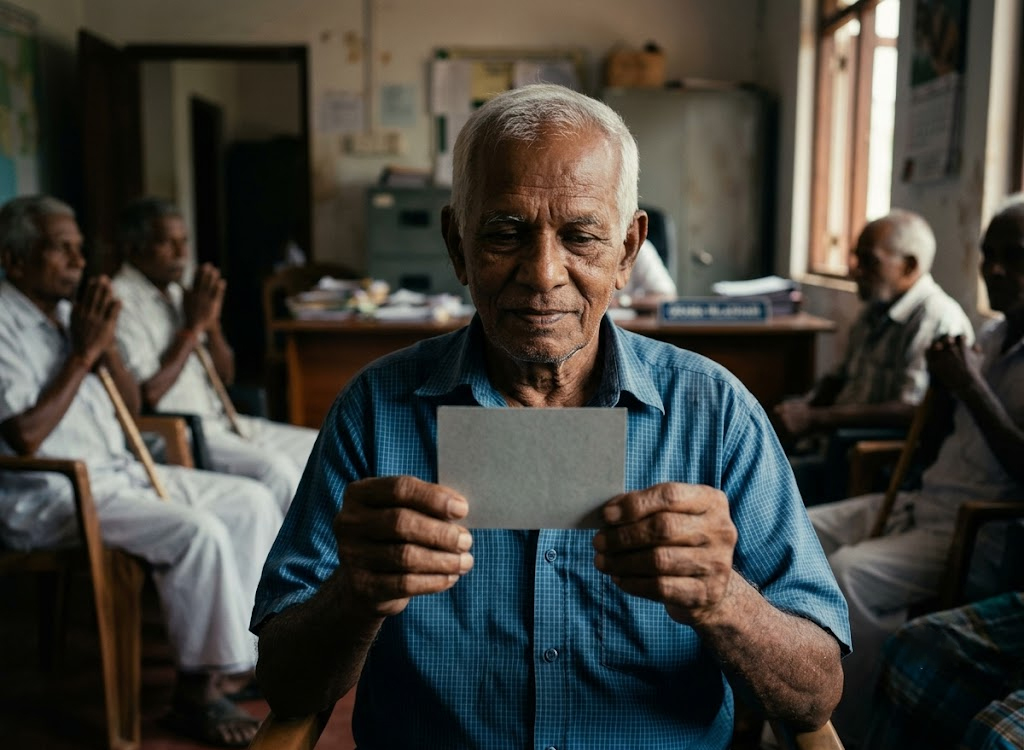
A simple piece of plastic should not stand between an elderly person and their monthly stipend. But for more than 76,000 senior citizens across Sri Lanka, the absence of a National Identity Card (NIC) has done exactly that — cutting them off from a government allowance they are otherwise fully entitled to receive.
The government is now moving to fix it.
A special fast-track programme to issue NICs to affected elderly beneficiaries has been jointly launched by the National Secretariat for Elders, the Department for Registration of Persons, and the Department of the Registrar General — all operating under the Ministry of Rural Development, Social Security and Community Empowerment.
What the numbers look like
The monthly elderly allowance — currently set at Rs. 5,000 for low-income Sri Lankans aged 70 and above — reaches nearly a million people. The current government has raised it from Rs. 3,000 and expanded the beneficiary base to one million, a significant policy commitment to the country’s ageing poor.
Of those beneficiaries, 698,790 receive payments through Aswesuma bank accounts, while another 232,496 collect theirs through post offices. But 76,716 eligible seniors are receiving nothing — not because they do not qualify, but because they do not have an NIC, which is required to access the payment system.
That is a bureaucratic gap with very human consequences.
Getting the word out
Information on eligible but unreached beneficiaries is being gathered through District Coordination Committees, Regional Coordination Committees, Community Shakthi organisations and Community Development Councils — a ground-level outreach effort designed to find people where they are, not where the system expects them to be.
For those who are aware of their situation, the National Secretariat for Elders is urging affected elderly persons to immediately contact their local Grama Niladhari, Community Empowerment Officer or Elder Rights Promotion Officer to get the process started.
Why it matters
For a 75-year-old from a low-income household, Rs. 5,000 a month is not a token gesture — it can cover medicine, a utility bill, or a week’s groceries. Losing access to it over a missing identity document is the kind of quiet, grinding hardship that rarely makes headlines but lands heavily on those experiencing it.
The fact that three government departments have come together to fast-track a solution is a positive sign. The real measure of success, however, will be how quickly those 76,716 people actually get their cards — and their money.










Leave a comment