
By The Pulseline News Desk
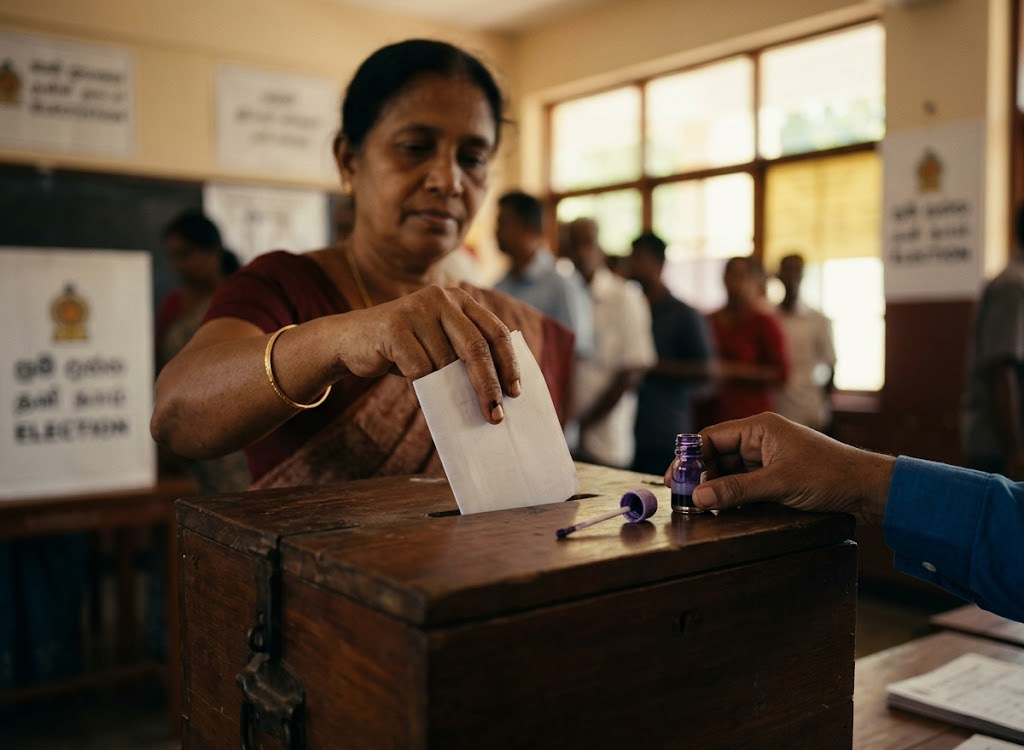
After more than 20 years of being a familiar sight at polling stations across the country, the indelible ink mark on voters’ fingers may soon become a thing of the past.
The Cabinet of Ministers has approved a proposal to repeal legal provisions that require voters to be marked with indelible ink before casting their ballots, signaling a significant change in the country’s electoral process.
The practice was introduced in 2004 as part of efforts to strengthen election integrity and prevent individuals from voting more than once. Since then, election officials have routinely applied indelible ink to voters’ fingers after verifying their identities, making the mark a symbol of democratic participation for generations of Sri Lankans.
However, authorities now argue that advances in voter identification procedures have rendered the additional safeguard unnecessary.
Under existing election laws, voters are required to present a valid national identity card or another approved form of identification before receiving a ballot. According to the government, this identity verification process already serves the purpose of preventing multiple voting, making the ink-marking requirement redundant.
Officials have noted that maintaining two separate mechanisms aimed at achieving the same objective has created operational inefficiencies at polling stations. Election administrators have also highlighted the financial costs associated with procuring and distributing indelible ink for nationwide elections.
The Cabinet paper states that removing the requirement is expected to streamline the voting process, reduce administrative burdens, and generate savings for the government without compromising electoral safeguards.
The proposal, submitted by President Anura Kumara Dissanayake in his capacity as the Minister of Finance, Planning and Economic Development, received Cabinet approval this week.
To implement the change, amendments will be introduced to repeal relevant provisions in several key election laws, including the Presidential Elections Act, Parliamentary Elections Act, Provincial Councils Elections Act, Local Authorities Elections Ordinance, and the Referendum Act.
The move represents one of the most notable changes to Sri Lanka’s election procedures in recent years and is likely to spark debate among political parties, election observers, and civil society groups.
Supporters of the proposal argue that modern identification systems and updated voter registers provide sufficient protection against electoral fraud. They contend that eliminating unnecessary procedures will help speed up voting and improve the overall efficiency of election administration.
Critics, however, may question whether removing a visible and widely recognised anti-fraud measure could weaken public confidence in the electoral process, particularly during closely contested elections.
Election experts have noted that many countries continue to use indelible ink where voter identification systems are less robust, while others have phased out the practice as technological and administrative safeguards have improved.
For Sri Lanka, the decision marks the possible end of a practice that has become deeply embedded in the country’s electoral culture. The purple mark on a voter’s finger has long served not only as a safeguard against fraud but also as a badge of civic participation.
If Parliament approves the necessary legal amendments, future voters may leave polling stations with no visible mark of having cast their ballot – except the knowledge that they have exercised one of democracy’s most fundamental rights.












Leave a comment