
By The Pulseline News Desk
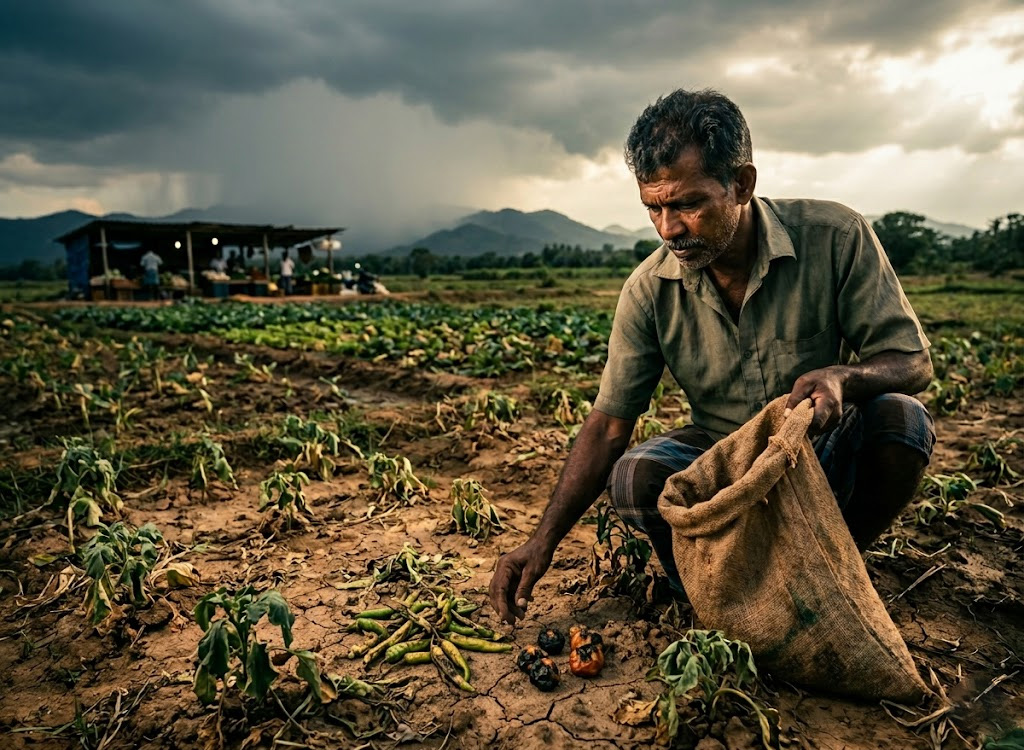
Sri Lankan consumers are facing rapidly rising vegetable prices as a prolonged fertiliser shortage continues to disrupt agricultural production, with farming representatives warning that the situation could deteriorate significantly in the coming weeks.
Industry leaders say the impact of delayed fertiliser supplies is now being felt across wholesale markets, where prices of several commonly consumed vegetables have surged to record levels, placing additional pressure on households already struggling with the cost of living.
According to Chairman of the National Agrarian Unity Association Anuradha Tennakoon, the current price increases are directly linked to shortages of fertiliser and agricultural inputs that affected cultivation during the ongoing Yala season.
“If the fertiliser shortage continues, vegetable prices could rise to unbearable levels by July,” he warned.
Price surge at wholesale markets
The effects of reduced harvests are already visible at the Dambulla Dedicated Economic Centre, the country’s largest wholesale vegetable market.
Wholesale prices recorded this week reportedly show sharp increases across a range of vegetables. A kilogram of moringa was sold at Rs. 700, while green chillies were priced between Rs. 600 and Rs. 650 per kilogram.
Tomatoes had fetched between Rs. 550 and Rs. 600 per kilogram, while beans and bitter gourd were selling at prices ranging from Rs. 500 to Rs. 550. Brinjal and snake gourd were also trading at elevated prices of Rs. 400 to Rs. 450 per kilogram.
The rising wholesale prices are expected to translate into even higher retail prices for consumers across the country.
Delayed fertiliser supplies hit production
Agricultural representatives attribute the crisis largely to delays in the distribution of fertiliser, including urea, a key nutrient required for vegetable cultivation.
Tennakoon has told the media that fertiliser supplies reached many farming areas nearly two months behind schedule, severely affecting planting and crop development.
As a result, production of key upcountry vegetables such as carrots, beans, leeks and capsicum has declined sharply. Similar reductions have been reported in dry-zone crops including okra, pumpkin and brinjal.
The delayed supplies came at a critical stage of cultivation, reducing yields and limiting the quantity of produce reaching markets.
Farmers abandon cultivation
The challenges facing the sector extend beyond fertiliser shortages.
According to the National Agrarian Unity Association, nearly half of the farmers who would normally cultivate during the Yala season have chosen not to plant crops this year due to a combination of fertiliser shortages, rising input costs and difficulties in obtaining quality seeds.
The reduction in cultivated acreage has compounded supply shortages and contributed to the current market instability.
Agricultural experts warn that the consequences of reduced cultivation may continue to be felt for several months, even if fertiliser supplies improve in the immediate future.
Market activity slows
The sharp rise in vegetable prices is also affecting market activity.
According to Tennakoon, the number of wholesalers and mobile traders visiting wholesale markets has declined because high prices make purchasing more risky and less profitable.
Lower trading volumes could further disrupt the distribution of vegetables and contribute to localized shortages in some areas.
Lack of data hampers planning
Beyond the immediate fertiliser crisis, farming organisations have raised concerns about weaknesses in agricultural planning and data management.
Tennakoon has argued that neither the Ministry of Trade nor the Department of Agriculture possesses comprehensive data on the country’s daily and monthly vegetable requirements.
Without accurate demand forecasts, authorities face difficulties in coordinating cultivation plans and ensuring adequate production levels throughout the year.
Agricultural economists have long highlighted the need for more reliable data systems to prevent both shortages and periods of oversupply that negatively affect farmers and consumers alike.
Turning to imports
With local production under pressure, attention is increasingly turning toward vegetable imports as a possible means of stabilising prices.
Tennakoon has said certain vegetables are already being imported to meet the requirements of the tourism industry and high-end hotels.
He has warned that if domestic production continues to decline, authorities may eventually have little choice but to increase imports from countries such as India and Pakistan to meet consumer demand.
According to his estimates, if locally produced vegetables rise to between Rs. 1,000 and Rs. 1,500 per kilogram, imported alternatives could enter the market at prices ranging from Rs. 300 to Rs. 500 per kilogram.
While such imports could provide relief to consumers, they could also create new challenges for local farmers.
The balancing act
Agricultural representatives caution that a heavy reliance on imported vegetables could undermine the livelihoods of local producers already struggling with rising production costs and reduced harvests.
The situation presents policymakers with a difficult balancing act: protecting consumers from escalating food prices while ensuring that local farmers remain economically viable.
As vegetable prices continue to climb, the fertiliser shortage has evolved from an agricultural issue into a broader economic concern affecting food security, household budgets and the future sustainability of Sri Lanka’s farming sector.
Unless supply chain disruptions are resolved and agricultural support measures strengthened, both farmers and consumers may face an increasingly difficult period in the months ahead.













Leave a comment