
By The Pulseline News Desk
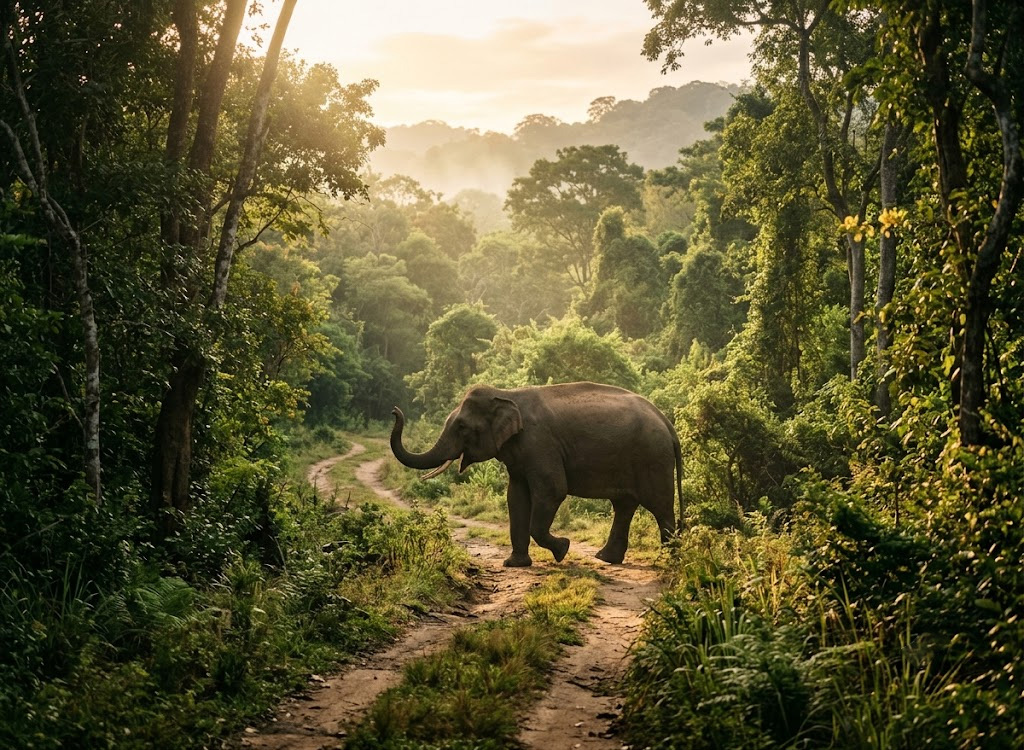
For decades, Sri Lanka has struggled to contain one of its most persistent conservation challenges – the deadly conflict between humans and wild elephants. Now, the government is placing renewed emphasis on a strategy that conservationists have long advocated: restoring the ancient migration routes that elephants have followed for generations.
The latest step in that direction came on Wednesday (8) when the government decided to expedite the clearing and legal protection of key elephant corridors in the Anuradhapura District, aiming to provide a long-term, science-based solution to the human-elephant conflict.
The decision was reached during a special meeting at Parliament co-chaired by Environment Minister Dr. Dammika Patabendi and Deputy Minister Anton Jayakody, with the participation of members of parliament (MPs) Susantha Kumara Navaratne and Bhagya Sri Herath, alongside senior officials of the Department of Wildlife Conservation.
Restoring ancient pathways
At the centre of the initiative is the restoration of traditional elephant migration routes linking the Mahakanadarawa, Nachchaduwa and Mahawilachchiya forest complexes.
Rather than relying primarily on electric fences or emergency interventions after conflict occurs, the government plans to identify, secure and legally protect the natural pathways elephants have historically used to move between habitats in search of food, water and mates.
Officials also discussed the use of GPS tracking and satellite technology to map elephant movements with greater precision, allowing authorities to identify critical corridors and designate them as protected reserves.
One of the immediate priorities is to begin the process of declaring the corridor connecting Mahakanadarawa and Nachchaduwa as a wildlife sanctuary.
Moving beyond fences
The Environment Ministry said the programme forms part of the Government’s broader environmental policy, which seeks to allow elephants to move freely along their traditional migratory routes while reducing encounters with farming communities.
Conservation experts have increasingly argued that fragmented habitats force elephants into villages and agricultural lands, often resulting in crop damage, property destruction and fatal encounters involving both humans and animals.
By reconnecting forests through protected corridors, authorities hope to address one of the root causes of the conflict rather than merely responding to its consequences.
Learning from earlier successes
The initiative builds on similar conservation measures already implemented in the country’s south.
According to the Government, three major elephant corridors in the Hambantota and Monaragala districts – Koholankala, Hadapanagala and Wetahirakanda – have already been gazetted and opened under the same programme.
Officials believe the Anuradhapura project can replicate those efforts in one of Sri Lanka’s most conflict-prone regions, where incidents involving elephants continue to claim lives, damage crops and impose heavy economic costs on rural communities.
A global conservation approach
The government also pointed to international experience in supporting the corridor-based approach.
Countries including India, Kenya and Tanzania have increasingly adopted landscape-level conservation strategies that protect wildlife migration routes instead of relying solely on physical barriers.
By improving habitat connectivity, these countries have demonstrated that safeguarding migration corridors can reduce encounters between humans and elephants while helping maintain healthy wildlife populations.
Sri Lankan authorities believe the same principle can provide a more sustainable solution than depending exclusively on electric fences, trenches and other temporary measures that often require continuous maintenance and are frequently breached by elephants.
Balancing conservation and livelihoods
Sri Lanka is home to one of Asia’s largest wild elephant populations, but rapid development, expanding agriculture and habitat fragmentation have intensified competition for land and resources.
The human-elephant conflict has become one of the country’s most pressing environmental and social issues, with dozens of people and hundreds of elephants killed each year.
Against this backdrop, the Government’s renewed focus on protecting elephant corridors represents a shift towards long-term ecological planning – one that seeks to balance wildlife conservation with the safety and livelihoods of rural communities.
If successfully implemented, the Anuradhapura initiative could become another important step in redefining how Sri Lanka manages one of its oldest and most complex relationships: that between people and elephants sharing the same landscape.













Leave a comment