
By The Pulseline News Desk
The International Monetary Fund (IMF) has reaffirmed its support for Sri Lanka’s ongoing public revenue reform programme following a review of progress made under the country’s Medium-Term Revenue Strategy (MTRS), highlighting advances in tax administration, digital transformation and institutional governance.
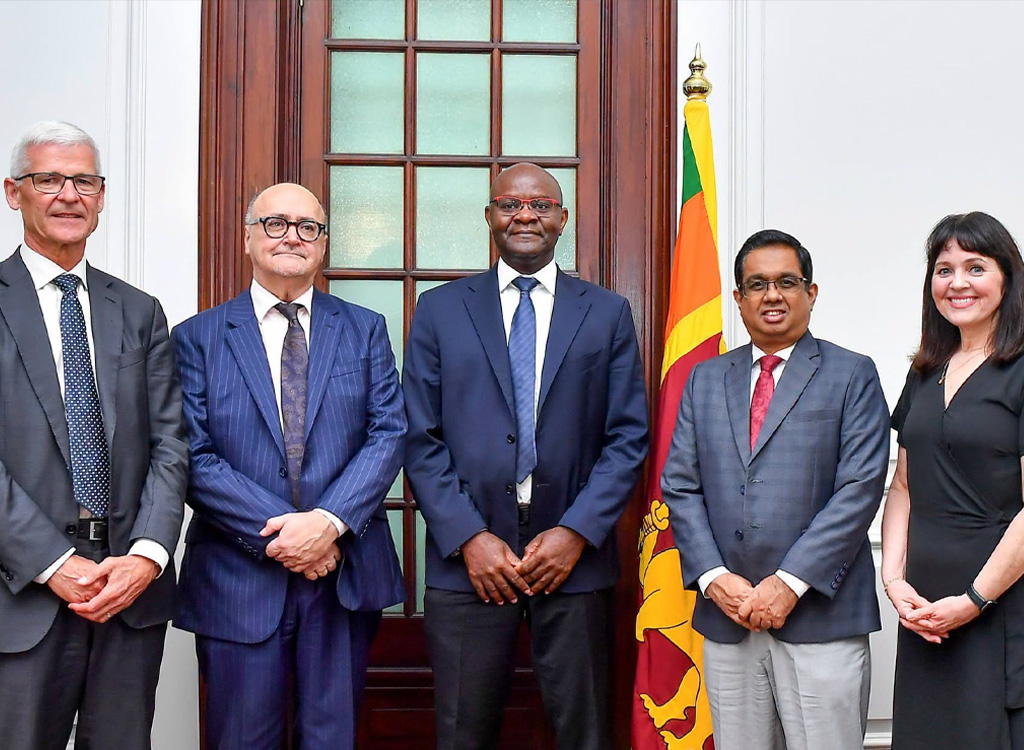
The discussions, held at the Presidential Secretariat and chaired by Secretary to the President Nandika Sanath Kumanayake, brought together the IMF delegation and officials from the Revenue Administration Reform and Modernisation Bureau (RARMB) to assess reforms implemented over the past year across the Inland Revenue Department (IRD), Sri Lanka Customs, the Department of Excise and the wider public revenue system.
As part of the review, the IMF delegation also held separate meetings with senior representatives from the Ministry of Finance, the IRD, Sri Lanka Customs and the Department of Excise to evaluate ongoing reform initiatives.
The review focused on key areas including digital transformation, data integration, leadership and human resource development, as well as measures aimed at broadening Sri Lanka’s tax base to strengthen long-term revenue collection.
According to the President’s Media Division (PMD), the IMF recognised the RARMB as a “reform hub with a strong governance framework,” acknowledging its role in coordinating institutional reforms across the country’s revenue agencies.
The IMF also agreed to continue providing technical assistance and advisory support for reforms being carried out by the IRD, Sri Lanka Customs and the Department of Excise.
The PMD said recent reforms within the IRD have already delivered significant improvements in tax compliance. Following the department’s restructuring into Medium Corporate, Metro and Regional Offices, tax compliance has increased from approximately 40-45 per cent to between 70 and 75 per cent.
Progress has also been made in customs reform. According to the PMD, a draft Bill to amend the Customs Ordinance has been submitted to the Legal Draftsman’s Department, while additional initiatives – including the introduction of paperless customs procedures, tariff simplification and enhanced services for exporters – are expected to be implemented as part of the broader modernisation agenda.
The IMF delegation was led by Andrew Killer of the Fund’s Fiscal Affairs Department and included Revenue Administration Project Manager Cindy Negus, IMF Resident Tax Adviser Greg, Canadian Senior Adviser Bob Hamilton and senior officials of the Revenue Administration Reform and Modernisation Bureau.
The latest review comes as Sri Lanka continues implementing structural reforms aimed at strengthening public finances, improving tax administration and building a more efficient and transparent revenue system as part of its broader economic recovery programme.









Leave a comment