
By The Pulseline News Desk
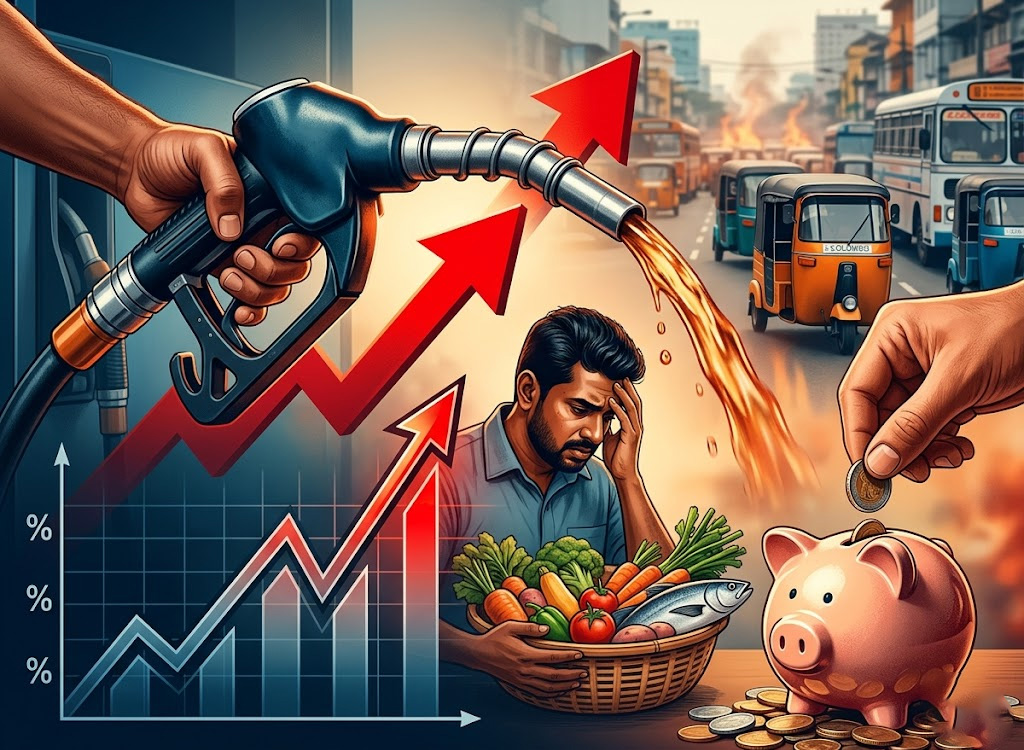
Sri Lanka’s inflation accelerated to its highest level in more than two years in May 2026, underlining mounting pressure on households and businesses as fuel price hikes triggered a wider increase in living costs across the economy.
Official data released by the Department of Census and Statistics (DCS) showed that the Colombo Consumer Price Index (CCPI)-based headline inflation rose to 5.5 percent in May, up from 5.4 percent in April and marking the highest reading since February 2024.
The increase places inflation near the Central Bank of Sri Lanka’s (CBSL’s) upper target range much earlier than policymakers had anticipated, raising fresh concerns over the durability of the island nation’s fragile post-crisis economic recovery.
Economists say the latest inflation spike reflects the delayed effects of sharp fuel price increases implemented over the past two months following supply disruptions linked to escalating tensions in the Middle East. Global oil prices surged amid fears of supply constraints, forcing Sri Lanka to revise domestic fuel prices upward by nearly 40 percent.
The fuel shock has quickly spread across the broader economy.
Transport costs rose significantly in May, while increases were also recorded in housing, electricity, gas, and other utility-related expenses. Food prices continued their upward trend, with vegetables and seafood among the largest contributors to inflation.
According to official statistics, the CCPI rose by 0.9 percent month-on-month in May, increasing the expenditure value of the standard consumer basket by Rs. 1,625.48.
“The month-on-month change was driven by an increase of 0.26 percent in food items and an increase of 0.62 percent in non-food items,” DCS said.
The widely monitored CCPI index climbed to 203.4 points in May from 201.6 points in April, reflecting the broad-based nature of current price pressures.
The inflationary trend has complicated the task facing CBSL, which spent much of the past two years attempting to stabilise prices after the country’s unprecedented economic collapse in 2022.
Following the sovereign debt crisis and foreign exchange shortages that triggered hyperinflationary conditions during the peak of the crisis, Sri Lanka had managed to bring inflation down sharply through tight monetary policy, import controls, tax increases, and support from the International Monetary Fund (IMF).
By late 2025, inflation had largely stabilised within manageable levels, helping improve investor confidence and ease pressure on consumers battered by years of economic hardship.
However, the latest rise suggests external shocks remain capable of destabilising the recovery.
In response to growing inflationary risks, CBSL earlier this week raised its Overnight Policy Rate by 100 basis points, signaling a renewed shift toward tightening monetary policy to curb demand-driven inflation and prevent inflation expectations from becoming entrenched.
Analysts warn that while the current inflation increase is partly supply-driven due to fuel and transport costs, prolonged price pressures could weaken household purchasing power and slow consumption-led growth. Businesses are also expected to face rising operational costs in the coming months, particularly in transport-dependent sectors such as agriculture, logistics, and retail trade.
The government now faces a difficult balancing act between maintaining fiscal discipline under the IMF-backed reform programme and easing the burden on consumers already struggling with high taxes, utility tariffs, and elevated borrowing costs.
For ordinary Sri Lankans, however, the latest inflation figures are another reminder that despite signs of macroeconomic recovery, the cost-of-living crisis remains far from over.











Leave a comment