
By The Pulseline News Desk
Sri Lanka has formally informed the International Monetary Fund (IMF) that temporary subsidies introduced to cushion households and businesses from rising fuel and electricity costs will be phased out by the end of September 2026, underscoring the government’s commitment to maintaining strict fiscal discipline under the ongoing bailout programme.
The undertaking was revealed in the Letter of Intent submitted jointly by President and Finance Minister Anura Kumara Dissanayake and Central Bank of Sri Lanka (CBSL) Governor Dr. Nandalal Weerasinghe following the completion of the combined fifth and sixth Reviews under the IMF’s Extended Fund Facility (EFF).
The document provides a significant indication of the direction of economic policy under the new administration, particularly at a time when public pressure is mounting over the rising cost of living and recent increases in fuel prices.
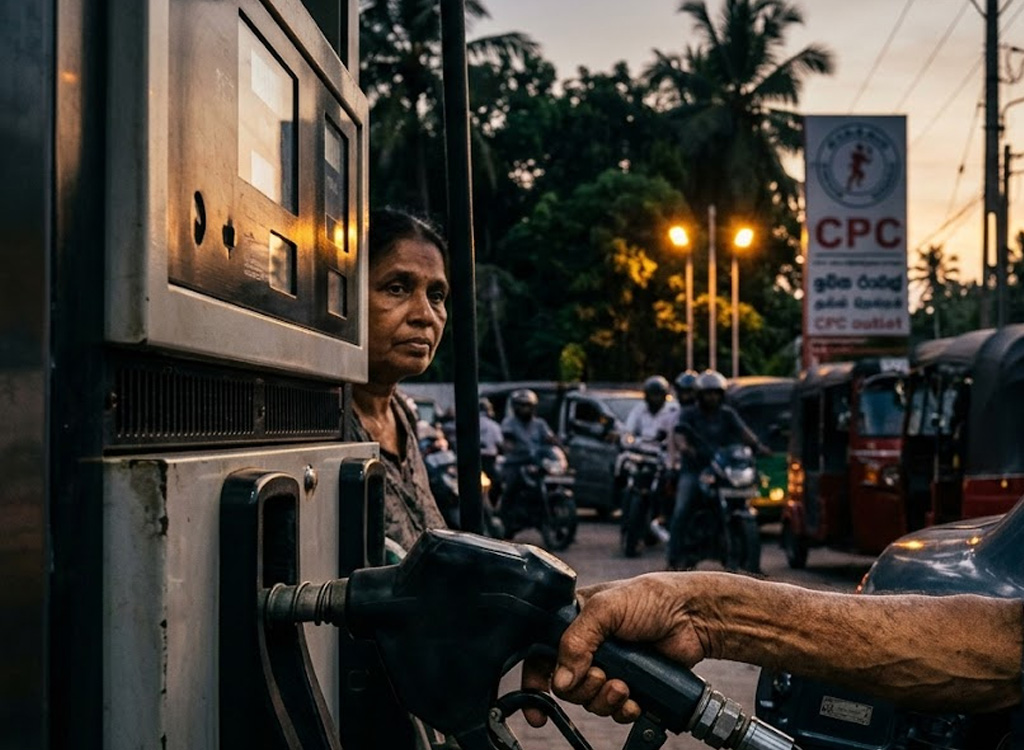
According to the letter, the government introduced temporary relief measures in response to the economic impact of Cyclone Ditwah and escalating tensions in the Middle East, which contributed to higher global oil prices and domestic fuel shortages.
Those developments had forced Sri Lanka to sharply increase local fuel prices in recent months, triggering broader increases in transport, electricity, and household costs across the economy.
While acknowledging the burden on consumers and businesses, the government has assured the IMF that the subsidies would remain within budgeted limits and would not undermine broader fiscal targets agreed under the reform programme.
“The temporary subsidies are expected to be phased out by end-September 2026,” the authorities stated in the letter, signaling a return to full cost-recovery pricing for fuel and electricity.
The commitment is politically sensitive.
Fuel and electricity pricing reforms have been among the most controversial components of Sri Lanka’s IMF-backed economic restructuring programme since the country’s financial collapse in 2022. For decades, successive governments maintained energy subsidies to reduce public pressure, but those policies contributed heavily to losses at state-owned enterprises and widening fiscal deficits.
Under the IMF programme, Sri Lanka agreed to adopt cost-reflective pricing mechanisms to prevent further accumulation of debt by state institutions such as the Ceylon Petroleum Corporation (CPC) and the Ceylon Electricity Board (CEB).
Economists say the government’s latest pledge indicates that authorities are attempting to avoid policy reversals despite growing social and political pressure for relief measures.
The challenge for the administration will be managing the political fallout once temporary support measures are withdrawn.
Sri Lanka’s inflation rate has also risen to 5.5 percent in May 2026 — the highest level in 27 months — largely driven by transport and energy-related costs following recent fuel price hikes. Many households continue to struggle with high taxes, utility tariffs, and borrowing costs despite broader signs of economic recovery.
The government has also told the IMF that future assistance for vulnerable groups would increasingly be delivered through targeted welfare schemes rather than broad consumer subsidies, a strategy aimed at balancing social protection with fiscal sustainability.
Analysts say the September deadline will likely become an important test of the government’s ability to maintain IMF-backed reforms while preserving public support.
The IMF Executive Board approved the latest programme review on 27 May, allowing Sri Lanka immediate access to approximately US$ 695 million and bringing total disbursements under the programme to around US$ 2.4 billion.









Leave a comment