
By The Pulseline News Desk
Efforts to address one of the country’s most enduring humanitarian challenges received a boost this week with the signing of a new agreement aimed at strengthening cooperation between two key state institutions involved in matters relating to missing persons.
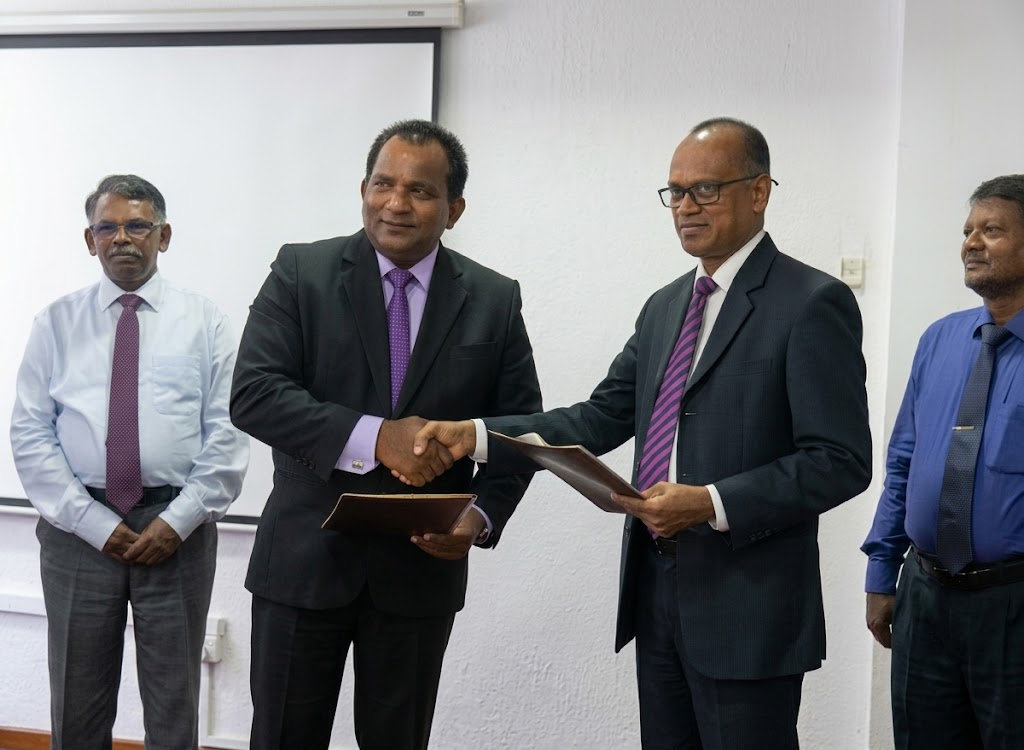
The Office on Missing Persons (OMP) and the Bureau of Rehabilitation (BOR) signed a Memorandum of Understanding (MOU) designed to improve coordination, information sharing, and joint initiatives in support of families searching for answers about the fate and whereabouts of missing loved ones.
According to the Ministry of Justice and National Integration, the agreement establishes a formal framework for collaboration in areas including information exchange, referrals, capacity building, and coordinated activities between the two institutions.
The partnership reflects a broader effort to enhance institutional cooperation in addressing issues surrounding missing persons, a matter that has remained a significant concern for thousands of families across Sri Lanka for decades.
A continuing humanitarian challenge
For many families, the search for missing relatives extends far beyond legal or administrative processes. It is a deeply personal and emotional journey marked by uncertainty, unanswered questions, and the hope of finding closure.
The OMP was established to investigate cases of missing and disappeared persons, clarify their fate and whereabouts where possible, and safeguard the rights and interests of affected family members.
Since its establishment, the OMP has become a central institution in Sri Lanka’s efforts to address unresolved cases linked to various periods of conflict, political unrest, and other circumstances that have led to disappearances.
The new collaboration with the Bureau of Rehabilitation is expected to strengthen the OMP’s ability to access relevant information and coordinate with agencies that may possess records or insights valuable to ongoing investigations.
Building a network of cooperation
The latest agreement forms part of a broader strategy by the OMP to develop partnerships with institutions whose work intersects with issues related to missing persons.
Over the years, the OMP has entered into Memoranda of Understanding with several state and international organisations, including the Human Rights Commission of Sri Lanka (HRCSL), the International Committee of the Red Cross (ICRC), the Department of National Archives, and the Registrar General’s Department.
These partnerships have sought to improve access to information, preserve records, strengthen investigative capacities, and facilitate cooperation across institutions that may hold information relevant to missing persons cases.
Officials say the agreement with the Bureau of Rehabilitation represents another important link in this growing network of institutional collaboration.
Enhancing information sharing
One of the key objectives of the new MOU is the creation of stronger mechanisms for information exchange between the two agencies.
In cases involving missing persons, information can often be dispersed across multiple institutions, making effective coordination essential. Supporters of the initiative argue that improved communication between agencies can help reduce duplication, streamline investigations, and improve outcomes for families seeking answers.
The agreement also includes provisions for referrals and joint activities that could support the tracing process and improve the overall effectiveness of both institutions’ work.
Supporting families seeking answers
At the heart of the initiative are the families of missing persons, many of whom have spent years pursuing information about their relatives.
Advocates for families affected by disappearances have consistently emphasised the importance of transparency, accountability, and institutional cooperation in ensuring that investigations progress and that families receive accurate information.
The Ministry of Justice and National Integration said the partnership is intended to strengthen efforts to support those families while advancing the humanitarian objectives of both organisations.
Looking ahead
The MOU was signed by Mahesh Katulanda and Brigadier M. S. Amith in the presence of senior officials from both institutions.
While the agreement itself is an administrative step, its significance lies in the potential to improve coordination among agencies involved in addressing one of the country’s most sensitive and complex issues.
For families still searching for answers, every effort to strengthen cooperation and information sharing represents a potential pathway toward greater clarity and, ultimately, a measure of closure.
As Sri Lanka continues its broader efforts to address unresolved humanitarian concerns, the success of such partnerships may be measured not only by institutional efficiency but by their ability to deliver meaningful results for those who have waited years for answers about the fate of their loved ones.











Leave a comment