
By The Pulseline News Desk
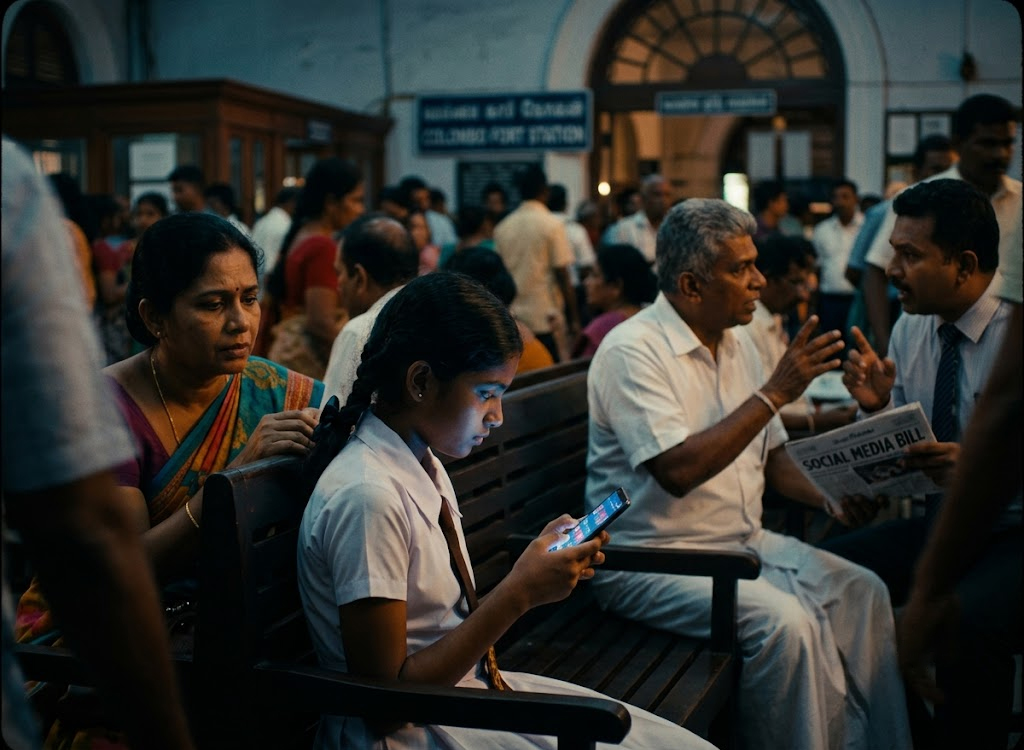
A new legislative proposal seeking to restrict social media access for children under the age of 16 has ignited debate in Sri Lanka over online safety, digital rights, and the role of technology in young people’s lives.
The proposed Social Media Minimum Age Bill, presented to parliament by Opposition MP Faiszer Musthapha as a Private Member’s Bill, aims to establish a legal framework to protect children from harmful content and online risks while strengthening regulatory oversight of social media platforms operating in the country.
If enacted, the legislation would require social media service providers to take steps to prevent children under 16 from accessing their platforms. It would also introduce restrictions for users classified as “age-restricted,” including possible limits on screen time and the hours during which certain online services may be accessed.
The Bill reportedly defines a child as any person below the age of 16 and seeks to address growing concerns about children’s exposure to cyberbullying, online exploitation, inappropriate content, misinformation, and other digital threats.
Stronger oversight proposed
One of the key features of the proposed law is the authority it grants to the relevant minister to formulate regulations compelling both internet service providers and social media companies to implement age-verification measures and access controls.
The draft legislation also proposes the appointment of an Authorised Commissioner under the National Child Protection Authority (NCPA). The commissioner would be responsible for overseeing enforcement, conducting investigations, handling complaints, and ensuring compliance with the law.
Supporters of the proposal argue that stronger safeguards are necessary as social media becomes increasingly integrated into the daily lives of young people.
“Children today are growing up in a digital environment that presents opportunities but also significant risks,” a child protection advocate noted. “A regulatory framework could help create safer online spaces while encouraging responsible technology use.”
Balancing protection and digital freedom
The proposal arrives amid a global trend of governments seeking to impose stricter rules on children’s use of social media. Several countries have introduced or are considering measures ranging from mandatory parental consent and age verification requirements to outright restrictions on access for younger users.
However, critics caution that implementation could prove challenging. Questions remain over how platforms would verify users’ ages, the potential impact on privacy, and whether restrictions could be effectively enforced without limiting legitimate access to educational and social resources.
Digital rights advocates have also emphasised the importance of balancing child protection with freedom of expression and access to information.
“Protecting children online is essential, but policymakers must ensure that safeguards do not create unintended consequences for privacy, digital inclusion, or fundamental rights,” one technology policy analyst noted.
Growing concern over online safety
The introduction of the Bill reflects increasing concern among parents, educators, and policymakers about the influence of social media on children’s mental health, behaviour, and academic performance.
Studies worldwide have linked excessive social media use among young people to issues such as anxiety, depression, sleep disruption, and exposure to harmful online content. At the same time, social media remains an important tool for communication, learning, and social engagement.
The proposed legislation seeks to address these concerns by creating legal mechanisms that would allow authorities to regulate access and hold service providers accountable for protecting younger users.
The road ahead
As a Private Member’s Bill, the proposal will need to undergo parliamentary scrutiny and debate before any decision is made on its future. Lawmakers, technology companies, child protection experts, educators, and civil society groups are expected to closely examine its provisions in the coming months.
If passed, the Social Media Minimum Age Bill would mark one of Sri Lanka’s most significant attempts to regulate children’s online activity and could reshape how young people access social media platforms across the country.
The debate now facing policymakers is whether the proposed restrictions can effectively safeguard children while preserving the benefits of digital connectivity in an increasingly online world.










Leave a comment