
By The Pulseline News Desk
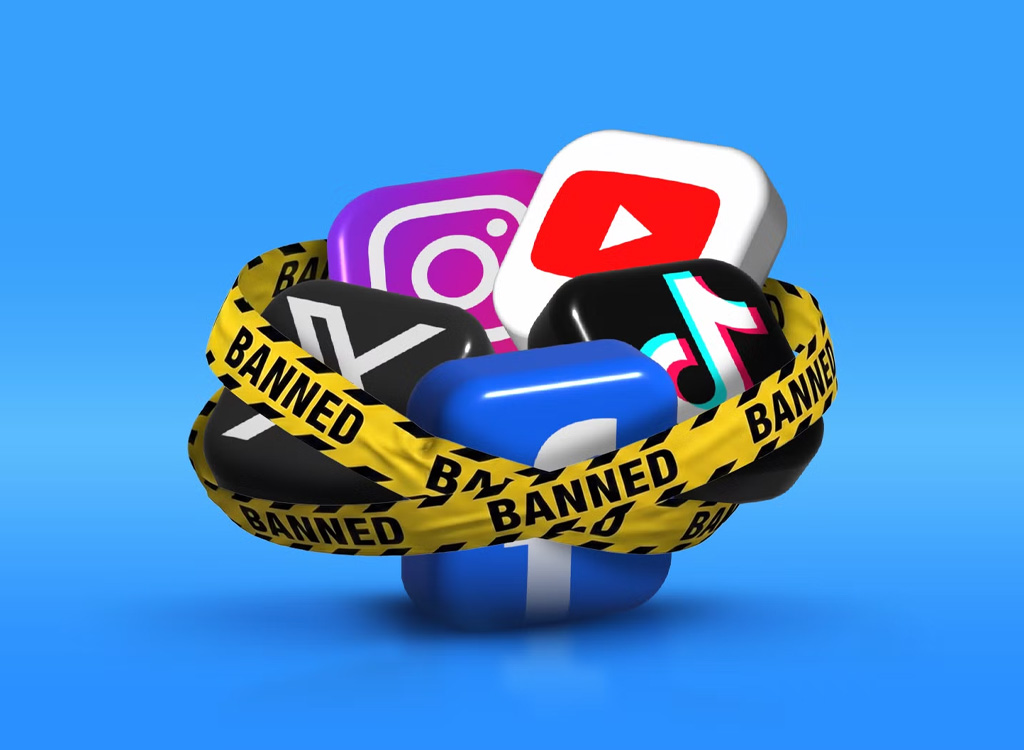
As governments around the world debate whether children under 16 should be banned from social media, the discussion has also become increasingly relevant for Sri Lanka, where internet access and social media use continue to expand rapidly.
The appeal of a ban is easy to understand. Parents are worried about cyberbullying, harmful content, online predators, misinformation, addiction and the impact of excessive screen time on children’s mental health. Yet the question remains: would banning children from social media actually make them safer?
The evidence suggests the answer is far more complicated.
Insufficient evidence
Scotland’s Children’s Commissioner, Nicola Killean, recently warned that there is insufficient evidence to prove that a social media ban for under-16s would improve online safety. Instead, such restrictions could push children towards less regulated corners of the internet where risks may be even greater.
Sri Lanka’s own experience with the digital world offers important lessons.
A landmark UNICEF study on Sri Lanka’s digital landscape found that more than half of young people had internet access, with the average age of first access being just 13 years old. The study also revealed significant online risks among children and adolescents. Nearly 46 percent of young internet users said they had communicated online with strangers, while almost 28 percent of those children had gone on to meet someone they first encountered online. More than 15 percent admitted sharing personal information with strangers online. (UNICEF)
Perhaps even more concerning was the finding that 53.6 percent of child internet users were largely self-taught in their online activities, while only 16.5 percent had learned about internet use from their parents. (UNICEF)
The challenge has become even greater in recent years as Sri Lanka’s digital footprint has expanded dramatically. According to Digital 2024 data, Sri Lanka had approximately 12.3 million internet users and 7.5 million social media users at the beginning of 2024. Social media usage continues to grow rapidly, particularly among younger age groups. (DataReportal – Global Digital Insights)
This reality makes one fact difficult to ignore: children are already online, and they are unlikely to disappear from digital platforms simply because governments impose legal restrictions.
Moving out of mainstream platforms
History shows that outright bans often drive behaviour underground rather than eliminating it. Teenagers frequently find ways around age restrictions through alternative accounts, VPNs or unregulated platforms. The danger is that children may migrate away from mainstream platforms with at least some degree of oversight and moderation into online spaces where safeguards are weaker.
The more effective approach is to make digital environments safer rather than pretending children can be completely removed from them.
That means placing greater responsibility on technology companies. Social media platforms have built business models designed to maximise attention and engagement. Algorithms that continuously push emotionally charged, addictive or sensational content should not operate without stronger safeguards for young users.
Stronger national focus
Governments should require stricter age-appropriate design standards, stronger privacy protections, transparent algorithms and faster removal of harmful content. Companies should be expected to prove that their platforms are safe for children instead of leaving parents to carry the entire burden.
At the same time, Sri Lanka urgently needs a stronger national focus on digital literacy. Children must be taught how to recognise misinformation, protect personal information, identify online manipulation and manage screen time responsibly. Digital literacy should be treated as an essential life skill, no different from road safety or financial literacy.
Parents also remain central to the solution. Technology cannot replace parenting. Open conversations, reasonable boundaries and active engagement with children’s online lives are often more effective than blanket bans that simply encourage secrecy.
This does not mean there should be no restrictions. Age verification systems, parental controls and screen-time limits all have a role. However, these measures should be part of a broader strategy rather than being viewed as a complete answer.
The debate should not be about whether children should be online. In today’s world, that question has largely been settled. The real challenge is whether governments, parents, schools and technology companies are prepared to create an online environment that allows children to benefit from the opportunities of the digital age while minimising the risks.
A social media ban may generate headlines and political applause. Building a safer digital ecosystem for children is far more difficult. But it is also far more likely to work.












Leave a comment