
By Vox Civis
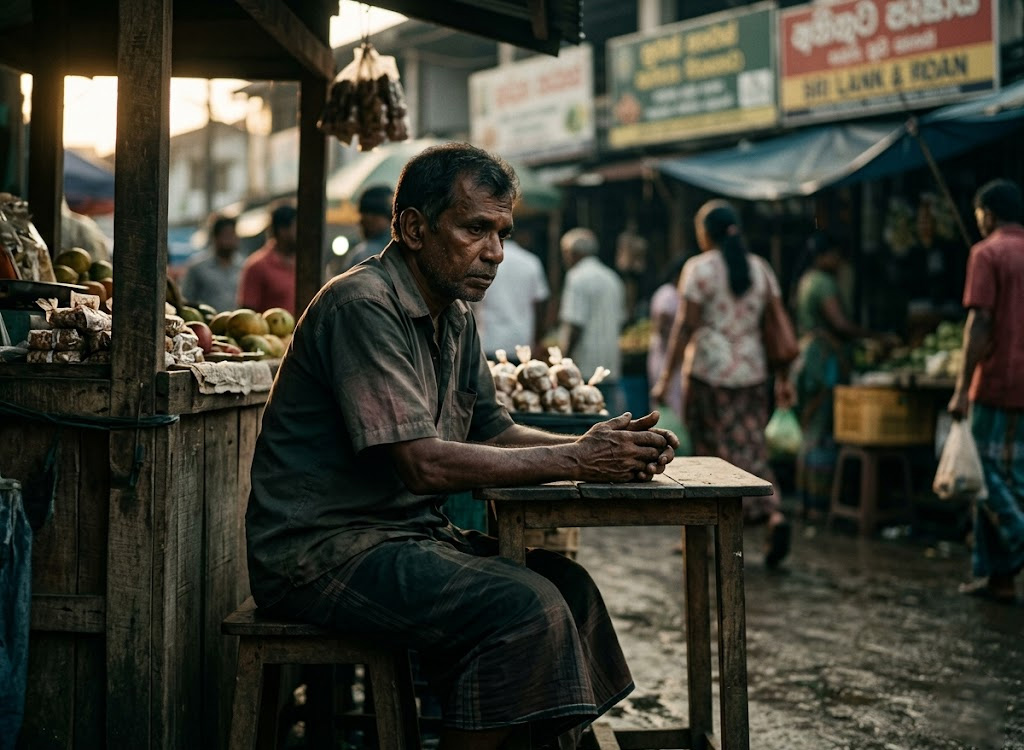
Sri Lanka stands today at a delicate and potentially dangerous crossroads. Four years after the country’s worst economic collapse, the public was promised a new beginning. The National People’s Power (NPP) administration rode to power on a platform of transparency, accountability, anti-corruption and a commitment to place ordinary citizens at the center of governance. Yet, as the country grapples with mounting economic pressures, growing tax burdens and persistent questions about transparency, a worrying reality is beginning to emerge. The challenge confronting Sri Lanka is no longer just economic, it is increasingly transforming into a crisis of confidence as well.
History demonstrates that societies can endure hardship when citizens believe sacrifice is shared fairly and when governments are perceived to be acting honestly and competently. Problems arise when economic pain is accompanied by a growing belief that the rules are not being applied equally, that transparency is declining, and that those in power are becoming increasingly insulated from public scrutiny. That is the danger Sri Lanka faces today.
The warning signs are accumulating. The tourism sector, one of the country’s most important sources of foreign exchange, is showing signs of strain. Hotel occupancy rates in parts of the leisure sector have reportedly fallen below 20 percent during the current off-season, significantly lower than historical averages that often exceeded 40 percent. The implications extend far beyond hotel owners. Tourism supports transport operators, restaurants, retailers, suppliers, tour guides and thousands of small businesses across the country.
Consequences of tourism downturn
As a consequence of the Middle East crisis airfares from Europe to Sri Lanka have risen sharply, with some tickets reportedly exceeding Rs. 500,000. Flight disruptions and reduced connectivity through major Middle Eastern transit hubs have further weakened demand. For a country that depends heavily on tourism receipts to replenish foreign exchange reserves, any prolonged downturn in arrivals poses a serious risk.
The consequences are potentially severe. Lower tourism earnings mean reduced foreign currency inflows when Sri Lanka remains heavily dependent on external earnings to meet future debt obligations and maintain exchange rate stability. As foreign exchange earnings come under pressure, concerns naturally arise regarding the future value of the rupee.
Many analysts fear that the exchange rate could once again come under pressure if inflows weaken significantly. Any substantial depreciation would immediately increase the cost of imports, fuel, medicine, food and industrial inputs. The burden would ultimately fall on consumers already struggling with one of the highest costs of living in the country’s history.
Fuel pricing has become a particularly sensitive issue. Deputy Minister of Finance and Planning Anil Jayantha recently stated that Sri Lanka currently has little room to reduce fuel prices despite significant declines in international oil prices because domestic pricing remains linked to stocks purchased at earlier, higher costs. While this explanation may contain an element of economic logic, it inevitably raises questions among consumers.
When global oil prices rise, local fuel prices are often adjusted upwards with remarkable speed. Yet when global prices decline, consumers are told that reductions must wait because older inventories were purchased at higher prices. To many citizens, this creates the appearance of a one-directional pricing formula where increases are passed through immediately while decreases are delayed. Whether or not that perception is entirely accurate, perceptions matter because public trust suffers when pricing mechanisms appear asymmetrical.
Rising costs
Higher fuel costs tend to ripple throughout the economy resulting in higher transport costs, production costs, and electricity generation costs. When businesses pass these costs on to consumers, inflationary pressures intensify and every increase in energy costs eventually manifests itself in higher prices for essential goods and services.
At a time when households are struggling to absorb these pressures, the Government is moving to expand the tax net further. Sri Lanka unquestionably needs tax revenue, no one disputes that reality. The country is emerging from sovereign default, remains under an IMF-supported reform programme and faces substantial debt repayments in the years ahead. Fiscal discipline is essential.
However, the question is not whether taxes should exist. The question is whether taxation is fair. The recent deliberations before the Committee on Public Finance (COPF) exposed some very valid concerns. Proposed amendments to VAT and the Social Security Contribution Levy (SSCL) that are supposed to come in to effect on the 1st of July are expected to bring more than 100,000 small businesses into the VAT net by reducing the annual turnover threshold from Rs. 60 million to Rs. 36 million.
Retail shops, beauty salons, garages, small hotels and numerous other small enterprises may soon face additional compliance requirements and administrative costs. The proposed future requirement for VAT-registered businesses to install Point-of-Sale systems will impose yet another layer of expense on entrepreneurs already struggling with rising costs. The burden will ultimately fall on consumers once again.
The combined effect of VAT and SSCL throughout the supply chain means that ordinary citizens effectively pay close to 22 percent in taxes on many everyday items. The example repeatedly cited during the COPF discussion was a simple bar of soap.
The need for fair taxation
There is something radically wrong about a tax system where a basic household necessity attracts a tax burden approaching 22 percent while thriving online gambling platforms and casinos continue to operate within regulatory and taxation frameworks that many critics regard as inadequate. As opposition MP Harsha de Silva observed, a country certainly needs taxes, but taxation must be fair.
The principle is simple: a government committed to social justice should ensure that essential goods consumed by ordinary citizens are not taxed more aggressively than activities that primarily benefit wealthy interests. When citizens see basic necessities heavily taxed while other sectors appear comparatively untouched, they naturally question whether the burden of economic recovery is being distributed equitably.
The broader concern is that economic recovery increasingly appears to be measured through fiscal indicators rather than the reality on the ground. Official statistics may improve, revenue targets may be met, IMF benchmarks may be achieved, yet if households continue to experience declining purchasing power, rising taxes and stagnant opportunities, the perception of recovery will remain elusive.
Compounding these economic concerns are growing questions regarding transparency in public financial management. Sri Lanka’s public debt remains one of the largest burdens confronting the nation. According to official figures, gross public debt is now around Rs. 30 trillion, equivalent to approximately US$99 billion. Nearly two-thirds of this debt is domestic, owed primarily to local banks, pension funds and financial institutions.
Transparency a necessity
Given the scale of these liabilities, transparency is not a luxury but an absolute necessity. For decades, investors, researchers and citizens relied upon detailed public debt data published by the Central Bank. Following the transfer of debt management responsibilities to the newly established Public Debt Management Office, however, concerns have emerged regarding the availability and accessibility of key financial information.
Dr. Harsha de Silva, in his capacity as Chairman of COPF, has publicly raised concerns regarding gaps in debt-related disclosures. Economists warn that when information becomes less accessible, financial markets become more vulnerable to speculation and manipulation because markets function efficiently when participants have access to timely and reliable information. This is particularly important for a country still recovering from sovereign default.
The issue extends beyond technical financial management and touches the fundamental relationship between government and citizen. Public debt does not belong to politicians, it belongs to the people. Every Treasury bill, Treasury bond and foreign loan ultimately represents a liability borne by taxpayers. Citizens therefore possess a legitimate right to understand how much debt exists, who holds it, how it is managed and what risks it poses.
Calls for a real-time public debt dashboard, legally enforceable disclosure deadlines and stronger parliamentary oversight deserve serious consideration. Transparency should not depend on the goodwill of individual officeholders. It should be institutionalised.
Unfortunately, concerns regarding transparency are not confined to public finance. The NPP came to power promising a decisive break from the political culture that contributed to Sri Lanka’s economic collapse. Accountability was central to its message. Corruption would be investigated regardless of political affiliation, it promised, and public officials would be held to higher standards. Governance would be conducted differently, it vowed.
Controversial remarks
That is why recent controversies have attracted so much attention. Minister K.D. Lal Kantha’s recent remarks suggesting that questions regarding his wealth or assets are not matters of public concern have generated considerable debate. In any democracy, public officials are subject to scrutiny. Asset declarations exist because citizens possess a legitimate interest in understanding the financial circumstances of those entrusted with public power. The issue is larger than any individual minister.
Questions have been raised regarding the assets, business interests and wealth accumulation of several political figures associated with the current administration. Whether those allegations are ultimately substantiated is a matter for investigation, not speculation. However, the principle remains clear; if transparency is demanded of political opponents, it must also apply to those currently in government.
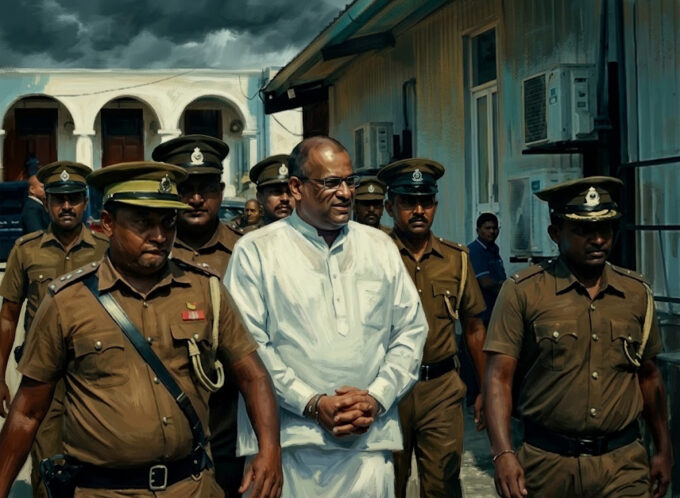
After all, anti-corruption campaigns derive legitimacy not from rhetoric but from consistency. The public is unlikely to support investigations perceived as selective. If allegations involving opposition politicians are pursued aggressively while concerns involving government figures are dismissed or ignored, confidence in the integrity of the process will inevitably suffer.
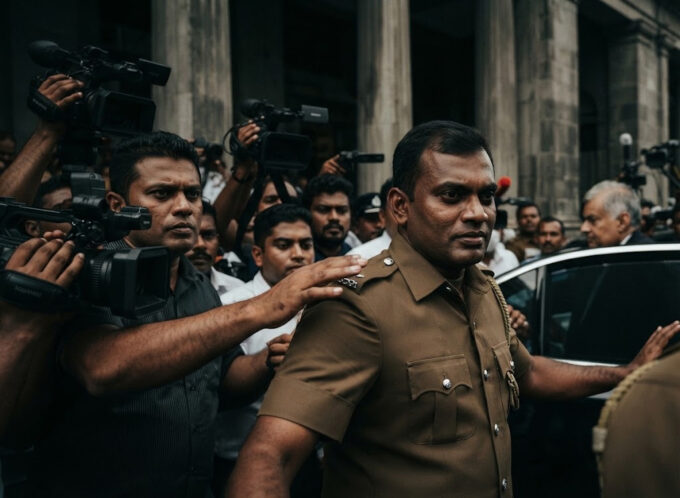
Recent developments surrounding COPF have further intensified these concerns. Reports that government MPs sought to prevent the release of footage from COPF proceedings and discussions regarding alleged financial irregularities have fuelled criticism. Whether these claims are accurate or not, the broader issue remains transparency.
The NPP promised openness. Citizens who voted for change expected more sunlight, not less. Any attempt to restrict public access to information will therefore inevitably invite suspicion and undermine confidence. Ironically, all this is occurring while official data suggests corruption remains deeply entrenched throughout the public sector.
Complaints on the rise
The Commission to Investigate Allegations of Bribery or Corruption (CIABOC) is reported to have received thousands of complaints during the first four months of 2026. Hundreds have been directed for investigation. Raids, arrests, prosecutions and convictions continue to involve officials across numerous institutions, including local authorities, law enforcement agencies and government departments.
These figures demonstrate two important realities. First, corruption remains a significant national challenge despite repeated promises of reform. Second, institutions continue to function and pursue cases across a range of sectors. However, public confidence depends not merely on statistics but on perceptions of fairness. Citizens want assurance that anti-corruption efforts reach all corners of society, including the highest levels of political power.
This is particularly important because Sri Lanka’s economic recovery remains fragile. The Central Bank Governor recently acknowledged that although foreign reserves currently stand at approximately US$6.8 billion, significant improvements are necessary to meet future objectives. Reports of illicit foreign exchange outflows disguised as import transactions have further underscored the vulnerability of the country’s financial position.
Against this backdrop, every dollar matters. Every investor matters. Every decision affecting public confidence matters. Countries do not attract investment merely through tax incentives or policy documents. They attract investment through credibility. Investors seek predictable rules, transparent institutions and confidence that information is reliable.
Similarly, societies maintain stability not merely through economic growth but through legitimacy. Citizens are more willing to endure hardship when they believe sacrifices are necessary, fairly distributed and honestly explained. The danger confronting Sri Lanka is that economic hardship and declining trust may begin reinforcing one another.
Toxic combination
If tourism weakens, foreign exchange earnings decline. If foreign exchange earnings decline, pressure on the rupee intensifies. If the rupee weakens, inflation rises. If inflation rises while taxes increase and transparency declines, public frustration will continue to grow. If citizens begin losing confidence in institutions, social tensions will inevitably increase. No government should underestimate the political consequences of economic pressure combined with perceptions of unfairness.
Sri Lanka has already experienced the consequences of public anger. The events of 2022 demonstrated how rapidly economic grievances can evolve into broader demands for accountability and systemic reform. While circumstances today differ significantly from those of the crisis period, the underlying lesson remains relevant: economic management cannot be separated from governance.
Therefore, the path forward is neither mysterious nor unattainable. The Government must demonstrate that taxation is fair, that transparency is non-negotiable and that anti-corruption measures apply equally to friends and opponents alike. Public debt information should be readily accessible. Parliamentary oversight should be strengthened rather than resisted. Asset declarations should be transparent and questions raised by citizens should be answered rather than dismissed.
Most importantly, economic recovery must be measured not only through fiscal targets but in the daily experience of ordinary Sri Lankans. The true test of governance is not whether revenue collection increases or debt ratios improve, it is whether citizens feel their lives are becoming more secure, more affordable and more hopeful.
At present, too many Sri Lankans feel the opposite, and that should concern everyone.
For when economic burdens become unbearable, when transparency diminishes and when confidence in institutions starts to erode, history shows that frustration rarely remains confined to conversations. Eventually it finds expression elsewhere. The challenge facing Sri Lanka today is to ensure that economic recovery restores not only fiscal stability, but also public trust. Without both, the country risks discovering that financial recovery alone is insufficient to prevent a deeper crisis of confidence from taking hold.
Disclaimer: The views and opinions expressed in this article are those of the writer and do not necessarily reflect the official position of this publication.









Leave a comment