
By Vox Civis
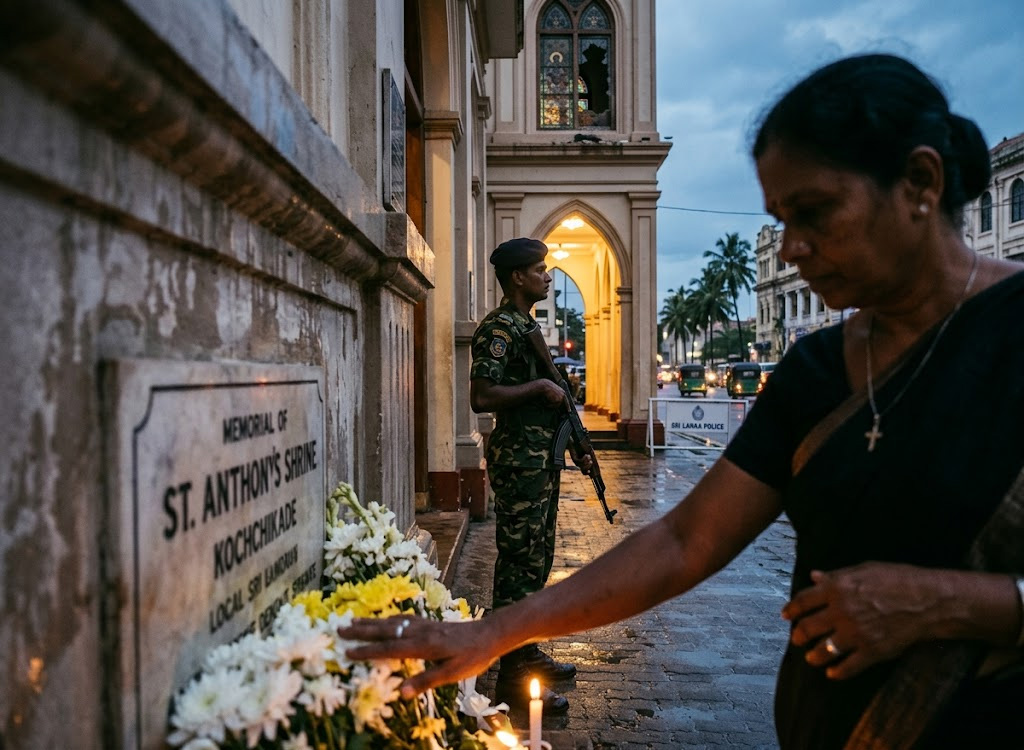
Few events have scarred Sri Lanka’s collective conscience as deeply as the Easter Sunday terrorist attacks of 2019. More than seven years later, the nation continues to grapple not only with the pain of the lives lost but also with a lingering sense that many questions remain unanswered. Victims and their families deserve nothing less than the full truth. Equally, every Sri Lankan has a legitimate interest in ensuring that justice is pursued fairly, professionally and without fear or favour.
Yet, the latest developments surrounding the investigation have opened a new and disturbing chapter. The focus has shifted from simply uncovering the truth behind one of the country’s worst terrorist atrocities to a broader debate about due process, the integrity of institutions, the treatment of those who served in the country’s security establishment, and the potential implications for Sri Lanka’s future intelligence capabilities.
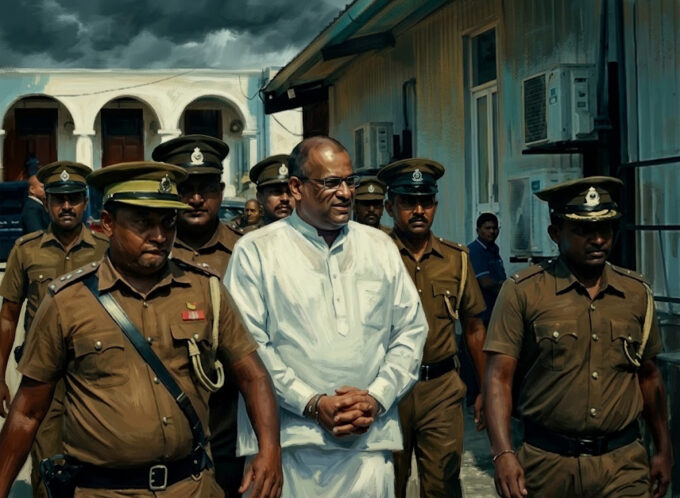
The arrest and ongoing legal proceedings involving former Director of the State Intelligence Service (SIS), Major General (Retired) Suresh Sallay have generated sharply divided opinion. Some see the developments as evidence that no individual, regardless of rank or position, should be beyond the reach of the law. Others view the investigation with increasing unease, questioning whether the process is being driven by evidence alone or whether broader political considerations have begun to shape its direction.
Institutional credibility
This debate is not merely about one individual. It is about the credibility of the institutions responsible for investigating one of the gravest crimes in Sri Lanka’s history.
Public confidence in any criminal investigation depends as much on the perceived independence of those conducting it as on the evidence ultimately produced. When senior officials involved in an investigation have themselves previously been criticised in relation to institutional failures surrounding the Easter attacks, questions about perception are bound to arise. Those questions do not amount to proof of bias or misconduct. Nor do they invalidate the legal process. But they do underscore the importance of ensuring that investigations are transparent, impartial and capable of withstanding the highest level of public scrutiny. Justice must never merely be done; it must also be seen to be done.
That principle becomes even more important when dealing with a tragedy that continues to divide public opinion. The search for accountability should never evolve into a search for convenient answers or individuals who happen to fit a prevailing public narrative. If prosecutions are ultimately to command public confidence, they must rest on compelling evidence rather than speculation, inference or political expectation.
The Easter Sunday attacks have already been examined by numerous investigative bodies, including local commissions of inquiry and international law enforcement agencies. Each has contributed pieces to a complex puzzle, although none has completely resolved every question surrounding the attacks. That lingering uncertainty has inevitably fuelled competing narratives and deepened public suspicion. It is because emotions remain so raw that investigators must be especially vigilant to ensure that every action taken is beyond reproach.
A dangerous new dimension
The courtroom proceedings last week introduced another dimension that deserves careful reflection. During exchanges involving a retired Sri Lanka Air Force warrant officer who sought to intervene as an aggrieved party, remarks attributed to the Deputy Solicitor General concerning military medals sparked considerable public criticism.
Whether intended as rhetorical advocacy or otherwise, many viewed the comments as unnecessarily dismissive of military decorations earned through acts of extraordinary courage. For thousands of serving and retired members of Sri Lanka’s armed forces, military honours are not ornamental symbols. They represent sacrifice, endurance, loss and devotion to duty under the most dangerous circumstances imaginable.
Decorations conferred by the President in his capacity as Commander-in-Chief carry constitutional and institutional significance. They are awarded under established legal processes to recognise exceptional service or gallantry. Any language that appears to belittle those honours is therefore unlikely to be interpreted as criticism of an individual alone. Instead, it risks being perceived as diminishing the sacrifices of countless servicemen and women who served the country through decades of conflict.
Lawyers appearing before court enjoy considerable latitude in advancing arguments. Vigorous advocacy is an essential feature of any justice system. Yet professional advocacy also carries responsibilities. Public confidence in the legal profession depends not only upon legal competence but also upon restraint, courtesy and respect for institutions that command national significance.
Important distinction
There is an important distinction between challenging a witness or questioning the relevance of an intervention and appearing to demean symbols that hold profound meaning for an entire community. Sri Lanka’s military remains one of the country’s most respected public institutions. Regardless of differing political opinions regarding the final stages of the civil war or subsequent events, few would dispute that thousands of soldiers, sailors, airmen and police officers paid an enormous personal price over three decades of conflict. Many never returned home. Others continue to live with permanent physical and psychological scars.
Recognising those sacrifices should never be seen as incompatible with accountability. A mature democracy is capable of honouring those who served while simultaneously investigating allegations of wrongdoing wherever credible evidence exists. The two principles reinforce rather than contradict one another.
Unfortunately, public discourse in recent years has too often presented a false choice between respecting the armed forces and pursuing justice. Such polarisation benefits nobody. It diminishes both the military and the justice system. There is also a broader concern that deserves serious consideration beyond the personalities currently dominating headlines.
Modern intelligence services depend fundamentally upon trust. Human intelligence networks are painstakingly built over decades through confidential relationships between intelligence officers and informants who frequently place themselves and their families at considerable personal risk. Their willingness to provide information rests upon one overriding expectation: that their identities will remain protected.
The need for careful consideration
This is why the legal questions arising from court orders relating to electronic devices allegedly used by former intelligence officials deserve careful examination. The issue extends well beyond the circumstances of any single accused individual.
Former intelligence officers often retain knowledge that remains operationally sensitive long after retirement. Contact details, communications, operational records or information capable of identifying confidential sources may continue to carry significant national security implications years later.
The concern expressed by some observers is therefore not simply about privacy or the rights of an accused person. It is whether judicial processes should incorporate sufficiently robust safeguards to prevent inadvertent compromise of intelligence assets whose exposure could endanger lives or undermine future national security operations.
Sri Lanka has experienced such consequences before. The exposure of intelligence networks during the Millennium City incident remains widely regarded by many within the security community as a major setback that disrupted valuable intelligence capabilities. That historical experience should ideally shape contemporary concerns whenever sensitive intelligence information risks entering wider investigative processes.
None of this suggests that intelligence officials should enjoy immunity from criminal investigation. Quite the contrary. In any democracy governed by the rule of law, every citizen – including intelligence officers, military commanders and politicians – must remain accountable before the law.
However, accountability must be balanced with legitimate national security considerations. Democracies around the world have developed mechanisms that enable courts to examine classified material without unnecessarily compromising intelligence capabilities. Sri Lanka should aspire to similar safeguards where appropriate.
Biggest challenge
The bigger question confronting the country is therefore not whether investigations should continue, they unquestionably should, and victims deserve nothing less. The real question is whether Sri Lanka can simultaneously pursue justice while preserving confidence in the institutions responsible for protecting national security. That challenge requires restraint from every stakeholder.
Political leaders must resist the temptation to transform criminal investigations into instruments of political contestation. Investigators must remain visibly independent of political influence. Prosecutors must exercise their authority with professionalism and measured language. Defence lawyers must advance robust legal arguments without undermining confidence in legitimate institutions. Religious leaders and civil society organisations should continue advocating for truth while encouraging processes that unite, rather than further polarise society.
Above all, the courts must continue to serve as the ultimate guardians of fairness, ensuring that decisions are guided exclusively by evidence and law.
Sri Lanka’s experience since Easter Sunday demonstrates how difficult that balance has become. Every new development risks reopening old wounds, reviving competing political narratives and eroding public confidence if not handled with exceptional care. The country cannot afford that outcome.
The Easter attacks represented a catastrophic failure whose consequences continue to shape national politics years later. Establishing responsibility remains an urgent national obligation. Yet the pursuit of truth should strengthen public institutions rather than weaken them.
Mitigating vulnerability
Justice that appears selective, risks losing legitimacy and national security pursued without accountability, risks undermining democracy. Conversely, accountability pursued without regard for national security can leave a country vulnerable in ways that may not become apparent until much later.
The challenge before Sri Lanka is therefore far greater than resolving one criminal investigation. It is whether the nation can demonstrate that democratic accountability, institutional professionalism and national security are not competing values but complementary pillars of a stable republic.
The victims of Easter Sunday deserve the truth. The armed forces deserve respect for their sacrifices. Those accused deserve due process and the presumption of innocence until proven guilty. The public deserves confidence that justice is being administered impartially and without political influence. These principles are not mutually exclusive. They are the very foundations upon which a democratic society rests.
If Sri Lanka succeeds in protecting all of them simultaneously, it will emerge stronger from one of the darkest chapters in its modern history. If it fails, the damage will extend far beyond one investigation. It will affect public trust in the very institutions upon which both justice and national security ultimately depend.
Disclaimer: The views and opinions expressed in this article are those of the writer and do not necessarily reflect the official position of this publication.











Leave a comment