
By Vox Civis
The sequence of events that followed has now become all too familiar: an investigative committee being hastily appointed and several officials suspended. A technical probe has been announced and an explanation that is thin, convenient, and difficult to verify has been offered: a “hacker” had diverted the funds through fraudulent email instructions. Yet the speed with which these reactive measures were rolled out stands in stark contrast to the inertia that preceded them. For months, there was no urgency, no transparency, no indication that public funds had gone astray. That dissonance has not only raised many an eyebrow but also lies at the heart of the evolving crisis.
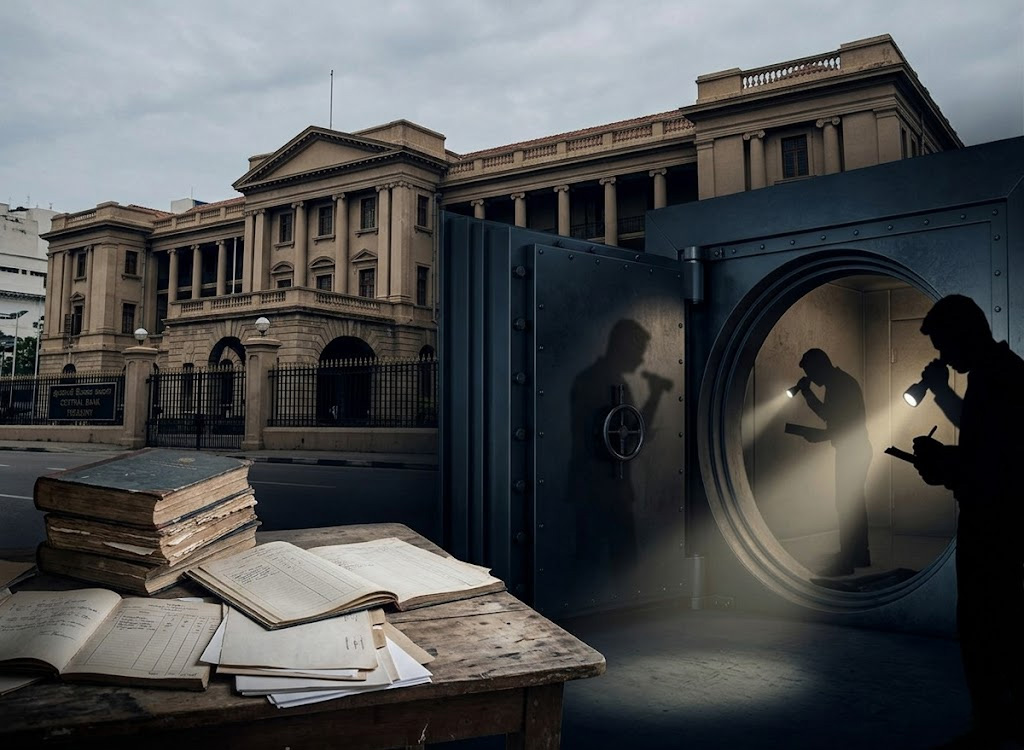
Four months is a long time in politics and an eternity in public finance. Yet, for four long months, the disappearance of USD 2.5 million from Sri Lanka’s Treasury appears to have existed in a vacuum of silence; unacknowledged, unexplained, and, most worryingly, undisclosed. It was not an internal alarm, an audit trigger, or a ministerial disclosure that brought the matter into the public domain either. It was a lawyer, speaking at a press conference, who forced the issue into the national conversation. Only then did the machinery of government begin to move, belatedly and conspicuously – awakened not by duty, but by exposure.
What is at stake here is not merely a missing sum of money, USD 2.5 million in a country still grappling with a fragile external position. It is the credibility of the systems that manage, safeguard, and account for public finance. The incident did not occur in isolation. It is the latest in a chain of controversies that has dogged the National People’s Power (NPP) government from its inception starting from the release of 323 shipping containers under opaque circumstances, to the infamous “multi-plug” procurement issue, to the multi-billion-rupee coal procurement debacle, to high priced spot purchasing of fuel, that collectively point to a pattern. In each case, critics allege that the initial instinct of the state has been to remain silent, to delay, to manage optics rather than confront substance, and to act only when public pressure renders inaction untenable.
A disturbing development
The details of the latest case – at face value – are deeply disturbing. The missing funds were supposedly part of a routine sovereign debt repayment, an obligation that carries not just financial weight but reputational consequence in international markets. Sri Lanka, still recovering from the trauma of default and engaged in a delicate restructuring process, can ill afford even the perception of irregularity in its debt servicing operations. Yet, in this instance, the funds reportedly never reached their intended destination in Australia. Instead, they were diverted, allegedly through fraudulent digital instructions that, for some inexplicable reason, bypassed standard verification protocols common to even the smallest of transactions.
That such a breach could occur raises immediate questions about the internal controls in place. That it could remain undisclosed for months raises even more serious questions about governance. And that even the government’s own Cabinet Spokesperson claimed to be unaware of the incident until it was publicly exposed, points to a breakdown that goes beyond technical failure. Either key officials were deliberately kept in the dark, or the information never reached them in the first place. Both scenarios are deeply unsettling. A government cannot claim transparency while operating in informational silos. Nor can it claim accountability when even its own spokesmen are learning of critical incidents from external actors in the glare of the media.
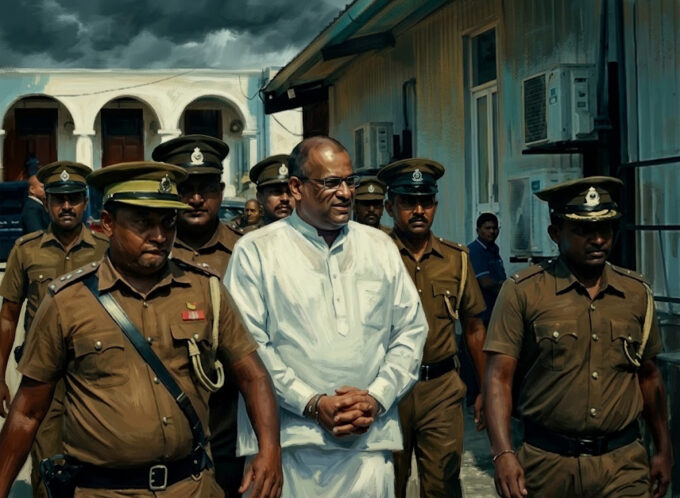
At the center of this unfolding controversy is Dr. Harshana Suriyapperuma, the NPP’s hand-picked Secretary to the Treasury. His position is not merely administrative; it is pivotal to the integrity of the country’s financial architecture. The Treasury Secretary sits at the nexus of policy, execution, and oversight. It is under his watch that this discrepancy has emerged. Yet the focus thus far has been on the suspension of a handful of officials – four individuals, including two directors, which raises the fundamental question whether these individuals are the architects of the failure, or convenient fall guys.
Change of monetary architecture
To answer that question, one must look beyond the immediate incident and examine the structural changes that preceded it. Historically, Sri Lanka’s sovereign debt servicing operations have been handled within the framework of the Central Bank. This arrangement was not incidental, it reflected a deliberate design, one that embedded multiple layers of verification, institutional separation, and professional oversight into the process. The Central Bank, with its technocratic orientation and relative insulation from day-to-day political pressures, provided a buffer against precisely the kind of failure that is now under scrutiny.
That architecture changed under the new Finance Act, which shifted key aspects of debt management to the Treasury’s Department of Foreign Resources. On paper, the reform may have been justified as an effort to streamline operations or enhance coordination. In practice, however, it appears to have reduced the degree of institutional separation that acted as a safeguard. By placing these functions under direct administrative control, the system appears to have become more centralized and, arguably, more vulnerable.
Centralization, in itself, is not inherently problematic. But when it is accompanied by weak controls, insufficient expertise, or blurred lines between political authority and administrative responsibility, it can create precisely the conditions in which failures occur and remain undetected. The present case appears to be a textbook illustration of that risk: a payment was initiated, a fraudulent instruction was processed, and the funds were diverted without triggering the safeguards that should have existed at multiple levels.
This brings us to the deeper and more uncomfortable question of politicization of key institutions. The position of Treasury Secretary has historically been reserved for career civil servants; individuals who, by virtue of their training and tenure, are expected to operate with a degree of independence from the political leadership of the day. That convention was not merely a matter of tradition but a recognition of the need to insulate the management of public finance from partisan influence.
Pitfalls of politicising the Treasury
That convention has now been broken not once, but twice. The first instance, involving Ajith Nivard Cabraal, remains controversial, not least because of the Greek bond hedging scandal that unfolded during his tenure. The second is the current appointment of Dr. Suriyapperuma, whose trajectory from National List Member of Parliament (MP) to Deputy Minister of Finance and then to Treasury Secretary in a matter of months, mirrors, in many respects, that of his predecessor. The parallels are difficult to ignore, and they raise legitimate concerns about whether the lessons of the past have been adequately absorbed by a regime that swore to do so.
Invariably when political and administrative lines blur, accountability becomes harder to pin down. Who is responsible for oversight? Who flags discrepancies? Who ensures that protocols are followed? And, crucially, who is held to account when they are not? In a system where authority is concentrated and roles are overlapping, the answers to these questions can become elusive.
The government’s recent attempts to influence the appointment of the Auditor General further compound these concerns. Over a period of nine months, multiple efforts were made to secure the approval of a preferred nominee; efforts that were ultimately resisted by the Constitutional Council with support from the Bar Association and civil society. That episode, in retrospect, appears less like an isolated dispute and more like part of a broader pattern: an attempt to reshape the architecture of accountability in ways that concentrate control while weakening independent oversight.
It is against this backdrop that the current scandal must be understood. The missing USD 2.5 million is not just a financial anomaly; it is also a symptom of a deeper malaise. It points to a system in which controls may be inadequate, oversight may be compromised, and transparency may be conditional rather than fundamental.
Questions galore
The questions that now demand answers are both specific and systemic. Who authorized the final digital signature for the ill-fated transaction? Why were the fraudulent instructions not detected before the funds were released? Why did the Technical Investigation Committee fail to freeze the transaction in time? Where did the money ultimately end up, and who are the beneficiaries? And perhaps most importantly, why was the entire incident kept hidden from the public, and, it would seem, from parts of the government itself, for four months?
These are not questions that can be answered by a committee report alone. They require a level of transparency and accountability that goes beyond administrative procedure. They require political will.
The opposition, led in part by figures such as Dr. Harsha de Silva, has already begun to frame the issue in broader terms. De Silva has raised concerns not only about the incident itself but about the systemic risks associated with the transfer of debt management functions from the Central Bank to the Treasury. He has pointed to warnings issued at the Committee on Public Finance (CoPF), where the need for specialized expertise in managing sovereign debt was emphasized. Those warnings, he alleges, were ignored.
More provocatively, he has questioned whether Sri Lanka may have technically defaulted if the intended creditor did not receive the payment in question. He has suggested that multiple payments may have been missed, raising the spectre of a deeper operational failure. These claims, if substantiated, would have far-reaching implications not just for the government’s credibility but for the country’s standing in international financial markets.
The government, for its part, has sought to contain the fallout by framing the incident as a cyber breach. There is, of course, a growing global recognition of the risks posed by cybercrime, particularly in the realm of financial transactions. But invoking a ‘hacker’ as the primary explanation carries its own risks. It can obscure internal failures, shift focus away from accountability and create the impression that the state is a passive victim rather than an active custodian of public resources.
Even if the breach was external, the responsibility for preventing, detecting, and responding to it remains internal. Systems are only as strong as their weakest link. Protocols are only as effective as their enforcement. And accountability cannot be outsourced to an anonymous adversary.
Fragile external situation
The timing of this incident could not be more precarious. Sri Lanka remains under the watchful eye of the International Monetary Fund (IMF), operating within a framework that demands fiscal discipline, transparency, and structural reform. The country’s external position, while improved from the depths of crisis, is still fragile. Foreign exchange reserves are under pressure, growth projections remain uncertain, and the resumption of debt servicing obligations looms on the horizon.
In this context, the loss of USD 2.5 million is not trivial. It is a signal. It raises questions about the robustness of the systems that will be relied upon to manage far larger flows in the months and years ahead. It invites scrutiny from international partners, and it risks undermining the very confidence that the government has worked to rebuild.
There is also a broader economic dimension that cannot be ignored. The country is already contending with external shocks, including rising energy prices and geopolitical tensions in the Middle East that threaten remittances, tourism, and trade. In such an environment, the margin for error is thin. Every dollar counts and every lapse carries amplified consequences.
And yet, the pattern persists: from the shipping container releases, to the coal procurement scandal that led to a ministerial resignation to allegations of overpriced fuel imports, the narrative is one of recurring crisis. Each episode is met with denial, delay, and eventual damage control, leaving behind a residue of doubt and erosion of trust.
Unmistakable irony
There is an irony here that is difficult to ignore. The current NPP administration came to power on a platform of accountability, transparency, and clean governance. It positioned itself as a corrective to the excesses of the past. And yet, it now finds itself confronting allegations that echo those it levelled against its predecessors. Whether this is a matter of karma, as some might suggest, or simply the result of systemic weaknesses that transcend political cycles is a question for historians. For the present, the concern is more immediate: the erosion of public trust.
Trust, once lost, is not easily regained. It requires more than rhetoric. It requires demonstrable action. It requires a willingness to confront uncomfortable truths, to hold individuals accountable regardless of their position, and to strengthen the institutions that serve as the backbone of governance.
The recovery of the missing funds, while important, is only part of the solution. The deeper challenge lies in restoring confidence; in the Treasury, in the processes it oversees, and in the government that ultimately bears responsibility for both. That will require not just an investigation, but a reckoning.
If there is a lesson to be drawn from this episode, it is that systems matter, and structures matter. The separation of powers, the independence of institutions, and professionalism of the public service are not abstract principles, but practical safeguards. When they are weakened, the consequences are real.
Sri Lanka has been here before. It knows the cost of institutional failure. It has paid that cost in economic hardship, in lost opportunities, and in diminished credibility. The question now is whether it is willing to learn from its own experience. Because if it does not, the USD 2.5 million that has gone missing may prove to be the least expensive lesson of all.
Disclaimer: The views and opinions expressed in this article are those of the writer and do not necessarily reflect the official position of this publication.












Leave a comment