

By Vox Civis
What begins as a scandal in sunny Sri Lanka, rarely remains confined to a single ministry. Today, one such scandal is metastasizing into something far more profound and consequential: a crisis of credibility at the very core of government. The unfolding controversy surrounding fuel procurement, coal tenders, unexplained wealth, and the reluctant resignation of a powerful minister is no longer about one individual or even one sector, it is about a pattern – one that raises uncomfortable questions about whether the promise of political transformation has quietly given way to old habits.
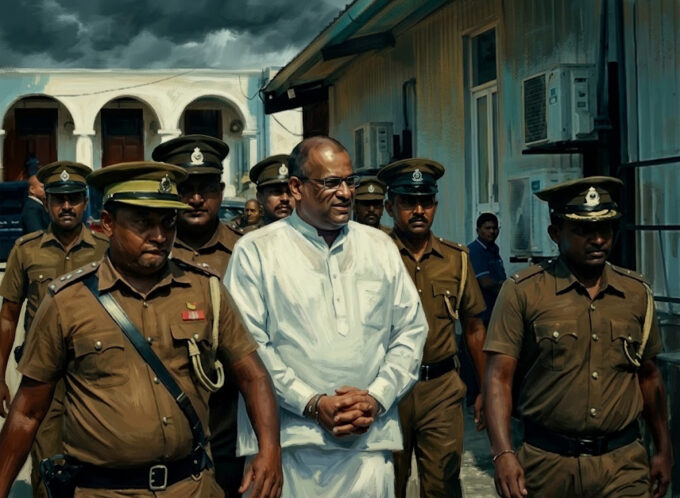
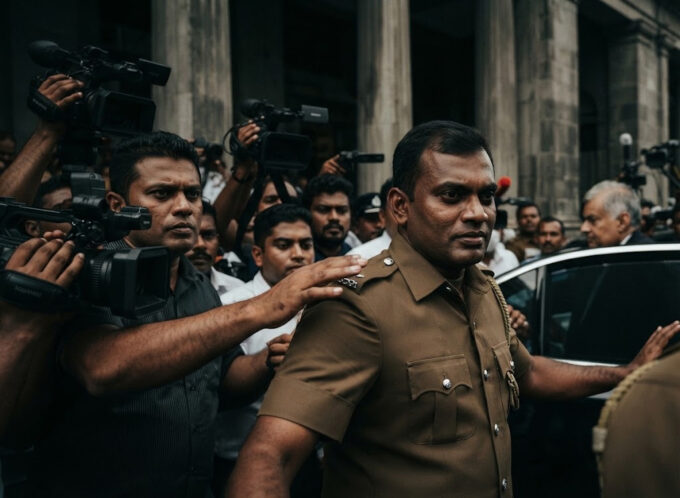
The resignation of Energy Minister, Kumara Jayakody coming barely a week after surviving a no-confidence motion in Parliament, has been presented by some as evidence of accountability. That interpretation, however one might choose to justify, simply does not withstand scrutiny. Resignations that arrive only after sustained public outrage, mounting evidence, and political isolation are not acts of principle; they are acts of necessity and political expediency. By the time the letter is tendered, the decision has already been made elsewhere; by public opinion, by political pressure, and by the sheer weight of contradiction that can no longer be managed.
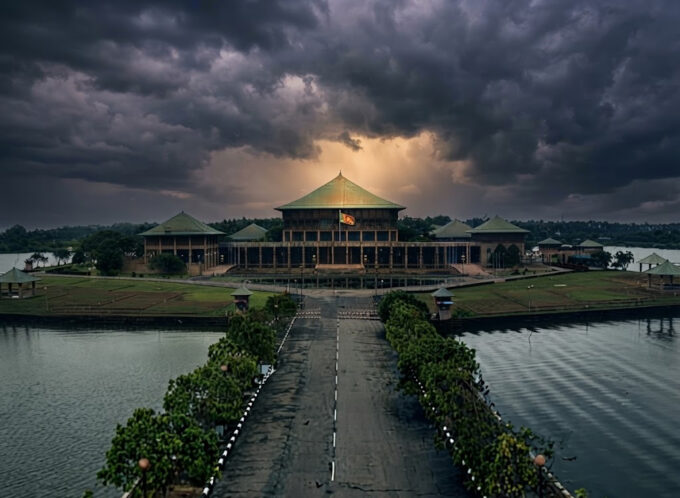
Indeed, the National People’s Power (NPP) government’s defenders have been quick to frame this as a victory for internal discipline. Yet the opposition has correctly pointed out the obvious that had the no-confidence motion not forced the issue into the open, the Minister would likely still be in office. The same 153 Members of Parliament who defended him and voted to protect him days earlier, cannot now claim credit for his departure. Political accountability cannot be retrofitted after the fact.
No smoke without fire
What makes this episode particularly troubling is not merely the resignation itself, but the trail that led to it. The Minister in question was not a political novice blindsided by an unforeseen allegation, he was already shadowed by a corruption controversy dating back to 2015, involving irregularities in procurement, for which indictments were served recently. That history alone should have prompted caution. Instead, he was elevated to a position of immense economic significance through the National List – a route that bypasses direct electoral scrutiny. It is a decision that now appears, at best, negligent and, at worst, knowingly reckless.
The allegations that ultimately precipitated his fall are both specific and systemic. They range from dubious coal tenders to claims of inflated fuel procurement prices. It is the latter that has captured public imagination, not least because of its stark numerical implications. When the Chief Executive of a global financial institution such as HSBC publicly states that Sri Lanka may have paid as much as “USD 286 for a barrel of oil” – the highest price he had encountered anywhere in the world thus far – it is not a claim that can be casually dismissed. It demands a coherent, evidence-based response, especially from a regime that was elected on assurances of transparency and accountability.
Instead, what followed was a denial that only deepened the mystery. The Ceylon Petroleum Corporation (CPC) at a hurriedly arranged press conference asserted that its procurement prices ranged between USD 71 and USD 113.29 per barrel from the start of the Middle East crisis end February, to now. On the surface, this appears to rebut the allegation. In reality, it creates a far more damaging contradiction.
The government cannot simultaneously claim that it purchased fuel at relatively moderate prices and that it was incurring massive losses necessitating steep price increases at the pump. The arithmetic simply does not allow it. When global crude prices hovered around $ 95 per barrel, the justification for increasing local fuel prices quite steeply by between Rs. 100 to Rs. 200 per liter, was that the state was absorbing unsustainable losses. Yet standard pricing models suggest that such losses would only materialise if procurement costs were dramatically higher; closer to USD 250 per barrel or more. And this is where the HSBC CEO’s revelation comes in to context.
One of two scenarios
This leaves only two plausible scenarios. The first is that the official figures are accurate and fuel was indeed purchased at around $ 71 to $ 113 per barrel during this period. If so, then the narrative of ‘losses’ becomes redundant. Mind you, at about this time the Government also announced that it was subsidising fuel – petrol by Rs.20 and diesel by Rs. 100 per liter. Instead of subsidising consumers, the state would have been generating substantial margins based on the CPC’s own revelation of actual purchase prices. In this scenario, the price hikes imposed on the public do not appear to be a painful necessity but an avoidable burden – one that effectively transferred wealth from citizens to the state under seemingly false pretenses.
The second scenario is even more disturbing. If the claims of losses are indeed true, then the procurement price must have been extraordinarily high; potentially aligning with the $ 286 figure cited internationally. This would imply not just inefficiency but a breakdown of procurement discipline on a scale that borders on the implausible. Paying more than double the prevailing regional price is not a marginal error; it is systemic failure that demands immediate accountability. Either way, the unavoidable conclusion is that the numbers do not reconcile. And when numbers do not reconcile, trust necessarily begins to erode.
This erosion of trust is compounded by the government’s response strategy. The appointment of a Presidential Commission to investigate coal procurement from 2009 onwards may appear, at first glance, to be a comprehensive approach. But in practice, it risks being perceived as a diversion. By expanding the scope of inquiry across nearly two decades, the focus is being shifted away from the immediacy of current allegations, creating a procedural labyrinth in which accountability can be delayed, diluted, or indefinitely deferred. In a nation notoriously famous for its two-week memory span, the issue is as good as buried unless the opposition which has done a good job thus far on this issue, keeps it current.
An all too familiar pattern
Sri Lanka has seen this pattern before where commissions are announced with great fanfare, timelines are set and then extended, and findings are contested until public attention gradually dissipates. By the time conclusions are reached – if they are reached at all – the political context would have shifted, and the urgency dulled. It is a mechanism that can produce the appearance of action without its substance. Therefore, given recent history, resorting to this same methodology itself can be construed as an admission of culpability.
There are also legitimate concerns about the composition and mandate of the commission itself. Questions have been raised as to who selected its members and what criteria governed their appointment. There is also the question of the order in which the allegations be examined given the 17-year period to be investigated. If the inquiry begins in 2009 and works forward, will it realistically reach 2026 within the stipulated timeframe of six months? Or will the most recent and politically sensitive issues remain conveniently unexamined?
It will be recalled that one of the prime reasons this same government has routinely offered for the delay in concluding the Easter Sunday terror attack investigations, is that it happened seven years back and therefore it has been difficult to trace evidence. However, in this instance, going back 17 years does not appear to be a problem. These are not procedural technicalities. They go to the heart of whether the commission is designed to uncover truth or to manage perception.
Meanwhile, overlaying these institutional concerns is a more personal, and perhaps more politically damaging, revelation: the disclosure of significant personal wealth by a senior figure long associated with the Janatha Vimukthi Peramuna’s (JVP’s) ideological austerity. For years, the narrative surrounding K.D. Lalkantha, now a senior Cabinet Minister, was one of simplicity, even hardship – a leader who reportedly depended on his spouse’s modest income as a teacher. However, his recent asset declaration, indicating wealth in excess of Rs. 460 million, has fundamentally disrupted, or rather destroyed, that narrative.
Deeper disillusionment
Discrepancies between public statements and declared assets are not merely matters of personal embarrassment because they raise questions about the integrity of the political project itself. When those who position themselves as moral alternatives are found to operate within the same opaque frameworks they vehemently criticised, the disillusionment becomes deeper and more enduring.
The complaint lodged with the Commission to Investigate Allegations of Bribery or Corruption (CIABOC) regarding these discrepancies underscores the seriousness of the issue. It calls for a thorough and impartial investigation not only into the assets themselves but into the processes by which they were accumulated and declared. At the end of the day, transparency is not an abstract principle; it is a measurable standard where either declarations align with reality, or they do not.
Taken together, these developments point to a broader failure of governance. It is not simply that mistakes have been made – it is that the mechanisms designed to detect, correct, and prevent those mistakes appear to be either compromised or ineffective. When allegations are met with denial, when contradictions are left unresolved, and when accountability is delayed, the cumulative effect is corrosive and therefore self-destructive.
This corrosion is not confined to political circles. It extends into the economy. Fuel pricing is not an abstract policy issue; it affects every sector, from transportation to agriculture to manufacturing. When prices are increased under questionable circumstances, the burden is ultimately borne by citizens through higher costs of living, increased electricity tariffs, and indirect taxation.
The question of who absorbs the loss is therefore not rhetorical. If procurement was flawed, should the cost be socialised? Should citizens pay for inefficiencies or irregularities they had no role in creating? Or should there be mechanisms to recover losses from those responsible – whether through contractual penalties, legal action, or institutional reform? These are difficult questions, but they cannot be avoided. The alternative is a continuation of the status quo, in which public resources are treated as expendable and accountability is episodic at best.
Opposition’s ‘work in progress’
It is also worth reflecting on the role of the opposition in this episode. While political motivations are never absent, the no-confidence motion served a critical function: it brought contested information into the public domain and forced a response. In that sense, it fulfilled one of the core functions of democratic opposition – to scrutinise, to challenge, and to compel transparency.
Without that pressure, it is entirely plausible that the situation would have unfolded differently where the Minister may have remained in office, the contradictions may have remained unexamined, and the public may have remained unaware. That is not a hypothetical scenario; it is a pattern that has repeated itself across administrations.
Yet even at this point, caution is warranted. Accountability that depends solely on opposition pressure is inherently fragile. It requires a balance of power that cannot always be guaranteed. Sustainable accountability must be institutionalised – embedded within systems that operate regardless of political configuration. That is what the people expected in electing the NPP.
Ultimately, the significance of this moment lies not in the fall of a single minister but in the choices that follow. The government can treat this as an isolated incident, to be managed and eventually forgotten. Or it can recognise it as a warning – a signal that the gap between promise and practice is widening.
Closing that gap will require more than resignations. It will require a willingness to confront uncomfortable truths, to enforce standards consistently, and to accept that credibility, once lost, is difficult to regain. It will require transparency not as a slogan but as a discipline – one that applies equally to allies and adversaries.
There is a tendency in Sri Lankan politics to celebrate the minimum where a resignation becomes an act of heroism; an investigation becomes a sign of resolve. But these are not achievements, they are basic expectations. In functioning democracies, ministers resign when credible allegations emerge – not after they become untenable. Investigations are swift, focused, and conclusive, not expansive and indefinite.
Setting the bar
The bar must be set higher. Not because it is idealistic, but because the cost of lowering it is already being felt. It is felt in the price of fuel, in the reliability of electricity, in the credibility of institutions, and in the confidence of citizens. If there is one lesson to be drawn from the current crisis, it is this: numbers have a way of cutting through narrative. They expose inconsistencies, challenge, and demand explanation. In this case, they have done precisely that. They have revealed a set of contradictions that cannot be reconciled through rhetoric.
The question now is whether those contradictions will be addressed or obscured. Whether accountability will be pursued or postponed. assumptions Whether this moment will mark a turning point or merely another chapter in a familiar story.
For the public, the stakes are clear. If the government cannot explain how a barrel of oil is priced, how a tender is awarded, or how a public official accumulates wealth, then it cannot claim to govern in the public interest. And if it cannot claim that, then the legitimacy of its authority is in question. In the end, the issue is not whether a minister resigned. It is whether a government can still command trust.
Disclaimer: The views and opinions expressed in this article are those of the writer and do not necessarily reflect the official position of this publication.








Leave a comment