
By The Pulseline News Desk
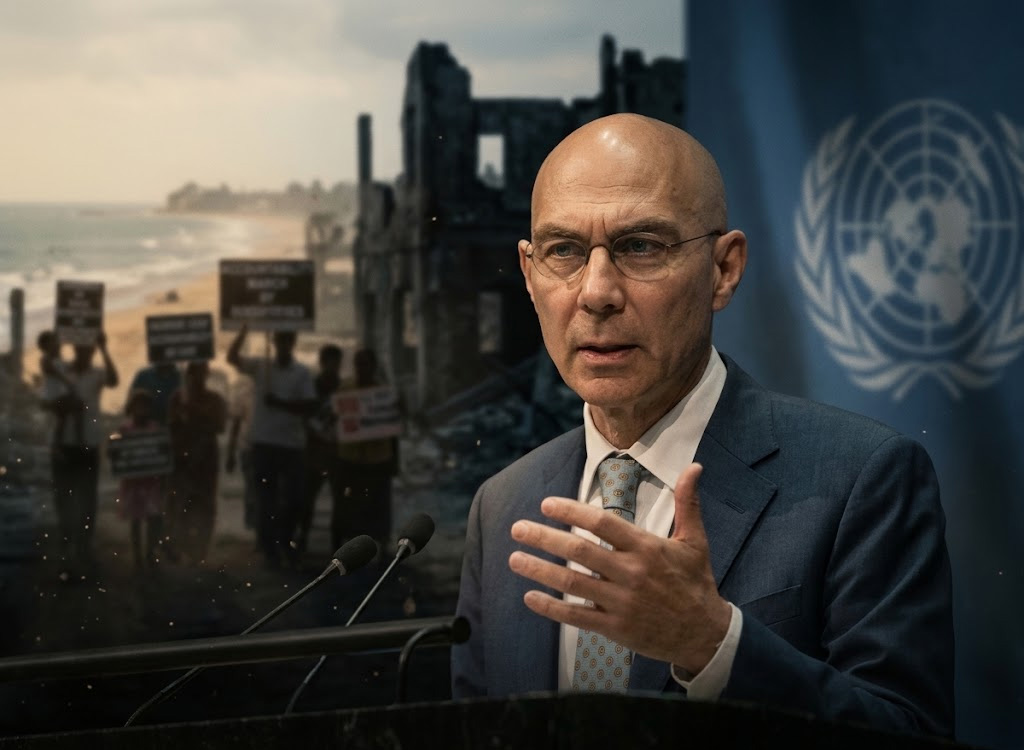
Seventeen years after the end of Sri Lanka’s civil war, the country continues to face a deep accountability gap over alleged grave human rights violations and international crimes committed during the conflict, United Nations High Commissioner for Human Rights Volker Türk has warned.
In his latest report on Sri Lanka, released on September 3, Türk has said that although there had been progress in a few significant cases, there had been no recognition or accountability for crimes under international law, gross human rights violations and serious violations of international humanitarian law allegedly committed by all parties during the war with the Liberation Tigers of Tamil Eelam (LTTE), which ended in 2009.
The assessment comes nearly two years after President Anura Kumara Dissanayake’s Government came to power promising to address longstanding concerns over justice, reconciliation and the rights of victims.
The UN report indicates that while the Government has taken some steps, these have yet to translate into a comprehensive accountability process capable of addressing the scale of alleged violations committed during the conflict.
The concerns echo those raised by Human Rights Watch (HRW) in a report released on September 1. HRW has said there had been limited progress in several high-profile cases, but little or no movement in cases involving enforced disappearances, the killing of aid workers and attacks on journalists.
The organisation has also pointed to a gap between the Government’s stated commitments and concrete institutional reforms. It has said the Government had yet to establish an independent public prosecutor’s office or undertake the legal and structural changes required to strengthen accountability.
Another unresolved issue is Sri Lanka’s position on the UN Human Rights Council’s (UNHRC’s) Sri Lanka Accountability Project, which was established to preserve evidence relating to serious human rights abuses. HRW said the Government had not accepted the project.
PTA remains a major concern
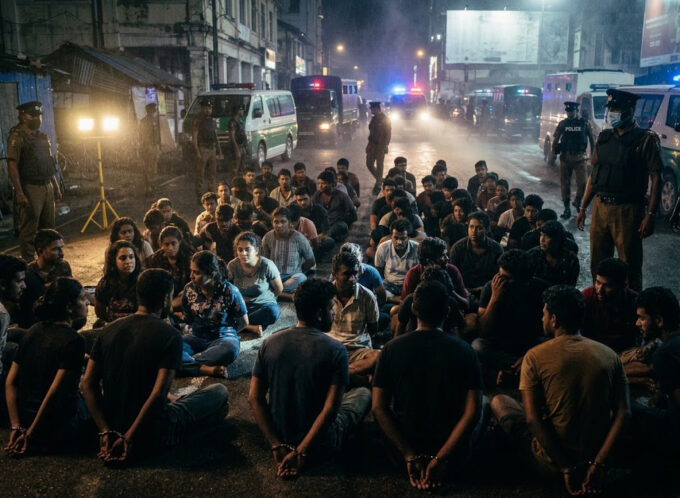
The UN report has also highlighted the continued use of the Prevention of Terrorism Act (PTA), despite longstanding calls for its repeal.
Türk has expressed concern that the law continues to be used against human rights defenders, journalists and families of victims, while victims’ families and activists — particularly in the Northern and Eastern provinces — continue to face surveillance and questioning by state intelligence agencies.
The High Commissioner has called on the Government to impose a moratorium on the use of the PTA pending its repeal and to release people who have been held under the legislation for prolonged periods.
The continued application of the PTA has become an important test of the Government’s broader pledge to move away from laws and practices associated with past rights abuses.
Trust deficit remains
For families of those who disappeared during the war, however, the issue remains more than a question of legal reform.
Years after the conflict ended, many families continue to demand information about the fate of missing relatives, while activists and victims’ groups have repeatedly called for credible investigations and accountability.
Türk’s report has warned that failure to address these longstanding concerns risks further entrenching impunity and widening the trust deficit between the State and victims and their families.
The UN has therefore urged the Government to move beyond individual cases and undertake comprehensive reforms, including changes to the legal and institutional framework, the repeal of repressive legislation, security-sector reform and concrete measures towards genuine reconciliation.
The challenge for the Dissanayake administration is consequently twofold: demonstrating that its commitment to justice is different from the promises made by successive governments, while ensuring that accountability does not remain confined to statements and isolated investigations.
With the war now nearly two decades in the past, the latest UN assessment underlines that the passage of time has not diminished the demand for answers. Instead, the continued absence of accountability risks making unresolved wartime abuses a lasting obstacle to reconciliation and public trust in Sri Lanka.










Leave a comment