
By The Pulseline News Desk
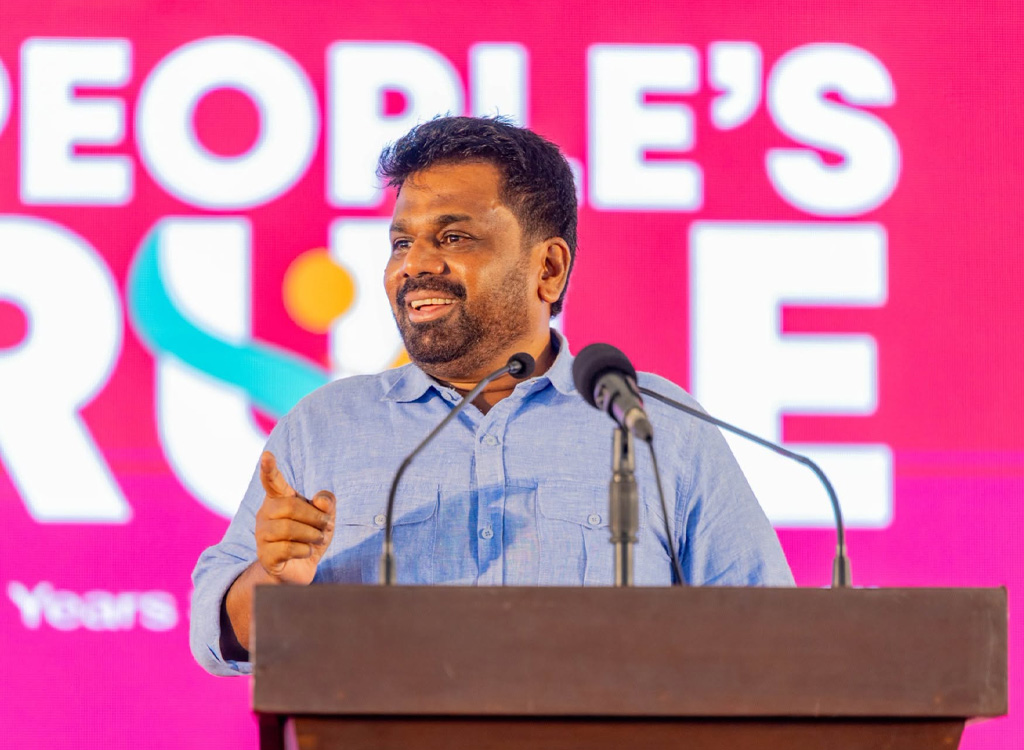
President Anura Kumara Dissanayake has pledged that the National People’s Power (NPP) Government will continue dismantling what he described as Sri Lanka’s longstanding “black state”, while accelerating public investment, digitalisation, law enforcement and social welfare programmes.
Addressing an NPP public meeting in Bulathsinhala, Dissanayake said the Government’s mandate came from voters who had rejected the political forces that had governed the country for decades and demanded a fundamental change in the way the State was administered.
He said the NPP had won power without the financial, media or State machinery traditionally used by political parties to secure elections.
“It was the people who elected this government; it is the people who will take this government forward; and it is the people who will protect this government,” he said.
According to the President, the previous political and economic system had created a “black state” characterised by corruption, economic mismanagement, racism, weakened law enforcement and the influence of organised crime.
“The people handed this country over to us to completely cleanse this black state and build a better country for future generations,” he said, pledging that the NPP would “uproot this black state from its very foundations.”
Government highlights revenue and fiscal gains
Dissanayake pointed to increased government revenue and tighter control over public finances as evidence of the Government’s efforts to reform the economy.
He claimed that Sri Lanka recorded government revenue equivalent to 16.7% of GDP in 2025, which he described as the highest level recorded in 30 years.
He also said the Government had achieved the country’s lowest budget deficit since 1957 in 2025 by reducing unnecessary expenditure and requiring feasibility studies before major projects were undertaken.
The President said the Government intends to increase capital expenditure to Rs. 2 trillion next year, while allocating Rs. 2 billion to each district as a reserve for urgent development requirements, subject to approval through the district coordinating mechanism.
He said the Government’s approach was to ensure that increased State revenue ultimately reached communities through development spending and welfare measures.
Welfare payments expanded
The President highlighted increases in several welfare and support schemes introduced since the NPP came to power.
The Mahapola scholarship for university students has been increased from Rs. 5,000 to Rs. 10,000, while the fertiliser subsidy for farmers has been doubled from Rs. 15,000 to Rs. 30,000, according to the President.
The allowance for persons with disabilities has also been increased from Rs. 5,000 to Rs. 10,000, while support for senior citizens has been increased.
Dissanayake said children living in care homes now receive Rs. 5,000 a month and, upon reaching 18, would receive Rs. 2 million to support house construction.
The Government also provided Rs. 6,000 each to 1.7 million schoolchildren to purchase educational equipment, he said.
Crackdown on corruption, drugs and organised crime
A major part of the President’s speech focused on the Government’s campaign against corruption and organised crime.
He claimed that authorities had uncovered schemes involving the illegal movement of approximately US$1 billion out of the country, with the Criminal Investigation Department (CID) and Customs intervening to stop such activities.
The President also said the Government had strengthened the Treasury by preventing public revenue from being diverted through illicit channels.
On the drug crackdown, Dissanayake said authorities had seized significant quantities of narcotics during the past two years, including 308 kilogrammes of cocaine, 1,820 kilogrammes of ‘ice’ and 16 million narcotic pills, while 74 major underworld figures who had fled Sri Lanka had been brought back to the country.
He said the State had also taken control of buses, estates, land and buildings worth approximately Rs. 6 billion allegedly belonging to drug traffickers.
“The Government of the National People’s Power is the only government that is directly confronting drugs and the underworld associated with them,” he said.
Faster justice promised
Dissanayake also linked the Government’s anti-corruption campaign to efforts to reduce delays in the justice system.
He said the Government Analyst’s Department, which previously produced around 3,000 reports a month, had produced 9,084 reports in the previous month after additional facilities and allowances were provided.
He said seven new High Courts had been established in Colombo to accelerate the disposal of cases.
The President also reiterated the Government’s intention to proceed with constitutional changes connected to the 22nd Amendment, saying the Government would move ahead once the relevant legal determination was delivered.
No postponement of elections, President says
Addressing speculation over the possibility of postponing elections, Dissanayake rejected claims that the Government intended to use a referendum to extend its political tenure.
He said presidential and parliamentary elections would be held as scheduled.
“There are currently legal obstacles to holding the provincial council elections,” he said, adding that those elections would also be held once Parliament agrees on the electoral system.
“We will never attempt to deceive the people and retain political power. We will always place our trust solely in the people,” the President said.
Rs. 2 trillion capital programme and major infrastructure projects
Looking beyond the Government’s immediate reform agenda, Dissanayake outlined an ambitious infrastructure programme for the coming years.
He said construction would begin on three major expressways — Galagedara-Rambukkana, Ingiriya-Padukka and Kurunegala-Galewela — with the projects to be funded entirely through the Treasury rather than foreign borrowing.
The Government also plans to begin railway electrification, with tenders expected to be awarded for the Panadura-Maradana, Negombo-Maradana and Ragama-Maradana lines.
A major Malwathu Oya reservoir project, estimated at Rs. 47 billion, is also planned.
Digital infrastructure will form another major component of the Government’s development strategy. Dissanayake said 1,000 4G towers would be constructed over three years, with 250 planned for next year.
He said Rs. 30 billion would be allocated for digitalisation in the next Budget, with the Government aiming to allow citizens to access around 80% of State services remotely through mobile phones.
Vocational education and energy reforms
The Government is also planning to establish 50 vocational universities across the country, according to Dissanayake, providing students with alternatives to the traditional university system.
Two such institutions are planned for the Kalutara District.
In the energy sector, the President said a 160-megawatt battery storage system had been installed to store solar-generated electricity during daylight hours and release it during the evening peak.
A further 200-megawatt battery system is also planned, he said.
The Government is additionally reviewing existing agreements involving the Ceylon Petroleum Corporation and seeking to establish a more competitive fuel market.
Govt. says crisis response demonstrates stronger Treasury
Dissanayake also pointed to the Government’s response to recent crises as evidence of improved fiscal capacity.
He said the Government had allocated funds to support communities affected by the “Ditwah” cyclone disaster and provided compensation for damaged homes, livestock and agricultural land.
He also said the Government allocated Rs. 100 billion to subsidise fuel and electricity costs following disruptions and higher global energy prices linked to the Middle East conflict.
According to the President, the Government absorbed Rs. 100 of the cost of each litre of fuel and provided assistance to the Ceylon Electricity Board to offset higher electricity costs for consumers using less than 180 units a month.
From political change to institutional transformation
The broader message from the Bulathsinhala rally was that the NPP sees its first phase in office not merely as an economic recovery programme, but as an attempt to restructure the political and institutional system that preceded it.
Dissanayake said the Government had abolished the post-service pension for MPs and removed privileges previously granted to former presidents, including official residences, vehicles, security and secretarial staff.
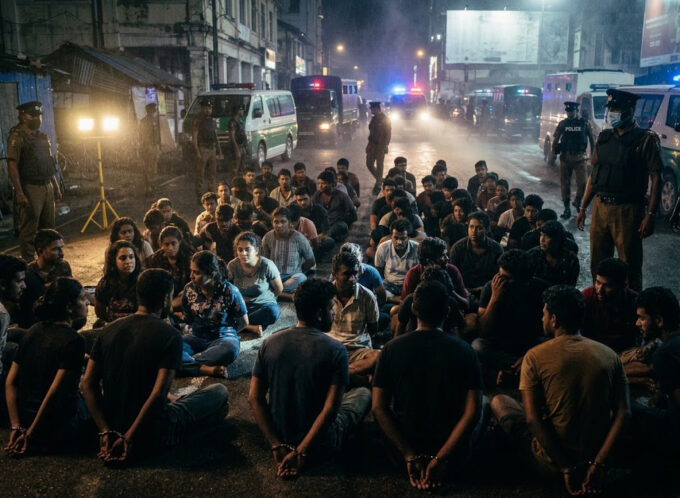
He also pointed to the Government’s handling of public protests, claiming that during its first two years in office there had been no tear-gas, baton or water-cannon attacks against public demonstrations.
The President said this represented a departure from what he described as a political culture in which citizens feared politicians and public resources were routinely used for political purposes.
The Government’s central challenge now is to translate those political promises into sustained institutional and economic results.
Dissanayake concluded by calling on supporters to strengthen the NPP’s grassroots organisation, framing the next phase of the Government’s programme as a longer-term effort to rebuild the State while maintaining public support.
“We cannot build the country while retaining this black state,” he said. “The first step in building the country is to destroy this black state.”






Leave a comment