
By The Pulseline News Desk
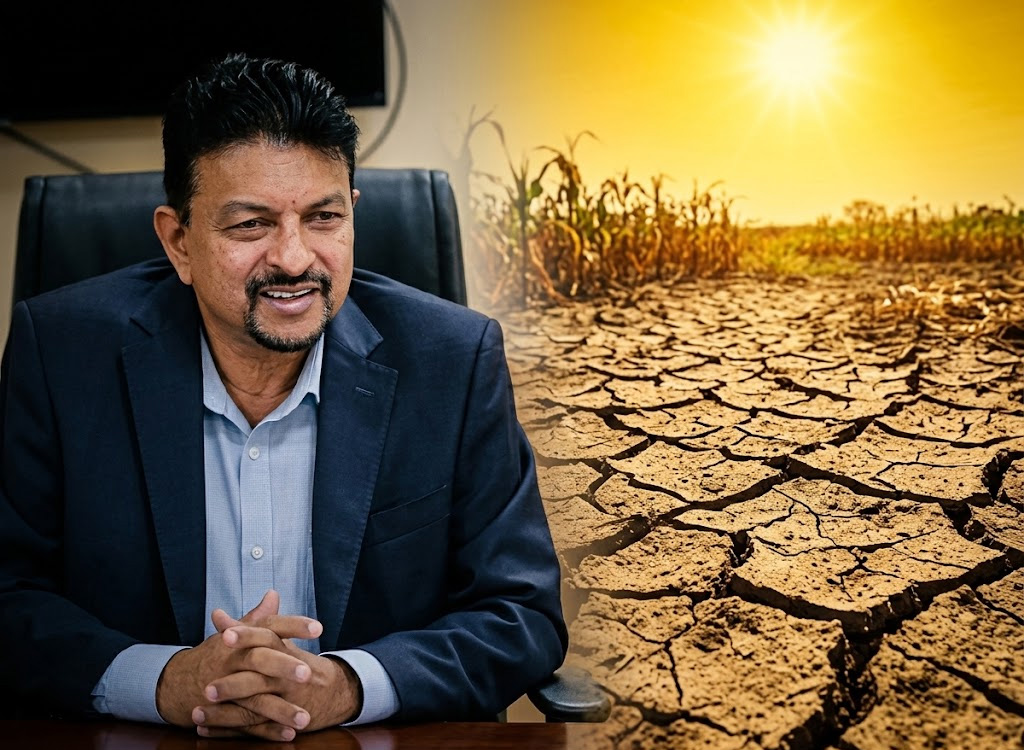
More than 78,000 people have lost their livelihoods due to El Niño-driven dry weather, but the Labour Ministry says it has no mechanism to assist most of them because they work outside the formal employment sector.
The contradiction highlights a growing gap in Sri Lanka’s protection systems: while climate shocks are destroying incomes on a large scale, those most affected are largely outside the framework designed to protect workers.
Deputy Labour Minister Mahinda Jayasinghe has told the media that the Labour Ministry could intervene in formal-sector employment disputes, but had no mechanism to address livelihood losses among farmers, fishermen, livestock owners, self-employed workers and others in the informal economy.
“People working in the formal sector have not faced employment-related issues. But, people engaged in agricultural activities and other sectors in the informal sector have lost their livelihoods,” he has said.
He has said intervention would be possible if, for example, factories or companies closed down and workers faced employment-related problems. However, such a mechanism did not currently exist for informal-sector workers who had simply lost their income-generating activities.
“There is no problematic situation to the extent that the Ministry needs to intervene. We can intervene if an employment issue arises in the formal sector, such as if factories and companies are closing down. At present, we don’t have a mechanism to intervene in the informal sector,” Jayasinghe has said.
Agriculture takes the biggest hit
The scale of the crisis was disclosed in Parliament recently, when Environment Minister Dammika Patabendi said 78,368 people from 25,037 families across seven Districts had lost their livelihoods because of the dry weather conditions caused by El Niño.
The affected Districts are Monaragala, Badulla, Ratnapura, Trincomalee, Batticaloa, Ampara and Anuradhapura.
Agriculture has suffered the largest impact, with 36,875 people from 12,304 families reporting livelihood losses.
The damage has extended across the rural economy. 9,408 people from 2,966 families in livestock farming have been affected, along with 7,889 plantation workers from 2,333 families and 7,491 people from 2,107 fishing families.
Self-employment has been affected among 6,039 people from 1,769 families, while 10,297 people from 3,450 families have been placed under other livelihood-related activities. Another 369 people from 108 families have suffered losses in the business sector.
The figures show that the drought is not simply an agricultural problem. It is disrupting multiple sources of household income across the informal economy.
When livelihood loss is not ‘employment loss’
The Government’s existing labour framework is largely built around the formal employer-employee relationship.
That leaves a farmer who loses a harvest, a fisherman unable to operate, or a livestock owner whose income collapses in a different position from a factory worker who loses a job.
For the former, there may be no employer, employment contract or workplace dispute for the Labour Ministry to address. Yet the economic consequence can be just as severe: the household has lost its means of earning an income.
Jayasinghe has said the Government was preparing a programme to assist those affected, indicating that the response would have to come through mechanisms outside the Labour Ministry’s existing mandate.
That makes the issue broader than labour administration. It raises questions about whether Sri Lanka’s social protection system is equipped to respond when climate events destroy livelihoods without necessarily creating conventional unemployment.
Climate shock becoming an income crisis
The immediate challenge is to help affected households recover their income-generating capacity. But the scale of the losses points to a longer-term problem.
Climate-related disruptions can hit informal workers particularly hard because their earnings are often directly tied to rainfall, water availability, natural resources and daily economic activity, while their access to formal employment protections is limited.
The 78,368 people identified by the Government are therefore more than a drought statistic. Their losses expose a structural gap between the way Sri Lanka defines employment and the way millions of people actually earn their living.
As climate shocks become an increasingly important economic risk, the question facing policymakers is no longer simply how to protect jobs. It is how to protect livelihoods when there is no formal job to protect.











Leave a comment