
By The Pulseline News Desk
Non-communicable diseases (NCDs) now account for 80% of deaths in Sri Lanka, with poorly controlled hypertension and diabetes emerging as major threats and placing growing pressure on a health system that is itself undergoing a major transformation.
Health Ministry Secretary Dr. Anil Jasinghe has warned that controlling high blood pressure and diabetes had become one of the biggest challenges facing the country’s health sector, as only about half of those with hypertension were effectively controlling their condition and just around a quarter of diabetic patients were considered to be properly controlled.
He has said the two conditions were closely linked and could lead to serious complications, including myocardial infarction, or heart attacks.
“This has now become a major problem in society,” Dr. Jasinghe has said.
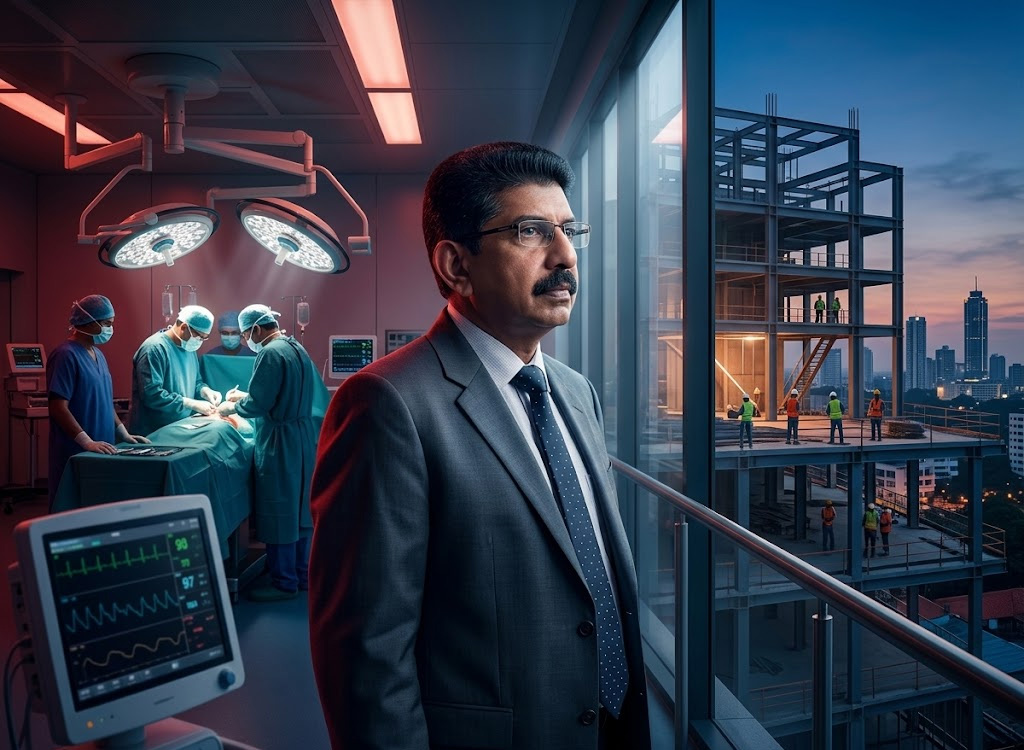
His remarks came as construction began on a new cardiac and cardiothoracic surgery complex at the Anuradhapura Teaching Hospital this week, highlighting the growing need for advanced cardiac care as Sri Lanka confronts an increasingly NCD-driven disease burden.
From infectious diseases to chronic illness
Sri Lanka’s health system has traditionally been recognised for its strong response to infectious diseases and its broad network of free public healthcare services.
But the country’s disease profile has changed significantly.
An ageing population, urbanisation and changing lifestyles have contributed to a growing burden of chronic diseases, with hypertension and diabetes among the conditions requiring long-term monitoring and treatment.
The challenge is not simply the availability of treatment. Effective management depends heavily on early detection, regular follow-up, medication adherence and changes in risk factors.
The figures cited by Dr. Jasinghe suggest that a substantial proportion of patients with two of the country’s most important cardiovascular risk factors remain inadequately controlled.
That increases the risk of complications that require more expensive and specialised hospital care.
Building capacity for advanced cardiac care
The new Anuradhapura facility is intended to expand the country’s capacity to respond to that growing demand.
The eight-storey cardiac and cardiothoracic surgery complex is being constructed at a cost of Rs. 3.545 billion, with loan assistance from the Japan International Cooperation Agency (JICA) and is scheduled for completion within 18 months.
The complex will include coronary care and intensive care units, catheterisation laboratories, X-ray and electrocardiogram facilities, specialised clinics, wards and laboratories. An auditorium and library are also included.
The total allocation for the project is Rs. 8.035 billion, comprising Rs. 3.545 billion for construction and Rs. 4.49 billion for equipment.
The expansion of specialist capacity is significant for the North Central Province, where access to highly specialised cardiac services has traditionally required patients to travel to major centres.
But the Government’s health strategy is not limited to building hospitals.
Dr. Jasinghe has said the health system must adapt to changes in the country’s demographic structure and disease patterns while continuing to expand modern medical facilities.
Three-pronged health strategy
He has said the Government’s health-sector programme was being implemented through three main components — Arogya, Cluster Systems and High-End Care Institutions.
President Anura Kumara Dissanayake, addressing the event, has identified three priorities for strengthening healthcare: bringing free healthcare services closer to the public, introducing advanced medical equipment and treatment practices, and establishing a more systematic management system.
The emphasis reflects a dual challenge facing the public health system.
Sri Lanka must expand highly specialised treatment for increasingly complex diseases while simultaneously preventing patients from reaching that stage through stronger primary and preventive healthcare.
Investment comes with a warning
The Government is also planning a major expansion of health infrastructure at Anuradhapura Teaching Hospital.
President Dissanayake has said projects worth nearly Rs. 19 billion were planned to commence at the hospital during 2027 and 2028, while projects valued at Rs. 9.7 billion were already underway.
However, he has warned that delays in completing public projects had resulted in significant financial losses, as construction costs increased while the public remained deprived of the services those projects were intended to provide.
The warning is particularly relevant to large health infrastructure projects, where delays can affect not only budgets but also access to essential medical services.
The workforce challenge
Infrastructure alone, however, cannot resolve the country’s changing health needs.
The Government is also attempting to expand the health workforce.
The President has said 3,000 doctors were being recruited for internship training during August, September and October.
A total of 3,978 nurses had been recruited, with another 2,820 expected to be recruited by 31 October.
Meanwhile, 4,869 student nurses had entered training, with a further 3,000 expected to be recruited by January 2027.
Recruitment is also underway for health assistants and para-medical and allied health personnel.
Prevention and treatment must move together
The expansion of cardiac facilities comes at a time when Sri Lanka is confronting a fundamental shift in the nature of its health burden.
The country needs sophisticated hospitals capable of treating heart attacks and other complications, but the scale of the NCD problem also makes prevention and early intervention increasingly important.
If only around half of people with hypertension and a quarter of diabetic patients have their conditions properly controlled, the pressure on specialist hospitals is likely to continue.
The new Anuradhapura complex therefore represents more than an infrastructure project. It is part of a broader attempt to reshape the health system around a population increasingly affected by chronic disease.













Leave a comment