
By The Pulseline News Desk
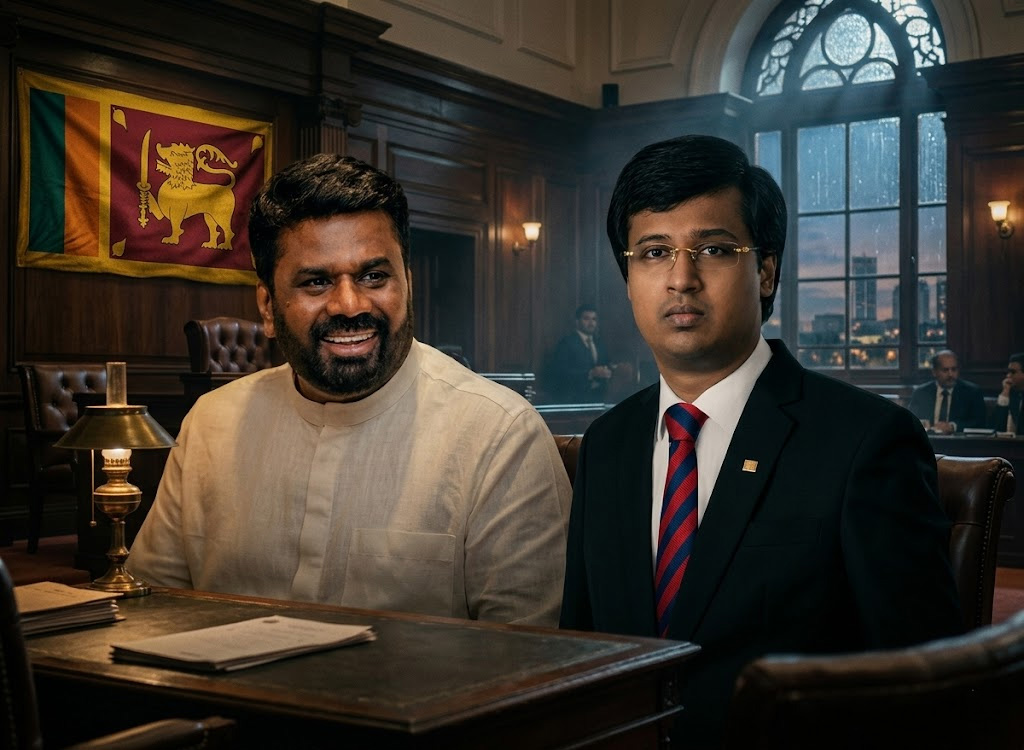
The Bar Association of Sri Lanka (BASL) has expressed cautious optimism that the Government may reconsider its proposal to extend the retirement age of superior court judges following a detailed and frank discussion with President Anura Kumara Dissanayake.
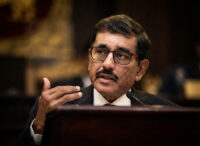
Speaking to journalists after the meeting at the Presidential Secretariat, BASL President Rajeev Amarasuriya said the Association had presented its concerns in detail and explained why the legal community was opposed to the proposed constitutional amendment.
The BASL delegation had included President’s Counsel, former presidents of the Association, academics and other legal experts, including Prof. Savitri Goonesekere and Lal Wijenayake.
Amarasuriya described the meeting with the President as a “good and frank discussion”, saying President Dissanayake had also explained his position and views on the proposed amendment.
However, the two sides did not reach any agreement.
The BASL’s principal request, according to Amarasuriya, was that a constitutional change of this nature should not be pursued without first conducting a broad-based consultation involving the legal profession, academics, researchers and others who have studied the issue.
‘This is not a fight against anyone’
Amarasuriya also sought to distance the BASL’s position from the increasingly personal nature of the public debate surrounding the proposed changes.
“This is not a fight against anyone,” he said, stressing that the Association’s opposition was based on its concerns over the proposed constitutional change and not directed at any individual judge or political figure.
He said the BASL did not support personal attacks or criticism directed at judges amid the controversy.
The clarification comes at a time when the debate over the retirement age of superior court judges has become increasingly politically charged, with competing arguments being made about judicial independence, constitutional reform and the Government’s intentions.
The BASL has maintained that its intervention should not be interpreted as a confrontation with the Government.
Rather, Amarasuriya said, both sides had been given an opportunity to present their respective positions during the Presidential meeting.
No agreement, but room for reconsideration
Asked whether the Government and the BASL had reached an agreement, Amarasuriya said no such conclusion had been reached.
Nevertheless, he appeared encouraged by the discussion and expressed hope that it would lead to a wider consultation process and, ultimately, a reconsideration of the proposed amendment before a final decision is taken.
He acknowledged that amending the Constitution was within the Government’s powers. At the same time, he stressed that the BASL also had the right and responsibility to oppose a constitutional change if it believed the move was inappropriate.
The Association, he said, expected the President to carefully consider the concerns raised, particularly given his long-standing advocacy of the rule of law and judicial independence.
“I hope that after today’s discussion, this will move in a positive direction,” Amarasuriya said.
A wider constitutional debate
The dispute over the retirement age of judges has now moved beyond a technical question of judicial tenure and into a broader debate over the relationship between the Executive, the Judiciary and the legal profession.
The Government’s proposal has already attracted opposition from the BASL and other sections of the legal community. The Chief Prelates of Sri Lanka’s three Buddhist Chapters have also urged President Dissanayake to reconsider the proposed constitutional amendment.
Against this backdrop, the BASL’s meeting with the President could provide an opportunity for the Government to broaden the discussion before proceeding with the legislation.
For the BASL, the central issue now appears to be consultation rather than confrontation.
Whether the Government will accept that approach remains to be seen. But following the Presidential meeting, the Association appears to believe that the door to reconsideration has not been closed.
The next step could therefore be crucial: whether the Government proceeds with the proposed amendment as planned, modifies it following further consultation, or pauses the process altogether.
For an administration that has repeatedly placed institutional reform and the rule of law at the centre of its political message, the handling of the judicial retirement controversy is likely to remain closely watched.









Leave a comment