
By The Pulseline News Desk
The temporary shutdown of two major water treatment plants following the release of a chemical by a private factory has raised fresh concerns over the vulnerability of Sri Lanka’s drinking water supply to industrial pollution.
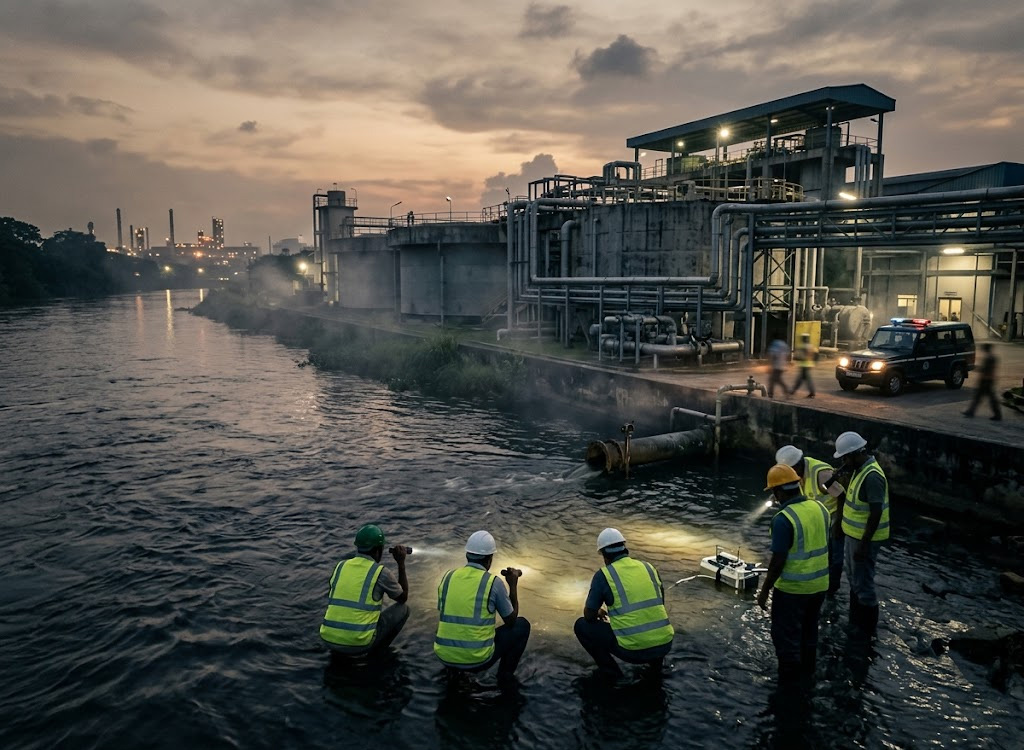
The National Water Supply and Drainage Board (NWSDB) temporarily halted operations at the Ambatale and Biyagama water purification plants after the chemical release was detected, as a precautionary measure to prevent potentially contaminated water from entering the public supply.
The two plants draw water from the Kelani River, one of the country’s most important sources of drinking water and a critical lifeline for large populations in Colombo, Gampaha and surrounding areas.
NWSDB chemical engineers had immediately launched an investigation and visited the affected location to determine whether pollutants released by the factory had reached the river.
NWSDB Chairman Chandana Bandara has said the decision to suspend water treatment operations was taken until authorities could establish that the quality of the Kelani River water had not been compromised.
Following tests confirming that the river water was safe for treatment and public consumption, the Ambatale and Biyagama plants had resumed operations at around 4.30 a.m. today.
Water supplies to several areas of Colombo were restored by around 7 a.m., while Kotte, Battaramulla and Wellawatta had received supplies again at approximately 9 a.m. Water distribution to Biyagama, Kelaniya and Gampaha had also resumed from around 6 a.m.
While the immediate disruption has been brought under control, the incident has raised more fundamental questions over the security of the Kelani River and the risks posed by industrial activity in areas surrounding major water sources.
In particular, questions remain about how the chemical had entered the environment, whether adequate safeguards were in place at the factory, and whether the incident could have resulted in a more serious contamination of the river.
Bandara has said a comprehensive investigation is now being carried out jointly by the Disaster Management Centre (DMC) and the security forces to determine the circumstances surrounding the chemical release.
The NWSDB has also lodged a complaint with the police and informed the relevant authorities, with legal action expected against those found responsible.
The incident highlights the delicate balance involved in protecting a water source that supports a large section of the country’s population. Even a suspected contamination event can force authorities to shut down major treatment facilities, disrupting water supplies to thousands of households.
It also underscores the need for stronger monitoring of industrial activity near rivers and other critical water sources, particularly where chemical substances are handled.
Although testing had allowed the two treatment plants to resume operations, the episode serves as another warning that protecting drinking water cannot depend solely on action taken after a pollution incident occurs.
Ensuring effective industrial monitoring, rapid detection of pollutants and strict enforcement of environmental safeguards will be crucial to preventing a similar incident from developing into a wider public health and environmental crisis.











Leave a comment