
By The Pulseline News Desk
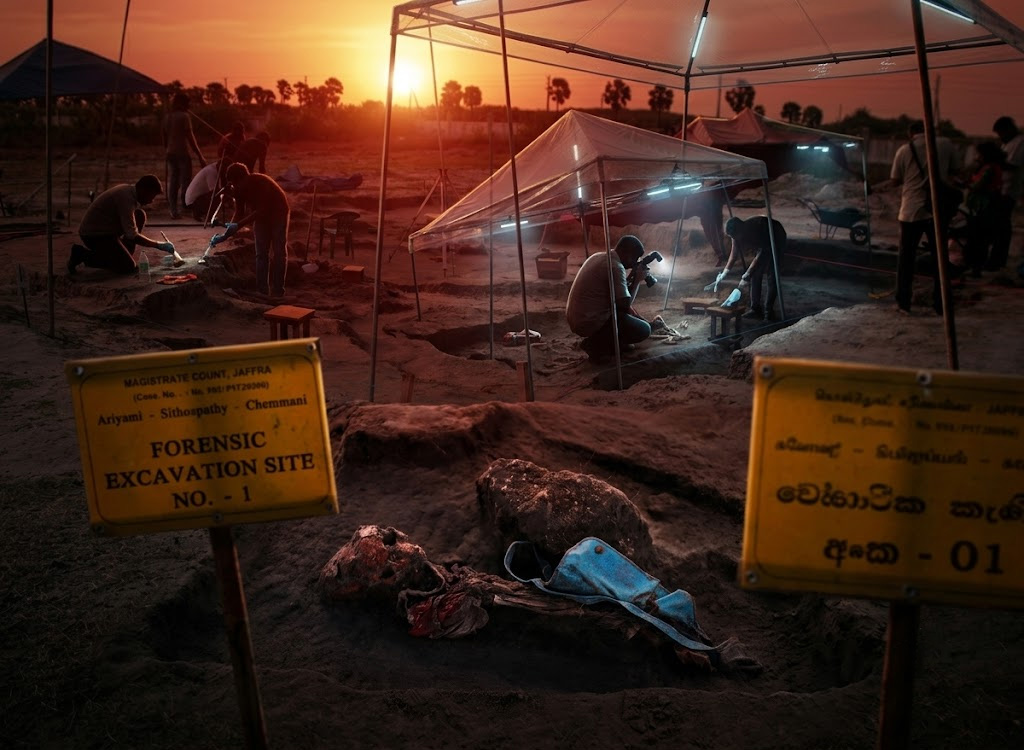
The excavation of the Chemmani mass grave in Jaffna has crossed a significant milestone, with investigators recovering more than 500 sets of human skeletal remains as the court-supervised operation entered its 100th day.
The latest findings underscore the scale of what is now one of Sri Lanka’s largest mass grave investigations, reviving longstanding questions over wartime disappearances and the country’s unresolved accountability process.
Officials overseeing the excavation have said eight additional sets of human skeletal remains were identified on the 100th day of operations, increasing the total number of skeletal remains discovered at the site to 507.
Of these, 501 sets of skeletal remains have been fully excavated and recovered, while work continues on the remaining discoveries.
The current operation is being carried out under the third phase of excavations, for which the courts had granted permission to conduct investigations over a 56-day period and Friday (7) marked the 46th day of that phase.
The Chemmani excavation has steadily expanded since work resumed earlier this year, with forensic teams uncovering an increasing number of human remains as excavation areas have widened.
The discovery has drawn renewed attention from victims’ families, human rights organisations and international observers, who have long viewed the site as a potential source of evidence relating to enforced disappearances during Sri Lanka’s decades-long armed conflict.
Chemmani has remained one of the country’s most sensitive locations since allegations first emerged in the late 1990s that civilians who disappeared during the conflict had been buried in the area. Previous investigations were limited in scope, but the latest court-authorised excavation has become the most extensive forensic examination ever conducted at the site.
Once recovered, the skeletal remains are expected to undergo detailed forensic and anthropological examinations to determine, where possible, the identities, age, sex and causes of death of the victims. DNA analysis is also expected to play a crucial role in any future identification process.
As the excavation enters its final stages under the current court order, the steadily rising number of recovered remains has reinforced calls for a comprehensive, transparent and scientifically rigorous investigation, with victims’ families continuing to seek answers decades after their relatives disappeared.
The outcome of the Chemmani investigation is expected to be closely watched both domestically and internationally, as Sri Lanka continues to face scrutiny over its handling of wartime disappearances and accountability.












Leave a comment