
By The Pulseline News Desk
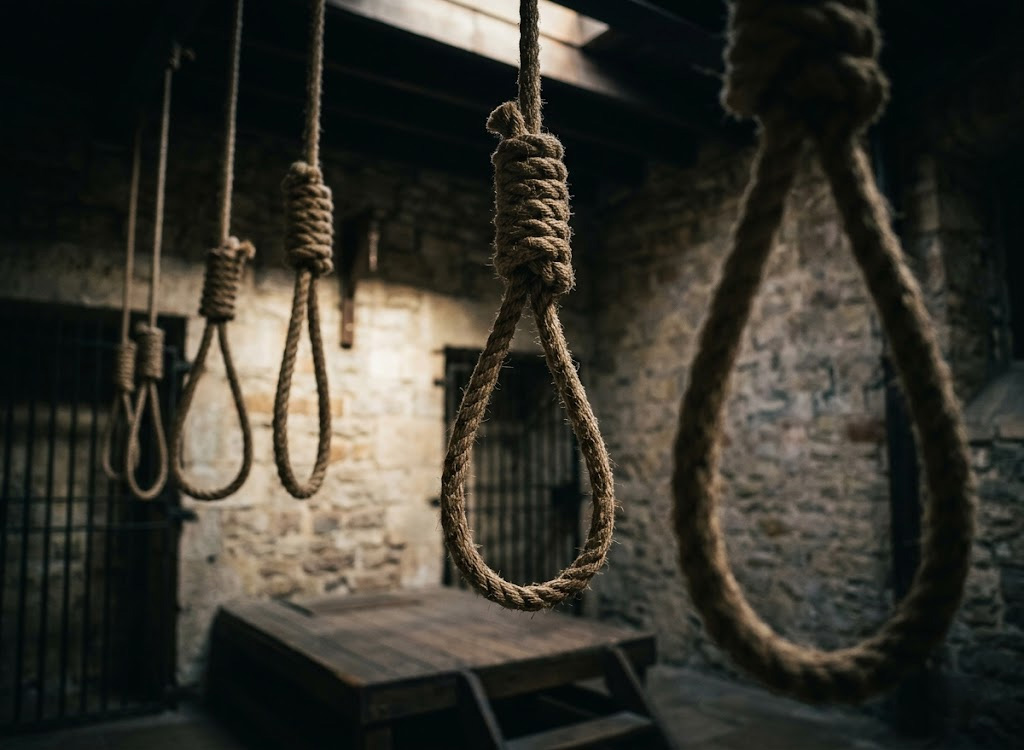
The Government has sought to clarify that no decision has been taken to introduce the death penalty for drug-related offences, despite renewed discussions on tougher measures to tackle the country’s escalating drug crisis.
Cabinet Spokesman Minister Nalinda Jayatissa has said the death penalty was among proposals put forward by certain stakeholders during discussions on the country’s growing drug problem, but stressed that the Government had not reached a final decision.
“It is only a proposal made by certain stakeholders. A final decision has not been taken,” Jayatissa has said at the Cabinet press briefing on Tuesday (11).
He has also said the Government had yet to determine how such a measure would be implemented if it were eventually approved.
The clarification comes after the issue was raised at a meeting of the “Ratama Ekata” (Country Together) National Operation Council, chaired by President Anura Kumara Dissanayake at the Presidential Secretariat on Monday (10).
The meeting had focused on the growing threat posed by narcotics and the wider impact of the drug trade on Sri Lankan society and the economy.
Drug wealth fuelling criminal networks
According to the President’s Media Division, officials at the meeting had highlighted the growing links between the illicit drug trade and organised criminal activity.
They had pointed out that wealth generated through drug trafficking was contributing to the expansion of a wider criminal ecosystem, creating risks not only to public security but also to the national economy, tourism and social values.
The discussion reflects the Government’s increasing focus on the economic and social consequences of narcotics, rather than treating drug trafficking solely as a law-and-order issue.
The large sums generated by the illegal trade can provide financial resources for organised criminal networks, while the resulting violence and insecurity can have wider consequences for communities and businesses.
The tourism sector could also be affected if drug-related violence and organised crime contribute to perceptions of insecurity, particularly at a time when Sri Lanka is seeking to strengthen tourism as a major source of foreign exchange.
Death penalty debate re-emerges
The proposal to introduce the death penalty for drug-related offences is likely to remain politically and socially sensitive.
Sri Lanka retains the death penalty in law, but executions have not been carried out for decades. Any move to introduce or apply capital punishment more extensively would therefore raise significant legal, human-rights and policy questions.
For the moment, however, the Government is making clear that no such decision has been taken.
Minister Jayatissa’s comments also suggest that the administration is still at the discussion stage, with various stakeholders putting forward possible responses to the drug crisis.
This leaves open the question of whether the Government will ultimately support capital punishment for certain drug offences or pursue alternative measures aimed at dismantling drug-trafficking networks and confiscating their illicit assets.
Focus shifts to the wider drug economy
The emphasis at the Presidential meeting on illicit wealth generated through narcotics trafficking could prove particularly important.
Rather than focusing exclusively on drug users and street-level offenders, the Government appears to be examining the financial infrastructure behind the illegal trade and its links to organised crime.
That approach could lead to greater attention on financial investigations, asset seizures, money laundering and the networks that enable large-scale trafficking.
For now, however, the death penalty remains exactly what the Government says it is: a proposal under consideration, not an approved policy.
With the drug crisis increasingly being framed as a threat to Sri Lanka’s economy, security and social fabric, the Government is likely to face growing pressure to demonstrate that its response can target the powerful networks behind the trade while remaining consistent with the country’s legal and constitutional framework.










Leave a comment