
By The Pulseline News Desk
Sri Lanka’s efforts to overhaul its electoral system have moved into a new phase, with an Expert Panel beginning a two-month review of proposals aimed at creating a more efficient, transparent and democratic system that better reflects the expectations of the public.
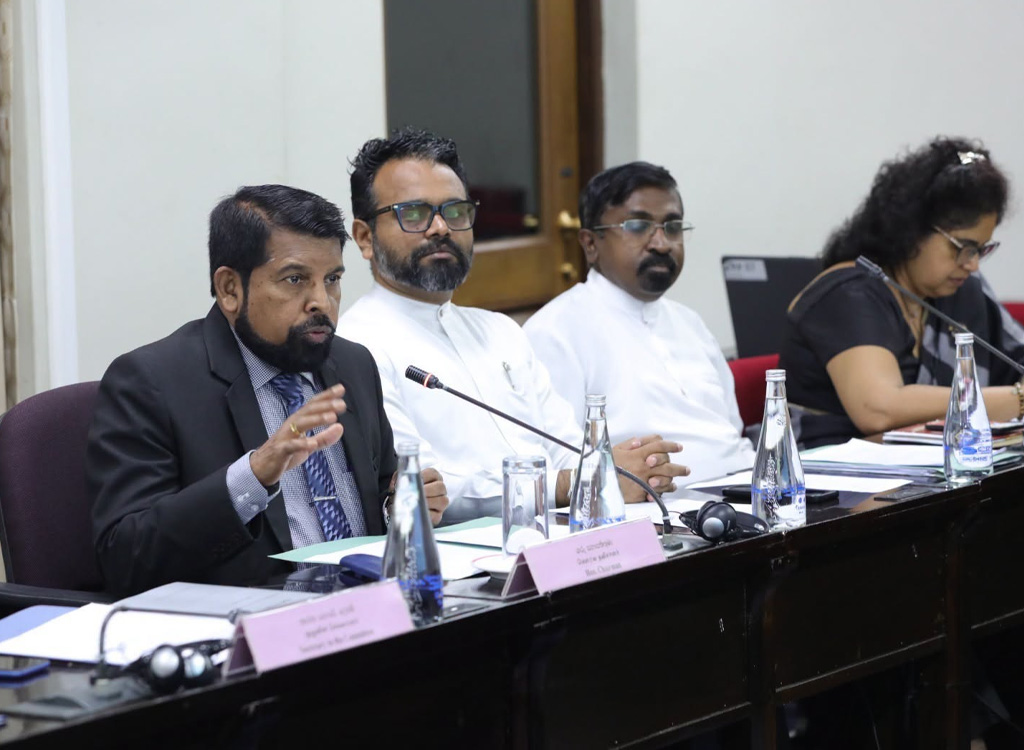
A special meeting was held at Parliament recently to determine the future course of work of the Expert Panel appointed to examine electoral reforms, excluding Provincial Council elections.
The meeting was chaired by Minister of Public Administration, Provincial Councils and Local Government A.H.M.H. Abeyratne, who also heads the Parliamentary Select Committee tasked with reviewing election laws and submitting recommendations to Parliament.
Committee members Ruwanthilaka Jayakody, Attorney-at-Law Thushari Jayasinghe and Chandima Hettiarachchi had also participated in the discussions.
The meeting has focused on defining the Panel’s mandate, identifying the areas requiring review and determining the process to be followed during the next stage of the reform exercise.
A key component of the Panel’s work will be an in-depth examination of 31 proposals submitted by citizens and organisations on electoral reform. The Panel will also consider relevant research, studies and recommendations produced by universities and other institutions.
The two-month review is expected to go beyond identifying weaknesses in the existing electoral framework. Officials have said the Panel would also consider whether more fundamental changes are required, including the possibility of establishing a new electoral system and a political and electoral culture with more constructive features.
This signals an attempt to move away from the traditional approach of making isolated amendments to election laws whenever shortcomings emerge.
Instead, the Parliamentary Select Committee is seeking to develop a comprehensive framework that addresses the broader functioning of Sri Lanka’s electoral system and its ability to respond to contemporary democratic expectations.
The Expert Panel is therefore expected to examine not only technical and legal shortcomings but also wider issues affecting the credibility, efficiency and transparency of elections.
The findings will subsequently form the basis of a comprehensive report containing policy and legislative recommendations, which will be submitted to Parliament for consideration.
The emphasis on both policy and legislation is significant, as the reform process is intended to provide a broader blueprint for the future rather than simply introduce a series of piecemeal legal amendments.
The Government and the Select Committee are also seeking to ensure that public submissions and academic research are incorporated into the process, potentially widening the scope of the reform exercise beyond discussions among political parties and lawmakers.
The formal commencement of the Panel’s work comes as Sri Lanka continues to grapple with questions over the effectiveness of its electoral framework, including the need to make elections more representative, transparent and responsive to voters.
With the Panel given two months to complete its review, its eventual recommendations could provide the foundation for a significant rethink of how elections are conducted and how the country’s electoral institutions function.
The central challenge, however, will be translating the wide range of public proposals and institutional research into a coherent system that can command broad political and public confidence.
The Panel’s work will therefore be closely watched as Sri Lanka considers whether its next electoral reforms will amount to another round of amendments or mark the beginning of a more fundamental transformation of the country’s electoral system.












Leave a comment