
By The Pulseline News Desk
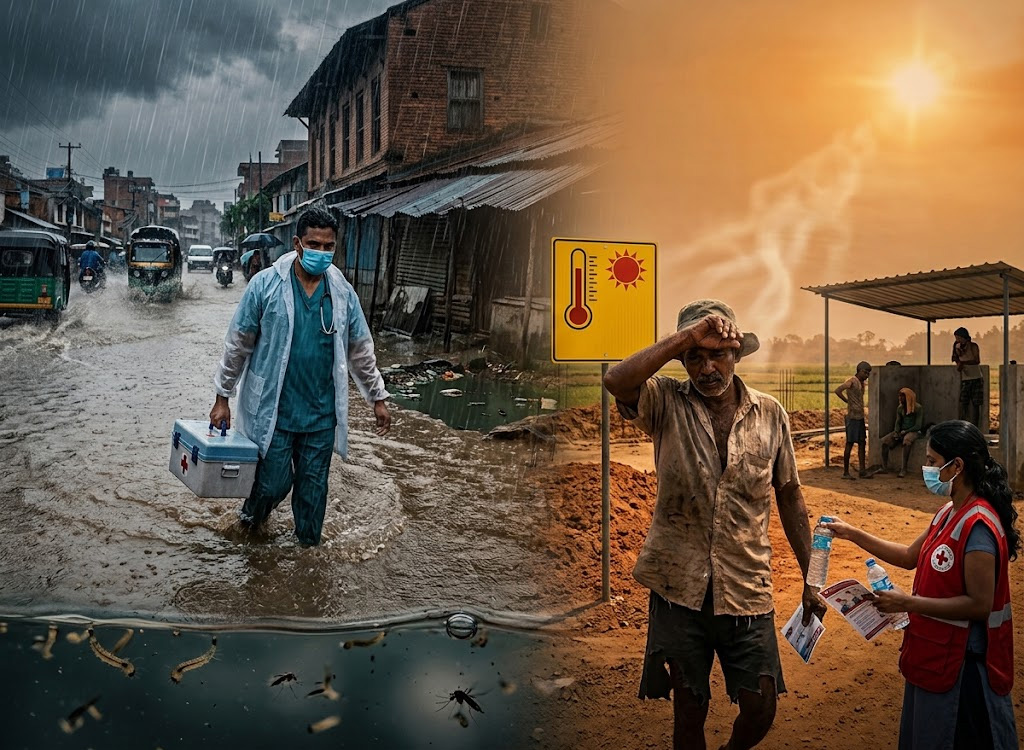
The country’s health authorities are stepping up preparations for a potential increase in climate-related diseases as the country faces a period of above-normal rainfall linked to El Niño, followed by a possible dry spell and continued heat.
The Environment and Occupational Health Unit of the Ministry of Health is currently coordinating preparations, with health officials working with the Meteorology Department and the Disaster Management Centre to monitor changing weather conditions and assess emerging health risks.
Consultant Community Physician Dr. Inoka Suraweera has reportedly said public awareness campaigns on heat-related illnesses were already being conducted through the media, while health workers, particularly clinicians at divisional level, were being given additional training to identify and manage heat-related conditions.
“We are carrying out capacity-building programmes for health workers, particularly clinicians at the divisional level, regarding heat-related diseases. Actually, we are on board,” she has said.
The health authorities are also preparing for the possible impact of heavy rainfall, including flooding and the disease outbreaks that can follow major weather events.
Such conditions can create a range of public health risks, placing additional pressure on healthcare services and requiring early intervention to prevent weather-related diseases from escalating.
Meanwhile, the Ministry is in discussions with the Asian Development Bank (ADB) to introduce a National Heat Health Action Plan with grant assistance.
Dr. Suraweera has said discussions on the plan had begun even before the latest El Niño warning, reflecting growing concern over the health consequences of rising temperatures associated with global warming.
“We began this discussion even before the El Niño warning,” she has said.
The Ministry is also preparing another initiative, titled ‘Heat and Workers’ Health’, with assistance from the International Labour Organization (ILO). The programme is expected to focus on protecting workers who are regularly exposed to excessive heat, including those in the agricultural and construction sectors.
The need for such measures has become increasingly urgent as Sri Lanka faces a changing climate and more frequent extreme weather conditions.
A recent World Bank report has identified Sri Lanka, alongside India, Pakistan and Bangladesh, among a small group of South Asian countries where temperatures are already considered too high for people to work safely outdoors for an average of six hours a day.
The report, From Risk to Resilience: Helping People and Firms Adapt in South Asia, has warned that this exposure could increase substantially, with safe outdoor working time potentially falling to just eight to nine hours a day under future climate conditions by 2050.
The wider regional outlook is equally concerning.
According to the World Bank, nearly 90% of South Asia’s population could be exposed to intense heat by 2030, while more than one in five people could face the risk of severe flooding.
For Sri Lanka, the combination of heat stress, heavy rainfall and subsequent dry conditions presents a complex public health challenge. While floods can increase the risk of water- and vector-borne diseases, prolonged heat and dry weather can create separate risks, particularly for vulnerable groups and outdoor workers.
The Health Ministry’s preparations therefore point to a growing shift in public health planning — from responding to climate-related health emergencies after they occur to building systems capable of anticipating and managing them.
With public resources already under pressure, the World Bank has also highlighted the need for households and businesses to play a greater role in adapting to increasingly frequent and damaging weather events.
For Sri Lanka, strengthening early-warning systems, health-worker preparedness, public awareness and protection for heat-exposed workers could become increasingly important as extreme weather becomes a more regular feature of the country’s climate.
The Health Ministry’s current preparations suggest that the focus is now moving towards ensuring that the country’s healthcare system is better equipped for a future in which extreme heat, heavy rainfall and their associated health consequences may become increasingly difficult to predict and manage.







Leave a comment