
By The Pulseline News Desk
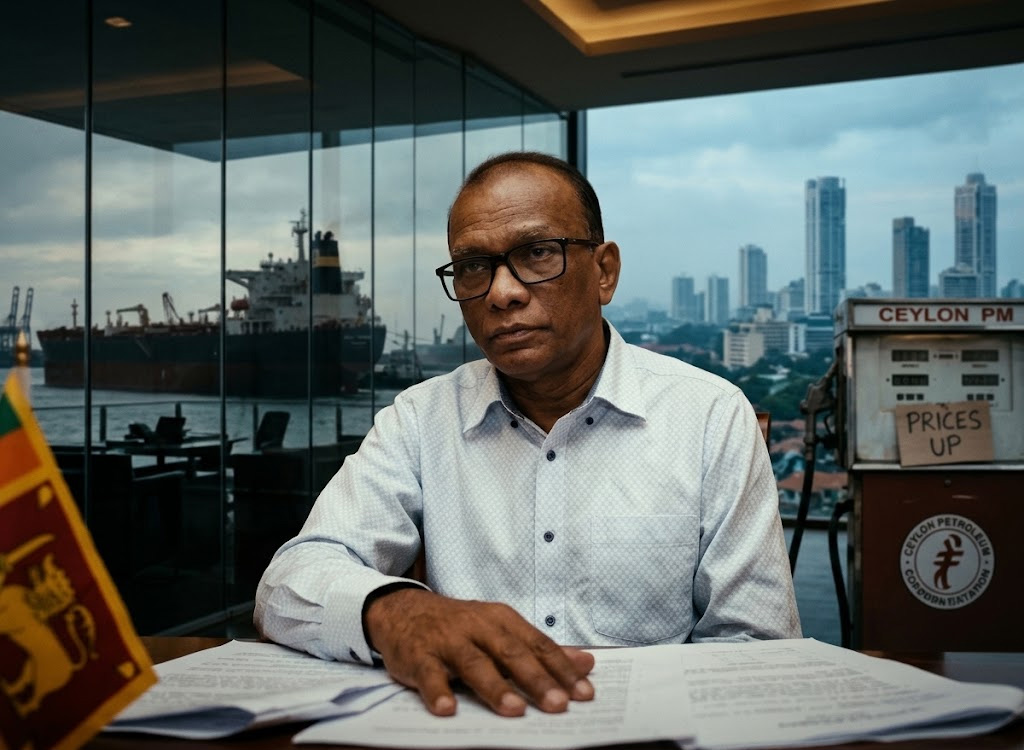
Energy Minister Anura Karunathilaka says the government cannot provide further substantial relief as global fuel prices continue to rise, while higher domestic prices threaten to add to inflationary pressures.
Sri Lanka’s fuel import costs have increased by approximately 50% compared with last year, forcing the government to raise domestic fuel prices despite having allocated billions of rupees in subsidies to cushion consumers against international price increases, Energy Minister Karunathilaka has said.
Defending the latest fuel price revision, the Minister has said the continuing conflict in the Middle East had driven international petroleum prices higher, leaving the government with limited room to provide further relief without increasing the financial burden on public finances.
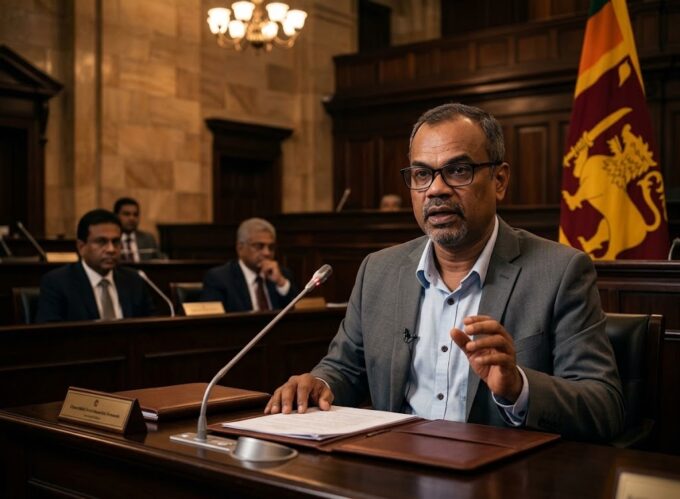
Speaking at a TV programme following the latest price revision, Karunathilaka has rejected Opposition proposals to sell fuel to consumers at the same price at which it is imported into the country, arguing that no country follows such a pricing mechanism.
He has also maintained that reducing fuel taxes and providing subsidies ultimately amounted to the same thing, as both involved the government foregoing revenue or absorbing additional costs.
The Minister has said the government had allocated Rs. 57 billion for fuel subsidies to provide relief to consumers amid rising international prices.
However, with fuel import costs approximately 50% higher than last year, he has said the government could not completely absorb the increase or provide further substantial relief at this stage.
The latest adjustment by the state-owned Ceylon Petroleum Corporation (CPC), effective from November 2, saw 92 Octane Petrol increase by Rs. 10 to Rs. 424 per litre and 95 Octane Petrol by Rs. 15 to Rs. 490.
Auto Diesel was increased by Rs. 5 to Rs. 397 per litre, while Super Diesel rose by Rs. 15 to Rs. 543. Kerosene prices remained unchanged at Rs. 285 per litre.
The Government’s position reflects the growing difficulty of balancing consumer protection against the financial requirements of maintaining cost-reflective fuel pricing.
Sri Lanka has already committed an additional Rs. 41 billion to maintain a diesel price cushion during the final quarter of the year, including relief of Rs. 70 per litre.
Opposition proposals rejected
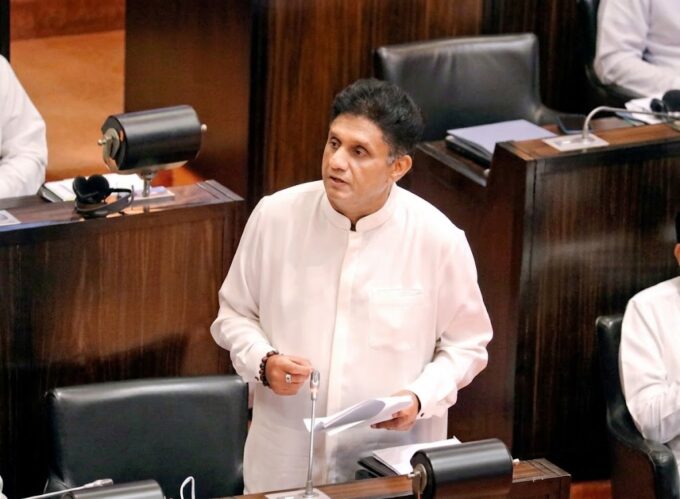
Responding to criticism over the latest price increase, Karunathilaka has questioned the practicality of Opposition proposals to sell imported fuel at the price paid at the port.
He has argued that such a mechanism would disregard the additional costs associated with bringing fuel to consumers.
The Minister has also defended the Government’s decision to use subsidies rather than further reduce taxes, saying both approaches involved providing financial relief to consumers.
However, his remarks highlight an important policy question over how much of the international oil price shock should be absorbed by the government and how much should be passed on to domestic consumers.
Under Sri Lanka’s IMF-supported economic recovery programme, the government has committed to maintaining cost-reflective fuel pricing to prevent the accumulation of losses at the CPC and reduce the need for Treasury bailouts.
While subsidies can temporarily protect consumers from international price fluctuations, they also create fiscal costs, particularly when global petroleum prices remain elevated for extended periods.
Inflationary Impact
The latest fuel price increase also comes at a difficult time for Sri Lanka’s inflation management.
Headline inflation, measured by the Colombo Consumer Price Index (CCPI), has accelerated to 8.3% in October, exceeding the Central Bank of Sri Lanka’s upper target limit of 7% for the fourth consecutive month.
The Central Bank operates under an inflation target of 5%, with a tolerance band of two percentage points.
Higher domestic fuel prices could add further pressure through increased transportation, freight, agricultural and manufacturing costs.
Businesses facing higher energy and distribution expenses may eventually pass these costs on to consumers, creating additional price pressures across food, essential commodities and services.
The impact could be particularly significant for small and medium-sized enterprises, logistics operators and manufacturers already dealing with elevated operating expenses.
Although public transport authorities have indicated that there will be no immediate bus fare increase following the Rs. 5 adjustment in auto diesel, other commercial transport operators and businesses could face tighter profit margins.
The increase also risks reducing household purchasing power, as higher transportation and other essential expenses leave less disposable income for non-essential consumption.
Central Bank Governor Nandalal Weerasinghe has recently indicated that monetary policy decisions would depend on the underlying sources of inflation and whether rising prices were influencing future inflation expectations and domestic demand conditions.
This distinction is particularly relevant because monetary policy instruments are generally more effective against demand-driven inflation than supply-side pressures originating from international commodity prices.
For the Government, the immediate challenge is therefore not limited to managing the CPC’s financial position or cushioning consumers against higher fuel prices. It must also ensure that the cost of maintaining fiscal discipline does not generate wider economic pressures that complicate the country’s ongoing recovery.
With fuel import costs continuing to rise and inflation already above the Central Bank’s target range, the latest price revision brings the tension between cost-reflective pricing, fiscal constraints and household affordability back into focus.










Leave a comment