
By The Pulseline News Desk
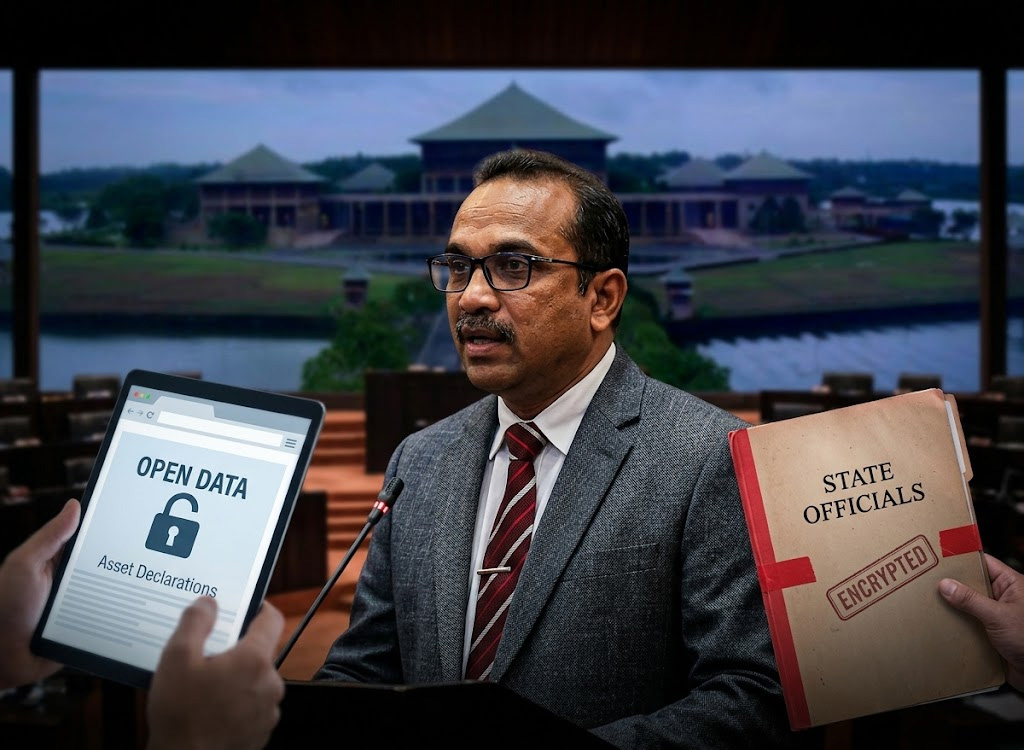
The government has moved to restore public access to the asset and liability declarations of politicians while shielding those of state officials, marking a significant reversal following criticism over a controversial gazette that had suspended public disclosure for all categories.
Leader of the House, Minister Bimal Rathnayake told Parliament that the government would amend last month’s gazette notification to ensure that elected public representatives remain subject to public scrutiny, while declarations submitted by non-public representatives, including government officials, would remain confidential.
The decision comes after concerns were raised by transparency advocates, civil society groups, and opposition parties that the earlier gazette undermined one of the key transparency provisions of the Anti-Corruption Act.
Addressing Parliament, Rathnayake described the Anti-Corruption Act No. 09 of 2023 as a landmark piece of legislation that significantly strengthened Sri Lanka’s anti-corruption framework.
He noted that Sections 86 and 88 of the Act require approximately 300 senior public office holders — including the President, ministers, members of parliament (MPs) and other top officials — to submit declarations of assets and liabilities.
“The law initially required declarations to be submitted in printed form and was later amended to make them available online,” he said.
However, Rathnayake argued that while elected representatives should continue to face public scrutiny, extending unrestricted public access to declarations submitted by career public officials posed privacy concerns.
“Public representatives are not ordinary officials. The public has a right to know about their assets and liabilities, including those of their close family members,” he said.
“But it is not appropriate for all state officials to be treated in the same way. We live in a society where even good laws can be misused. Certain sections of the media have harassed individuals who are not politicians, and the Commission to Investigate Allegations of Bribery or Corruption has also expressed concerns about protecting their privacy.”
Under the proposed amendment, declarations submitted by public representatives will once again be available to the public, while those filed by government officials and other non-public representatives will remain confidential.
The move represents a partial retreat from the government’s earlier position and appears aimed at striking a balance between transparency and privacy.
The issue had become politically sensitive after the gazette issued last month effectively halted public access to all asset declarations, prompting accusations that the government was weakening transparency safeguards introduced under the Anti-Corruption Act.
By restoring public access to politicians’ declarations while limiting disclosure for public officials, the government hopes to address those concerns without exposing thousands of state employees to potential misuse of their personal financial information.
Whether the revised approach satisfies transparency campaigners is likely to depend on the final wording of the amendment when it is formally presented to Parliament, as the debate over balancing public accountability and individual privacy continues.













Leave a comment