
By The Pulseline News Desk
Sri Lanka’s cost-of-living pressures are intensifying, with inflation accelerating to 8% in August 2026 as a sharp increase in food prices puts renewed pressure on household spending.
According to the Department of Census and Statistics, inflation measured by the Colombo Consumer Price Index (CCPI) rose from 7.3% in July to 8% in August, signalling a faster pace of price increases across the economy.
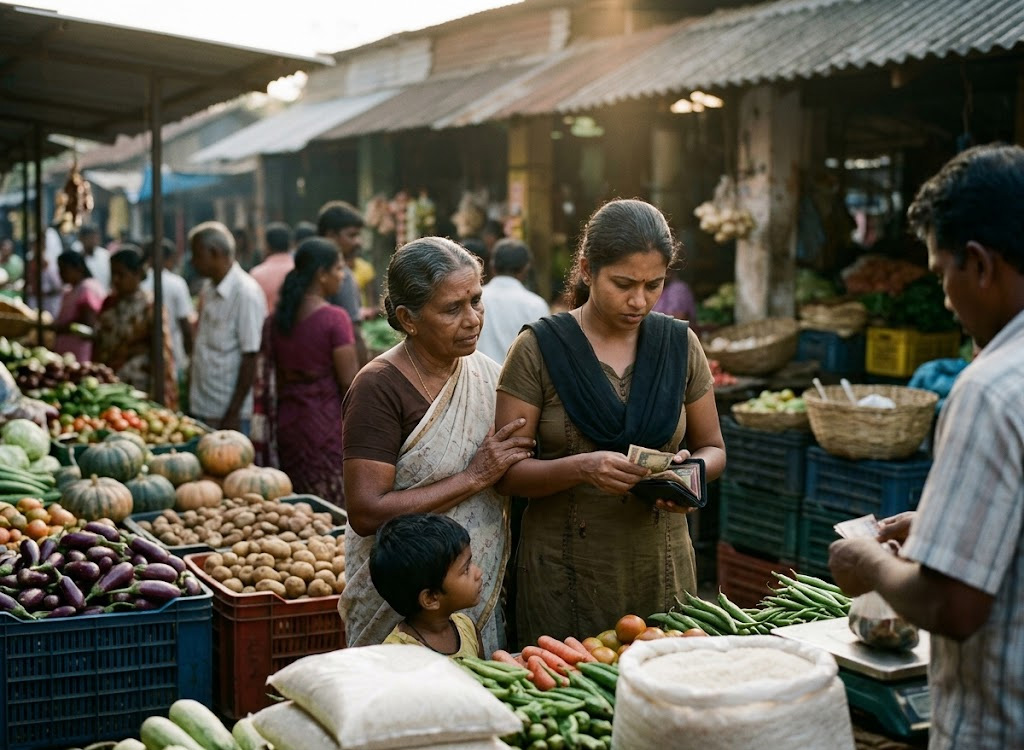
The biggest concern for households is the sharp acceleration in food inflation. Food prices rose by 8.5% year-on-year in August, up significantly from 6.3% in July.
For consumers, the increase is being felt most directly in everyday spending. Food accounts for a substantial share of household expenditure, particularly among lower- and middle-income families. As the prices of essential food items rise, families have less disposable income left for transport, education, healthcare, utilities and other non-essential spending.
The latest figures therefore point to a renewed squeeze on household purchasing power, even as Sri Lanka continues its broader economic recovery.
Non-food inflation, meanwhile, eased marginally to 7.7% in August from 7.8% in July. However, the relatively small decline provides limited relief to households already facing higher overall expenses.
The acceleration in headline inflation is particularly significant because it comes after the severe cost-of-living shock experienced during the economic crisis. Although current inflation remains far below the unprecedented levels recorded during the crisis period, households that have yet to fully recover their purchasing power remain vulnerable to renewed price increases.
For many families, higher food prices can force difficult adjustments to monthly budgets. Households may respond by reducing the quantity or quality of food purchased, postponing non-essential expenses, cutting back on savings or relying more heavily on credit.
The impact can also extend beyond the household. When consumers devote a greater share of their income to food and other essentials, spending on restaurants, leisure, clothing, household goods and other discretionary items can weaken. This can in turn affect businesses dependent on domestic demand.
The August inflation figures also raise questions about the sustainability of recent improvements in household economic conditions. Income growth needs to keep pace with prices if families are to see a meaningful improvement in living standards.
The immediate challenge for policymakers, therefore, is not simply to contain the headline inflation rate, but to prevent rising prices, particularly for essential goods, from eroding the purchasing power of ordinary households.
With food inflation now significantly above the overall inflation rate, the pressure on household budgets is likely to remain one of the most closely watched aspects of Sri Lanka’s economic recovery in the months ahead.












Leave a comment