
By The Pulseline News Desk
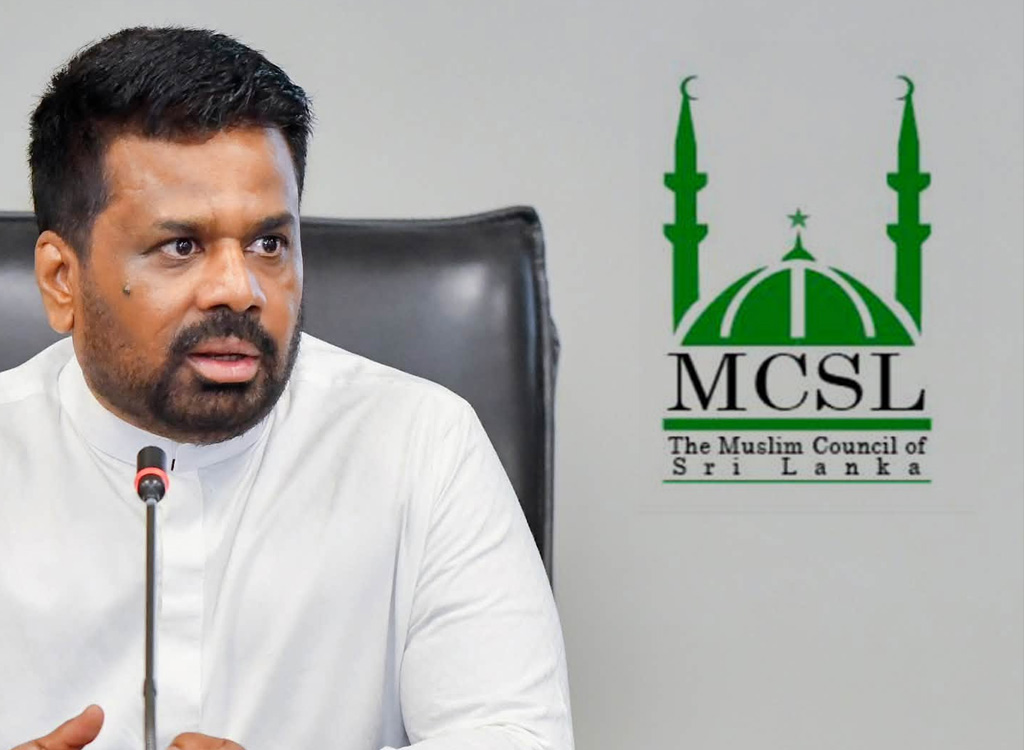
The Muslim Council of Sri Lanka has urged President Anura Kumara Dissanayake to appoint a representative of the Muslim community to the National Delimitation Commission (NDC), pointing out that no Muslim member was included in the appointments made last month.
In a letter addressed to the President recently, the Council has said the omission appeared to be an oversight and called for a Muslim representative to be appointed at the earliest opportunity.
President Dissanayake last month appointed former Commissioner General of Elections Saman Sri Ratnayake as Chairman of the NDC, along with Dr. K. Thavalingam and Rohana Pushpakumara as members.
However, the Muslim Council has noted that previous delimitation commissions had included members representing the Muslim community.
It has cited the appointments of Dr. M.H. Hasbulla, A.M. Nahiya and M.I.M. Ameer, who had previously served as members of the commission.
“We presume the omission has been an oversight,” the Council has said, while drawing attention to Article 95 of the Constitution, which provides for the appointment of five persons to the Delimitation Commission.
The Council has appealed to the President to appoint a Muslim representative before the commission’s work progresses further, arguing that the nominee should be able to participate in its deliberations from the initial stage.
Why the appointment matters
The NDC plays a key role in determining the boundaries of electoral districts and other geographical units used for political representation.
Its work involves reviewing and adjusting boundaries with the aim of achieving a balance in population distribution and ensuring that citizens have equal and effective voting representation.
The commission also provides technical guidance for delimitation-related work carried out by public and administrative institutions and is expected to conduct the process independently and in accordance with the law.
The Muslim Council’s intervention comes at a politically significant stage, as decisions on electoral boundaries can have a direct impact on the representation of communities across different parts of the country.
The Council therefore appears to be seeking representation at the commission before substantive deliberations begin, rather than having a representative appointed at a later stage.
The call also brings attention to the constitutional requirement governing the composition of the commission. With Article 95 providing for five members, the Council has questioned the absence of a representative who could reflect the interests and demographic concerns of the Muslim community.
The President will now face a request to fill the remaining position as the delimitation process moves forward.
For the Muslim Council, the issue is not simply about filling a vacant position but ensuring that the perspectives of a significant minority community are included from the outset in a process that could ultimately influence the country’s electoral representation.










Leave a comment