
By The Pulseline News Desk
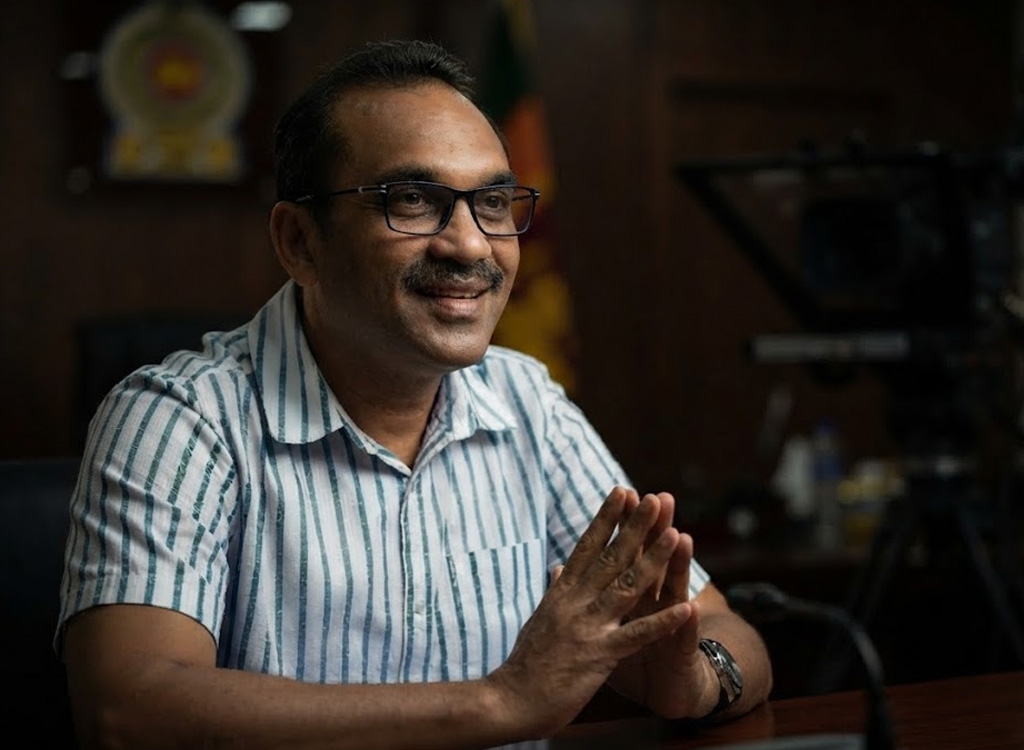
The Government is signalling possible further relief on Pay-As-You-Earn (PAYE) tax in the upcoming Budget, with Minister Bimal Rathnayake acknowledging that the existing tax burden remains a major concern for professionals.
Speaking during a television interview, Rathnayake said the Government accepted that PAYE taxation was still high for professionals, although the scope for reducing the burden was constrained by Sri Lanka’s fiscal position and its commitments under the International Monetary Fund (IMF)-supported programme.
“We accept that the PAYE tax is high for professionals,” Rathnayake said, noting that the Government had to balance tax relief against the country’s fiscal requirements and the commitments made under the IMF programme.
However, he indicated that the Finance Ministry was in favour of providing additional relief.
“The Finance Ministry is of the view, as a matter of policy, that relief should be given on PAYE. There are only a few more days [until the Budget],” he said.
His comments have put PAYE taxation back at the centre of attention ahead of the Budget, particularly among professionals whose disposable incomes have been affected by the current tax structure.
Rathnayake, however, did not disclose whether the Government was considering an increase in the existing tax-free threshold, changes to tax bands, or a reduction in applicable rates. The extent of any relief is therefore expected to become clear only when the Budget proposals are presented.
VAT also under scrutiny
The Minister also acknowledged that the Government considers the existing Value Added Tax (VAT) burden to be high.
However, unlike his comments on PAYE, Rathnayake stopped short of indicating that a VAT reduction would be included in the upcoming Budget.
He said any decision on VAT would have to be considered in the context of the country’s broader economic and fiscal position.
This reflects one of the central challenges facing the Government as it prepares its Budget: providing relief to households and professionals while maintaining sufficient revenue to meet the State’s expenditure requirements and fiscal commitments.
Balancing relief with revenue
The Government has defended its approach to revenue collection, arguing that it has not introduced new taxes but has instead focused on improving tax compliance and reducing wasteful expenditure.
The issue is particularly significant as Sri Lanka continues to implement its IMF-supported economic reform programme, under which the Government has committed to strengthening public finances and maintaining fiscal discipline.
For professionals, however, the debate over PAYE is closely linked to the question of how much of their income remains available after taxation. Rathnayake’s acknowledgement that the current burden is high, coupled with the Finance Ministry’s stated policy position in favour of further relief, suggests that the Government is now considering adjustments within the limits imposed by the country’s fiscal position.
The Budget will therefore determine whether that policy position translates into a concrete change in PAYE taxation — and, if so, how much relief professionals will actually receive.
At the same time, the Government will have to balance any tax concessions against its revenue targets, IMF commitments and the continuing need to strengthen Sri Lanka’s public finances.










Leave a comment