
By Vox Civis
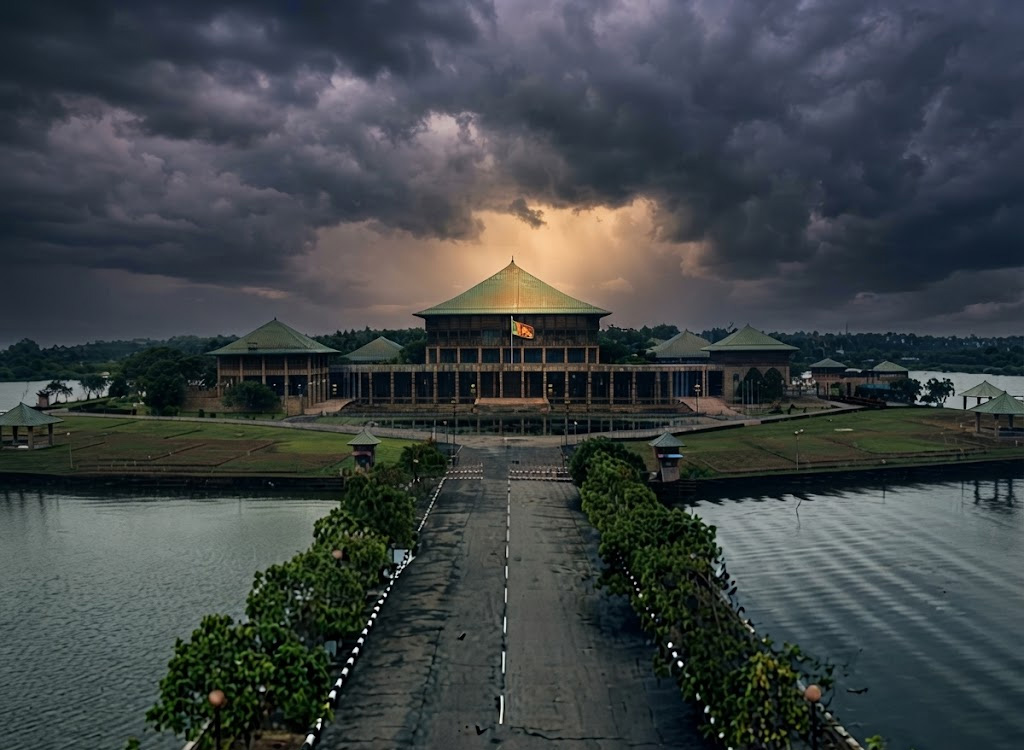
It was, as everyone always knew it would be, a foregone conclusion. Late on Friday (25) evening, Parliament passed the 22nd Amendment to the Constitution by 158 votes to 63, with the companion Judicature (Amendment) Bill carried by the same margin – comfortably above the two-thirds threshold. The ruling National People’s Power (NPP) threw its full parliamentary weight behind the bill that will outlive this government’s term in office, and possibly its reputation.
The government’s case is not without a surface plausibility. Sri Lanka’s courts are sitting on a backlog estimated at 1.1 million cases, and the country’s prisons, built for roughly 11,000 inmates, now holding more than 41,000, have just been the scene of riots that killed 31 people, including 10 prison officials. Raising the retirement age of judges, the government argues, keeps experienced hands on the bench a little longer and helps clear that logjam. It is a real crisis, and it deserves a real answer.
But raising the retirement age by two years does not by itself increase the number of cases a court can hear in a day, any more than improved life expectancy obliges judges to sit through the night. If the backlog is the problem, the new Act does not solve it – and the more closely one reads the amendment, the harder it becomes to avoid a narrower and more uncomfortable explanation: it lets the government retain the one Chief Justice, while the amendment’s careful proviso on future tenure quietly settles who does and does not inherit that office next.
Point of contention
That the amendment applies, by design, to judges already sitting is what has driven the controversy, and why calling it a technical fix for court congestion has convinced almost no one outside the government’s own ranks.
It is worth pausing on how few, in fact, may even understand what they voted for. The UN Resident Coordinator in Sri Lanka, Marc-André Franche, recently told a gathering of civil society representatives in Colombo that the country’s legislative process suffers from serious shortcomings, and that many MPs vote on bills without reading or studying them. He cited his own conversations with roughly 45 MPs after the Online Safety Act passed, most of whom, he said, had not read the bill they voted for. In such a backdrop, one is entitled to wonder how many of the 158 who backed the 22nd Amendment on Friday could explain, unprompted, what Article 107(5) now says.
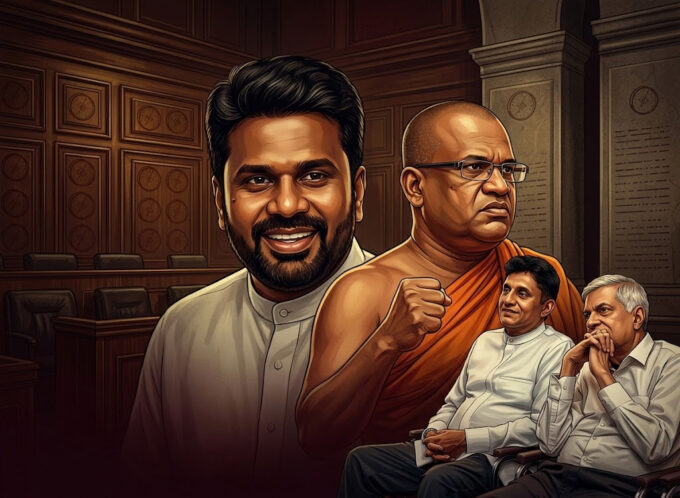
What makes this amendment different from the routine churn of Sri Lankan constitutional politics is not the retirement age itself, but what it represents: the first time a sitting government has handed the judiciary something tangible in return for nothing more than continuity of office. It was also the first time a government felt able to disregard, in a single stroke, the collective clergy – Mahanayake Theros, the Catholic Bishops’ Conference, the Church of Ceylon, the Bar Association of Sri Lanka, the UN Special Rapporteur on Judicial Independence, the Commonwealth Lawyers Association, LAWASIA, and legal scholars of the standing of Professors, Deepika Udagama, Savitri Goonesekere and Rohan Edrisinha – alongside respected voices from within its own coalition, including Lal Wijenayake.
Noting the distinction
Even the Supreme Court’s own determination, read out on 22 September and clearing the bill of a referendum requirement, came with the Bar Association’s pointed reminder that a ruling on constitutionality is not an endorsement of policy, and that MPs alone carried the responsibility of weighing the bill’s wisdom. Sixty-seven petitions were filed against it, none of which can be waved away as noise of a defeated opposition. When the Mahanayake Theros and the IMF’s own governance advisers end up, coincidentally, making the same argument in the same week – that transparency is being traded for convenience – it stops looking like politics and starts looking like a pattern.
The damage, if it comes, will not be visible immediately. It will surface the next time a controversial judgment is handed down and the losing side wonders aloud whether the bench that decided it owes its continued presence to the government it now must rule on. That suspicion, once seeded, does not require proof to do its work. It is the single most corrosive consequence of this amendment, and it will attach itself to verdicts that are entirely sound as readily as to those that are not.
Opposition MPs have described the 22nd Amendment as a thinly disguised mechanism for “court-packing”: filling roughly 40 newly created judicial positions in a compressed timeframe, with the process concentrated in the President’s hands. They argue that it can reshape the composition of the bench for a generation even if every individual appointment is technically lawful. The danger lies not in any single appointment but in the manner, timing, scale and selection mechanism taken together, and most importantly, what stops political preference from substituting for merit.
This isn’t a hypothetical worry. The Bar Association of Sri Lanka raised it directly in a letter to the President in December last year, objecting to departures from seniority in High Court and Court of Appeal promotions and insisting seniority remain the default rule until objective, publicly known merit criteria exist.
Critical structural gap
The IMF’s 2023 Governance Diagnostic Assessment found the same structural gap independently: no documented criteria for judicial promotion, transfer or career progression, and outsized authority concentrated in a small Judicial Service Commission – a pre-existing vulnerability the government now has a responsibility to fix before adding new appointments rather than after.
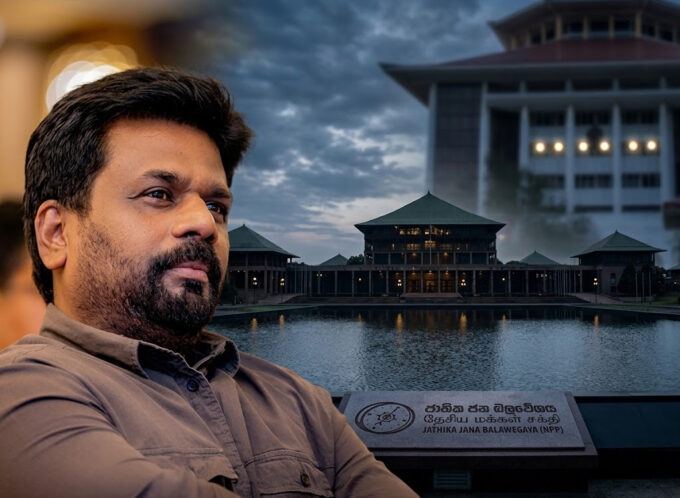
There is also a discipline the NPP itself insisted on, and now conveniently sets aside. President Anura Kumara Dissanayake’s own parliamentary record runs against the 18th Amendment of 2010, which removed presidential term limits; for the 19th, which restored the Constitutional Council; against the 20th, which reversed those checks; and for the 21st, which restored them again – each time arguing, correctly, that Sri Lanka’s problem was too much power concentrated with too little oversight.
That history is what makes the government’s haste over 22A so hard to square with its own stated principles. This is a government that has taken no meaningful steps toward the provincial council elections it promised to conduct without delay, gone quiet on a new constitution, continued detaining people under the Prevention of Terrorism Act it denounced, and said nothing further about the Online Safety Act it opposed while in opposition, yet found time, ahead of all of that, to reshape the judiciary’s upper ranks.
When the Prime Minister, hours before the vote, chose to frame the moment as a display of party unity rather than a matter of national consequence, she inadvertently confirmed the point that this was about the NPP holding together, not the country moving forward.
The elixir the opposition needed
It is on that terrain – a government using its majority for itself while everything else waits – that the SJB has found its opening, and it has used it with more discipline than most expected. Sajith Premadasa’s party spent September building toward a single, self-organised mobilisation at Polduwa Junction near Parliament, deliberately declining to fold itself into a broader civil-society coalition that had been trying, with far less success, to assemble a unified front against the bill. That was a real gamble: it meant standing or falling on the SJB’s own organisational strength, with no allied parties to share the credit or the blame. In the end, it paid off.
Despite days of heavy rain that had turned the run-up to the vote into a genuine test of commitment, thousands of supporters marched to the edges of Parliament, even though the Supreme Court’s determination delivered two days earlier, meant the legal outcome was already settled before a single protester arrived.
The rally could not change the vote, but it did something arguably more useful for the SJB: it demonstrated reach, discipline and a leader willing to tell his own supporters that a two-thirds majority in the chamber does not settle the argument in the country. Whatever else the 22nd Amendment turns out to be, it has functioned as a genuine turning point for the SJB – proof to itself and to the public that it can mobilise at scale without borrowing anyone else’s crowd.
This is where the NPP needs to be honest about the trap it may have set for itself. A precedent that lets a government reconfigure the judiciary’s senior ranks through raw parliamentary arithmetic. It is a precedent every future government inherits too – including one led by the very opposition now gaining strength on the strength of opposing it. The NPP built its 2024 mandate on the promise that it was different: cleaner, more restrained, more respectful of institutions than the governments that came before it. Every argument it made against the 18th and 20th Amendments can now be made against it in turn, and its opponents will not need to invent a single new one.
The real trap
The second, related trap is unfolding in parallel and gets far less attention than it deserves, though it matters more. While Parliament and the press were consumed by the judiciary bill, the government has been quietly pursuing amendments to the 2023 Anti-Corruption Act, the law built with IMF technical assistance as the centerpiece of Sri Lanka’s post-crisis commitment to transparency.
An IMF mission led by Evan Papageorgiou spent nearly two weeks in Colombo through 23 September discussing the Seventh Review of the country’s Extended Fund Facility, and left without a staff-level agreement. The mission was unusually direct in saying why: clauses in the government’s July amendments risk weakening the very asset-declaration and beneficial-ownership disclosure rules that gave the original act its credibility.
This is not a minor technical quibble. It is the IMF publicly questioning whether the government that rode into office on the promise of clean governance is now diluting the one law built to prove it meant it, while at the same time asking it to bless the next stage of its recovery.
And that recovery is where the real argument should be. The NPP holds office today because of the 2022 economic collapse, not because of any constitutional theory, and it will be judged, in the end, on whether that collapse is truly behind the country or merely repackaged. The government and the ratings agencies point to a Fitch upgrade and talk of a return to international capital markets by 2027.
But set against that the fact that roughly 150,000 businesses have closed since the crisis, driven under by an 800-basis-point rate rise, an unpredictable rupee and cost-reflective pricing pushed by the same reform programme now being praised; youth unemployment among the educated being among the highest in Asia, near 43 percent; and more than 300,000 people a year, including nurses, engineers and bankers, leaving the country since 2022, with a record 314,828 departing in 2024 alone; the flip side of the higher foreign remittances the government has been boasting about.
The NPP’s legacy
Debt restructuring did not shrink the debt so much as relocate it, from international bondholders toward the ADB, the World Bank and the IMF itself, even as the government now prepares to borrow from capital markets again. External debt had reached $37.2 billion by last September; total public debt still sits near $103 billion, and by the IMF’s own projections will remain close to 95 percent of GDP as late as 2027, with debt servicing climbing toward $3.5–4 billion a year between 2028 and 2032.
Meanwhile poverty has roughly doubled since 2022. And the 2024 Economic Transformation Act has now written the current programme’s fiscal targets into law, binding every future government – including, eventually, whichever one replaces this one – regardless of the mandate it wins.
Set beside that, a fight over the retirement age of appellate judges looks less like a defining reform and more like a government spending its scarcest asset – public trust – on the wrong ledger. The Constitution, as it has been argued in this very debate, is bigger than any government, any president, any party secretariat, however large its majority. Sovereignty ultimately rests with the people, arguably not with the 158 votes cast on Friday, as the opposition pointed out with its rally.
If the NPP wants to be remembered as the government that broke with Sri Lanka’s old habits rather than one that simply learned to use them more efficiently, it will need to answer, convincingly and soon, why an amendment this contested was worth the political capital it squandered – and why an anti-corruption law is being loosened at a time the IMF is watching most closely. Until it does, the opposition it just handed a rallying cry will keep growing louder, and the suspicion now attached to every future judgment from this bench will not fade on its own.
Disclaimer: The views and opinions expressed in this article are those of the writer and do not necessarily reflect the official position of this publication.










Leave a comment